
Last updated October 31, 2026
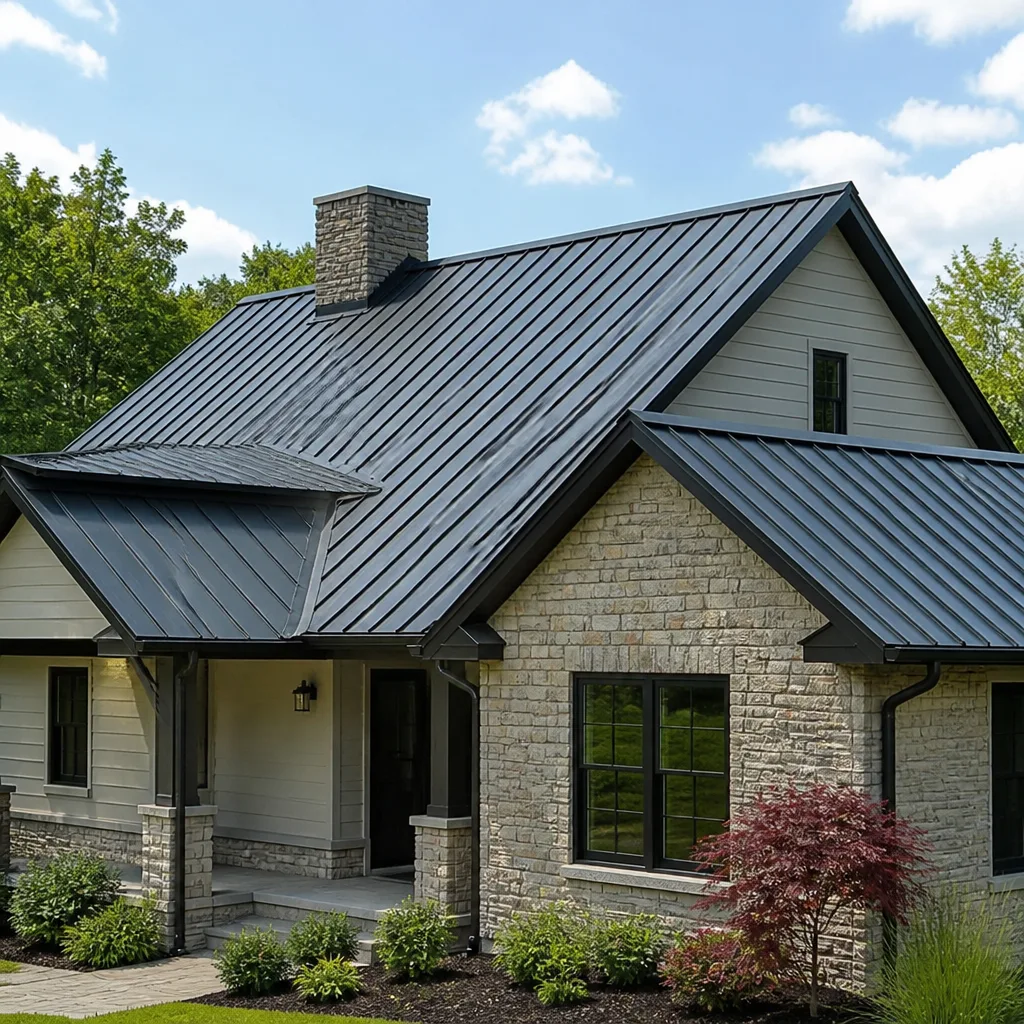 Metal roofing
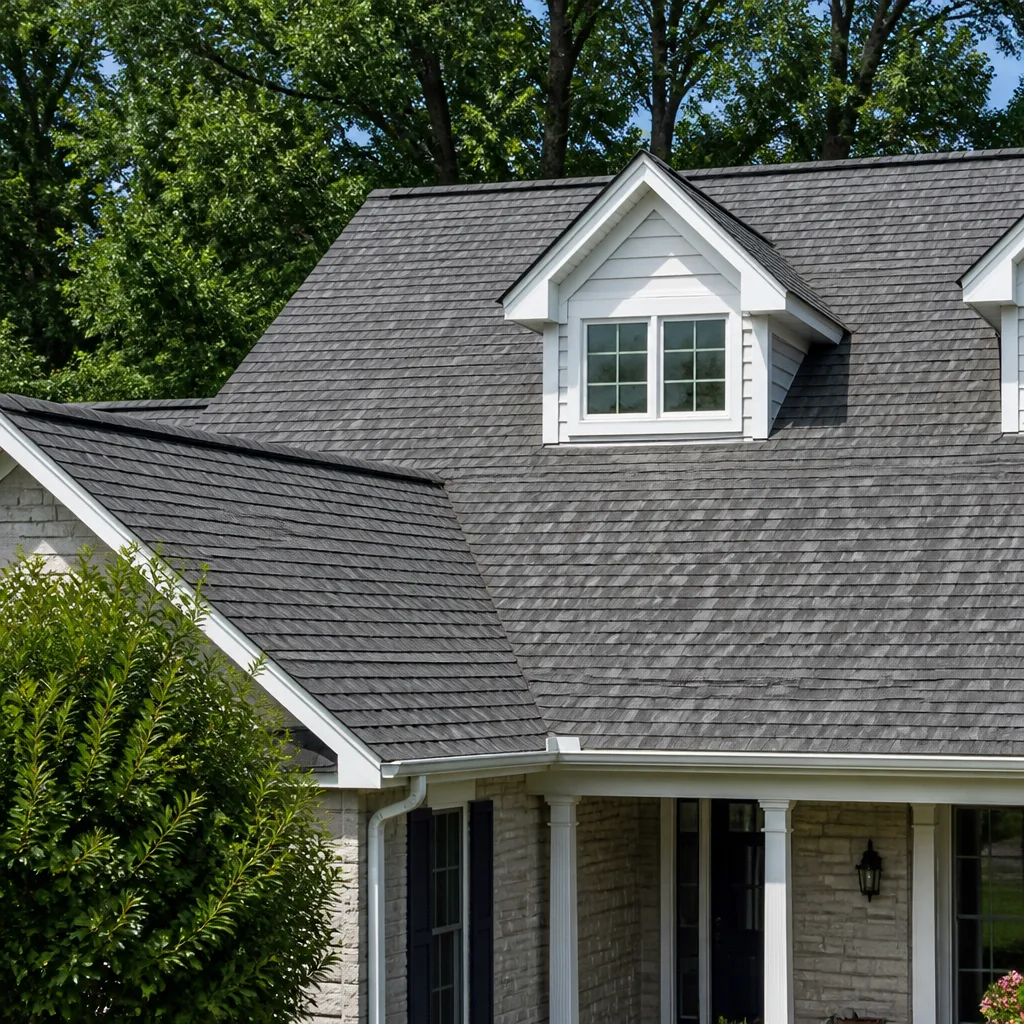 Architectural shingles
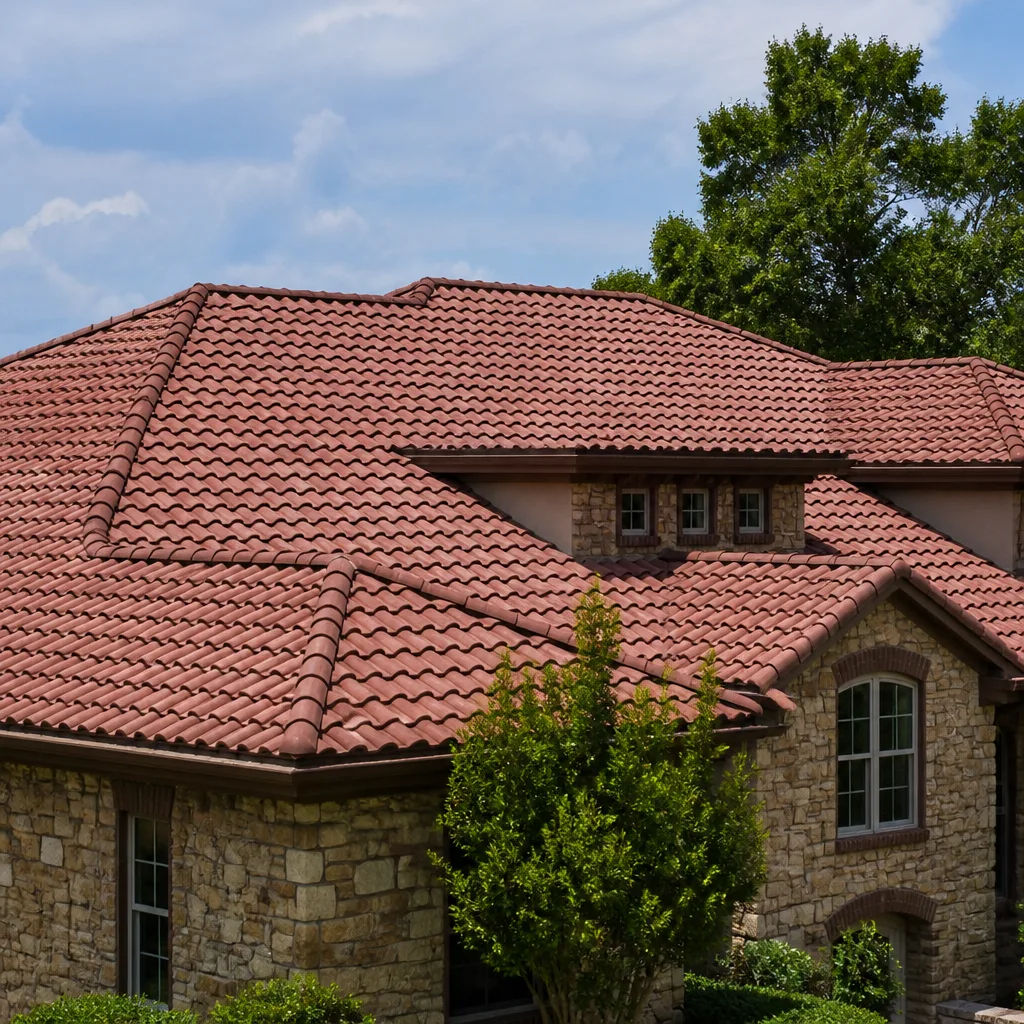 Tile roofing
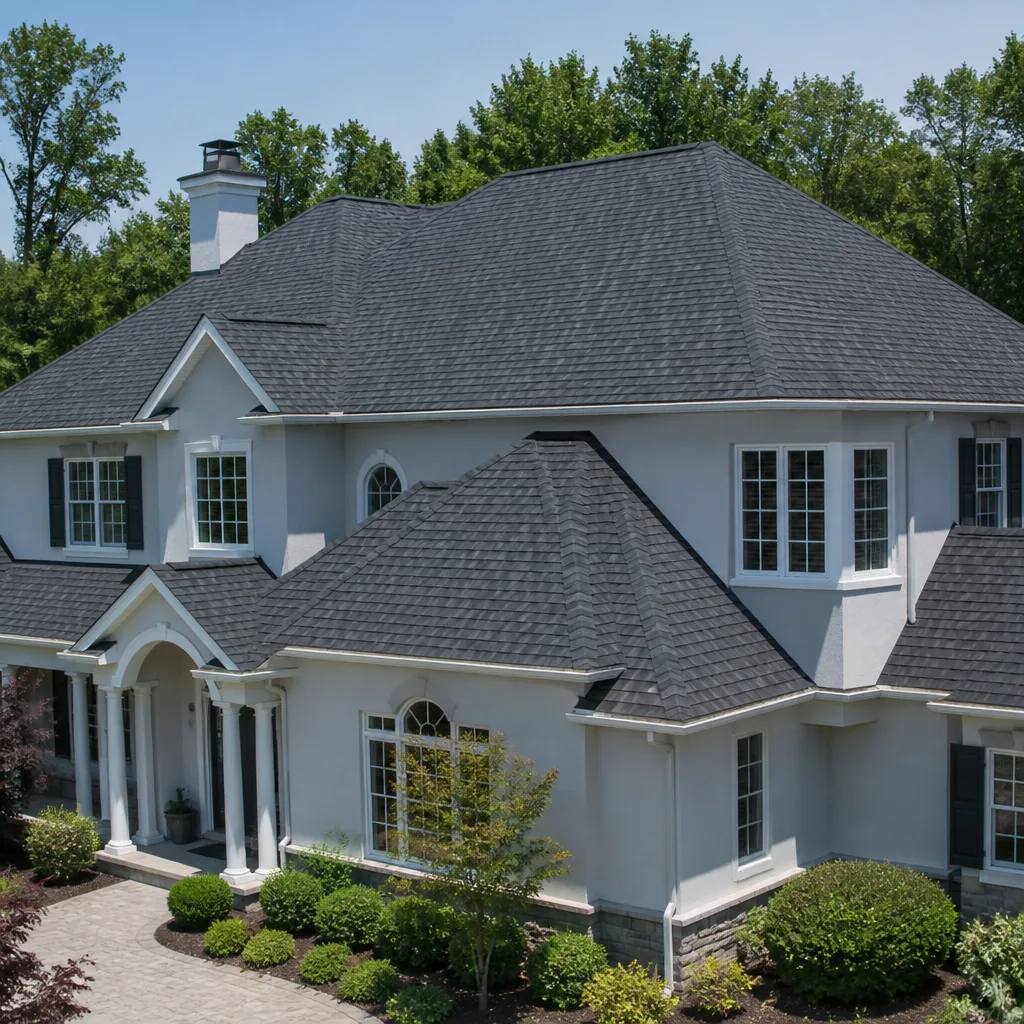 GAF
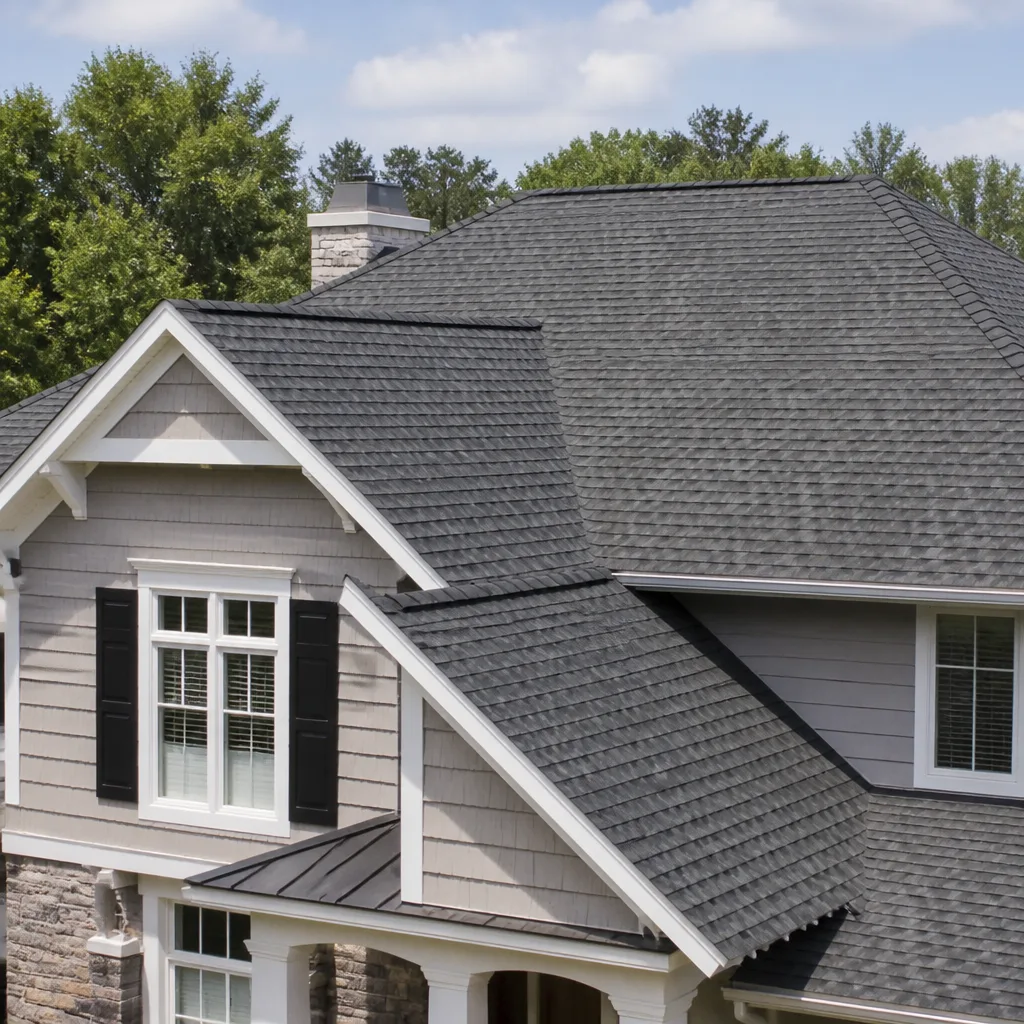 Owens Corning
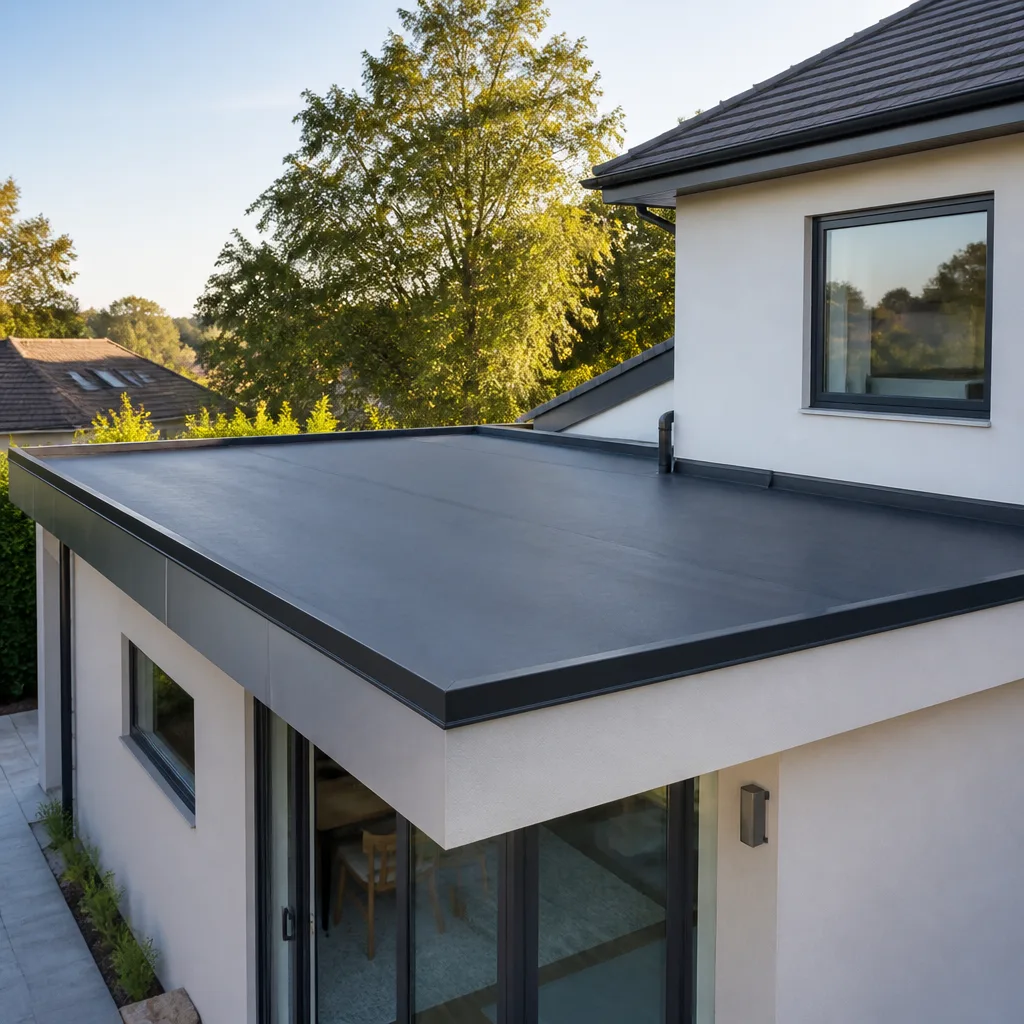 Flat & low-slope
Free roof inspection with deck photos before we talk money - GAF and Owens Corning certified installation
The Complete Guide to Roofing in Downey
Most Downey homes were built between 1945 and 1965 with roof pitches between 2:12 and 4:12. That slope range matters more than most homeowners realize, because at least three popular shingle products are technically off-label below 4:12 and void their own warranties when installed there. This guide walks through what Downey’s specific housing stock actually requires: which materials work on low-slope ranch roofs, what those T&G board decks from the Eisenhower era mean for tear-off decisions, and how to read a roofing bid without missing the line items that matter in this city. For a deeper dive, see The Complete Roof Repair Guide for Downey Homeowners. If you own a postwar ranch in Downey, this is the guide that treats your roof the way it actually is, not the way a generic Southern California roofing article pretends it is.
Quick Answer
Roofing in Downey is defined by the city’s dominant housing type: post-war ranch homes with low-slope roofs (2:12 to 4:12), aging tongue-and-groove board decking, and specific permit rules that cap roofing layers at two. A full tear-off replacement on a typical Downey ranch runs between $9,500 and $16,500 depending on material tier, while targeted repairs on these homes typically range from $350 to $1,800. The most important decision you’ll make is not which shingle color you like, but which products are actually warrantied on a low-slope roof in this specific climate. Our DIY vs Professional Roofing: The Downey Homeowner’s Decision Guide can help you think through who should handle the installation.
Styles & brands we work with
Table of Contents
- Why Downey’s Roof Geometry Limits Your Shingle Choices
- Tear-Off vs. Re-Roofing Over Existing Layers on Downey’s T&G Decks
- How Downey’s Inland Position Changes Your Material Decision
- Navigating Downey’s Permit Process and the Two-Layer Maximum
- How to Read a Roofing Bid for a Downey Ranch
- What Roofing Actually Costs in Downey in 2025
- A Straightforward Guide to Shingle Brands We Stock
- Common Mistakes to Avoid
Why Downey’s Roof Geometry Limits Your Shingle Choices
Walk down any residential street in Downey, from the neighborhoods north of Firestone Boulevard to the tree-lined blocks south of Imperial Highway, and you’ll see the same roof profile repeated hundreds of times. Ranch homes. Low pitch. Eaves that run long and horizontal. The geometry is consistent because the era was consistent: most of Downey’s housing inventory went up between the late 1940s and the mid 1960s, when builders favored simple, economical rooflines over steep architectural pitches.
That geometry creates a constraint most roofing companies won’t tell you about, because telling you narrows their product pitch. Here’s the reality: standard architectural shingles from most manufacturers carry installation specifications that require a minimum slope of 4:12 for warranty coverage. Below that, the manufacturer requires special underlayment treatments, and below 2:12, most asphalt shingles are not approved at all. A 3:12 roof is not a gentle suggestion zone; it’s a genuine product eligibility threshold.
In our inspections across Downey, we regularly see ranch roofs at 2.5:12 or 3:12 with shingles that were installed by previous contractors without the required low-slope underlayment. The shingles look fine from the street. The warranty, if you read the manufacturer’s fine print, was void the day they were nailed down.
What this means practically: if you own a low-slope Downey ranch, your material decision starts with the slope measurement, not the color swatch. Some shingle lines, including certain CertainTeed and GAF products, offer low-slope application ratings down to 2:12 when installed over specific underlayments. Others simply are not rated for your roof, and no contractor should install them there. A material-neutral inspection is what tells you which category applies to your specific roof before you ever look at a bid.
Tear-Off vs. Re-Roofing Over Existing Layers on Downey’s T&G Decks
Downey’s postwar builders used tongue-and-groove board decking almost exclusively. It was the standard for the era: 1×6 T&G boards laid across rafters, then covered with wood shake or early composition shingles. Sixty to seventy-five years later, that decking is one of the most consequential variables in your roofing decision.
Re-roofing over an existing shingle layer, sometimes called an overlay, is faster and cheaper up front. It’s also legal in Downey under specific conditions, but those conditions matter enormously. The most important one: Downey enforces a two-layer maximum. If your roof already has two layers of shingles, you cannot add a third. That rule exists in the building code for good reason: weight loads on aging framing, and the difficulty of diagnosing deck damage hidden under multiple layers.
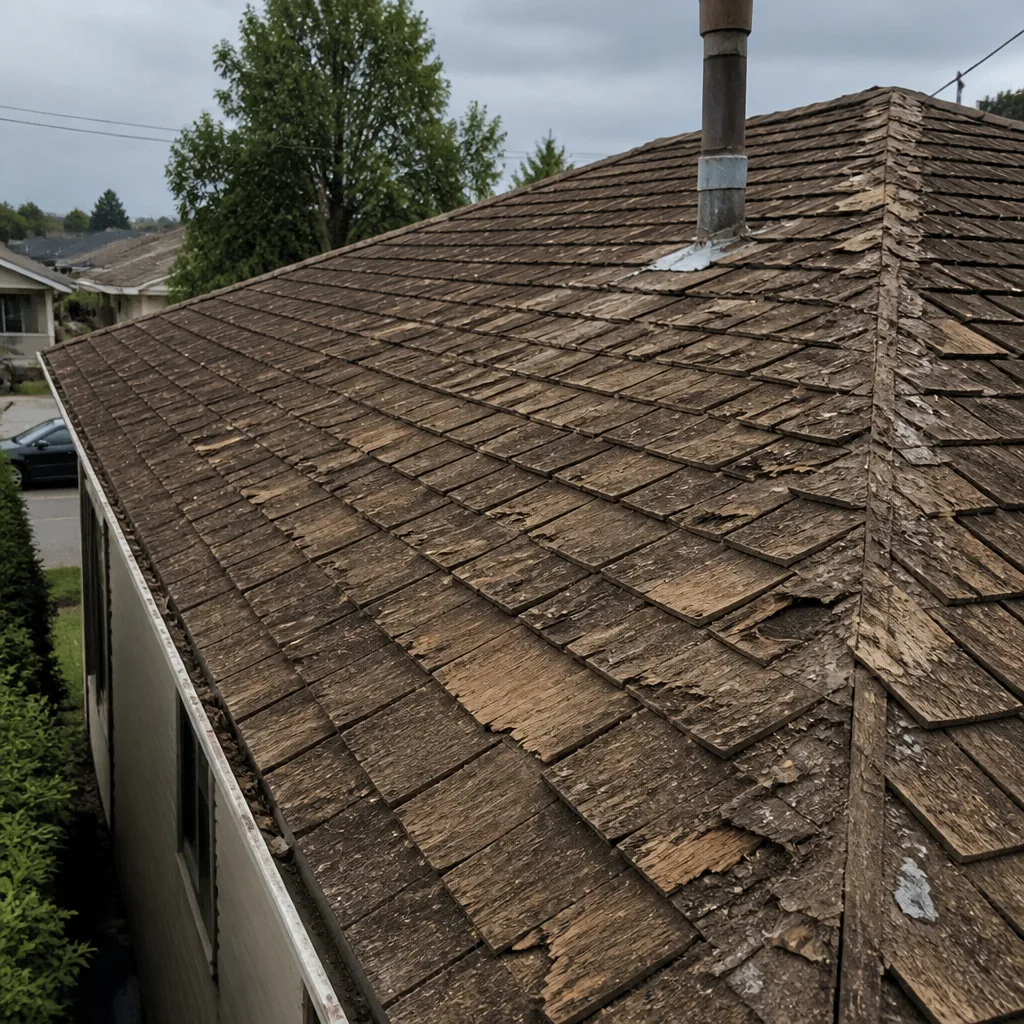
But here’s what matters more for Downey specifically. T&G board decking from the 1950s and 1960s is often in worse shape than the shingles above it. Boards cup, split, and separate at the joints. Nail-holding capacity degrades. If your roof has one layer and someone proposes an overlay without inspecting the deck condition underneath, they’re solving the visible problem while ignoring the structural one. We’ve lifted shingles on Downey ranch homes and found T&G boards so dried and split that a new shingle layer would have begun failing within five years, not the twenty-five the manufacturer promises.
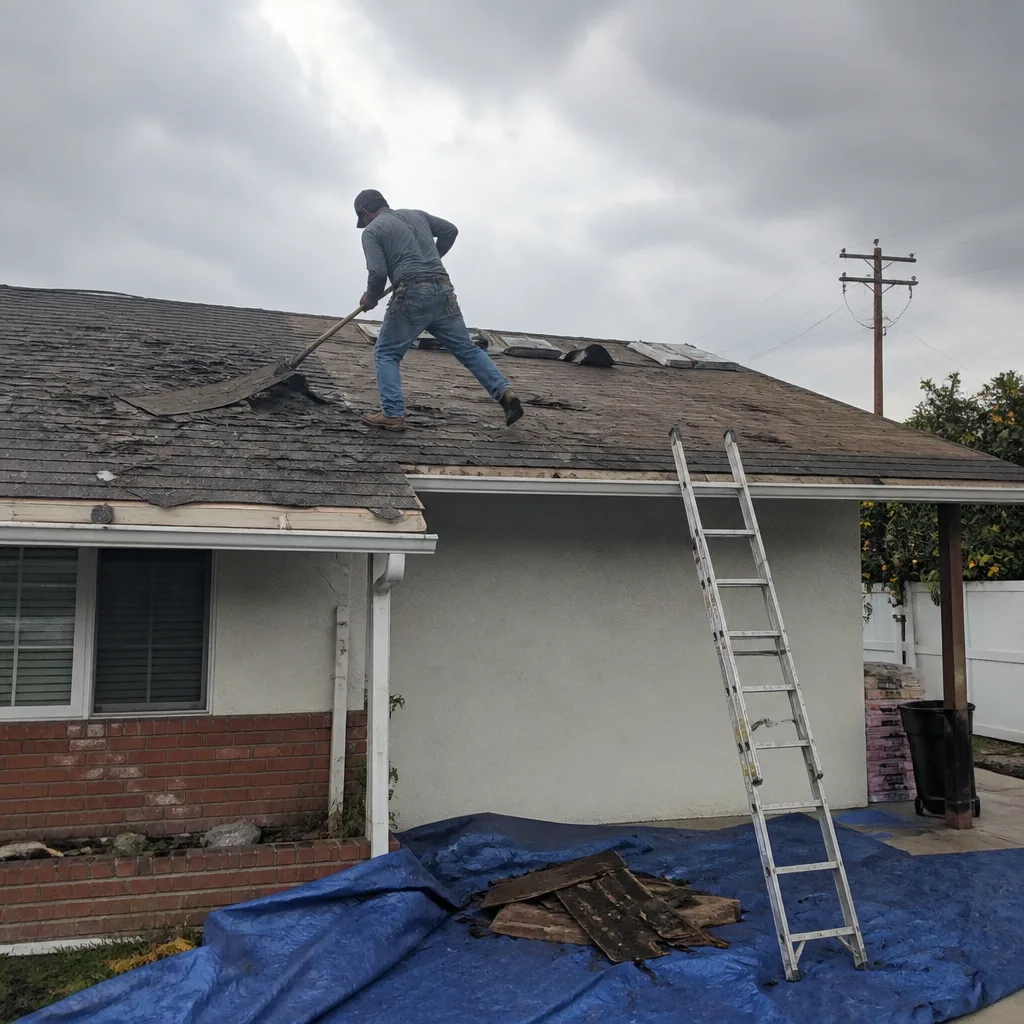
A full tear-off lets you see every board. It adds cost, yes, roughly $1,800 to $3,200 on a typical Downey ranch depending on deck condition. But it’s the only way to replace damaged decking, inspect flashing properly, and install a clean underlayment system. If your home still has its original 1950s decking, the tear-off is not an upsell. It’s the difference between a roof that lasts and one that fails where you can’t see it.
How Downey’s Inland Position Changes Your Material Decision
Downey sits roughly twelve miles inland from the coast. That distance sounds small, but it changes the roofing equation in ways that beachside cities like Long Beach or Seal Beach never experience.
Coastal roofs deal with salt air and morning marine layer moisture. Downey roofs deal with something different: sustained summer heat. Inland temperatures in Downey routinely run ten to fifteen degrees higher than coastal neighborhoods on the same July afternoon. That heat load does two things to a roof: it accelerates UV degradation of asphalt shingle granules, and it expands and contracts the decking and underlayment in ways that stress fasteners over time.
For product selection, this means a few things. Lighter shingle colors perform measurably better in Downey’s heat, reducing attic temperatures and extending shingle life. Certain shingle lines, including some Owens Corning and Tamko products, offer reflective granule options designed for exactly this climate profile. The Inland Empire and the San Gabriel Valley share similar thermal characteristics, but Downey’s specific position, away from the ocean breeze channel that cools cities like Lakewood, puts it firmly in the high-heat category.
There’s also a moisture consideration that surprises people. Downey doesn’t get the persistent marine layer, but it does get concentrated winter rain events. When a roof system has been baked through the summer months from late May to early October, then hit with heavy rain in December and January, the thermal expansion and contraction cycles are more extreme than in cities with more moderate swings. Underlayment choice matters more here than in a city where the temperature curve is flatter. The combination of high summer heat and winter rain concentration means Downey residents should think carefully about underlayment grades, not just shingle brands.
Navigating Downey’s Permit Process and the Two-Layer Maximum
Downey’s Building and Safety division handles roofing permits through the city’s online portal or in person at City Hall. The process is straightforward enough, but it has specific requirements that affect your project timeline and cost.
For a full roof replacement, you’ll need a permit. The fee for a standard residential re-roof in Downey typically ranges from $180 to $350 depending on project valuation. The city requires two inspections: one after the underlayment is installed but before shingles go on, and one final inspection after completion. Missing the first inspection is a common contractor mistake that forces the crew to remove newly installed shingles so the inspector can see the underlayment. Ask any roofer you’re considering how they sequence their permits and inspections. Their answer tells you how much they actually work in Downey. For help vetting candidates, read How to Hire a Roofing Contractor in Downey: A Step-by-Step Guide.
The two-layer maximum is enforced. Downey follows the California Building Code on this, and the code states that a roof cannot have more than two layers of roof covering. If your home has two existing layers, a full tear-off is required by code, not just recommended. Some homeowners don’t know how many layers their roof has. A competent inspection will tell you, and the city’s permit records often reflect it as well.
One more local detail: Downey’s permit office operates on a specific schedule and has historically experienced heavy demand in the spring and early summer, when every homeowner in the city decides to re-roof at the same time. If you’re planning a replacement between March and July, factor permit wait times into your schedule. Starting the paper process a few weeks before you want work to begin is a small thing that prevents a large delay.
How to Read a Roofing Bid for a Downey Ranch
Most roofing bids look similar: a total price, a shingle brand, maybe a line for underlayment. The differences that matter are what’s missing. Here’s what to look for in a bid for a low-slope Downey ranch, and what those line items mean.
Step 1: Check the slope specification. The bid should state your roof’s measured slope. If it says 3:12 or lower, the bid should specify low-slope underlayment installation. If it doesn’t mention slope at all, that’s a red flag. You cannot price a low-slope roof correctly without acknowledging the slope.
Step 2: Look for deck replacement language. A bid that says “deck repair as needed” without specifying a per-board or per-sheet price gives the contractor unilateral pricing power later. Ask for a stated unit price: for example, $6 to $10 per linear foot of T&G board replacement, or $55 to $80 per sheet if plywood is needed. If the bid doesn’t include a deck replacement rate, get it in writing before you sign.
Step 3: Verify the underlayment product by name. “Synthetic underlayment” is not a specification. It’s a category. Ask for the exact product: is it GAF Deck-Armor, CertainTeed RoofRunner, Owens Corning ProArmor, or something else? The product name tells you the quality tier the contractor is quoting. On a low-slope Downey roof, this matters more than on a steep roof.
Step 4: Check for flashing scope. T&G decking homes from the 1950s and 1960s almost always need some flashing work at walls, chimneys, and pipe penetrations. A bid that says “reuse existing flashing” without qualification is likely saving cost by skipping necessary work. Ask whether the flashing will be replaced or re-sealed, and which specific areas are included.
Step 5: Confirm the permit and inspection line. The bid should include permit fees and the cost of scheduling both city inspections. If it doesn’t, you’ll pay for those separately, and the final price will drift.
Missing line items are not an accident. They’re how some contractors keep the upfront number low and recover cost later through change orders. When we write a bid for a Downey ranch, every one of these items is listed with a fixed price. No change orders. No surprises after the tear-off begins.
What Roofing Actually Costs in Downey in 2025
Downey roofing prices reflect the city’s housing stock: low-slope ranch roofs with moderate square footage and aging decking. Here’s what we’re seeing in the local market right now, broken down by material tier and project type.
Full Tear-Off Replacement
- Budget architectural shingles: $9,500 to $12,500. Products from IKO or Atlas in this tier offer solid performance at a lower price point. Warranty coverage is typically limited to the manufacturer’s standard material warranty.
- Mid-grade architectural shingles: $11,500 to $15,000. This is where most Downey homes land. CertainTeed Landmark, GAF Timberline, Owens Corning Duration, or Tamko Heritage all live in this range. The price difference reflects the specific product line, the underlayment grade, and the deck condition.
- Premium and designer shingles: $14,000 to $18,500. Products like CertainTeed Grand Manor, GAF Grand Sequoia, or Boral’s designer lines. These offer longer warranties and a more dimensional appearance. For a Downey ranch with a visible street-facing roof plane, this tier changes the home’s curb appeal meaningfully.
Targeted Repair Work
- Single shingle or small area replacement: $350 to $700
- Flashing replacement at a chimney or wall junction: $450 to $1,200
- Underlayment repair on a low-slope section: $600 to $1,500
- Deck board replacement (localized): $400 to $900 per area
These repair ranges vary based on accessibility, the number of roof penetrations, and whether the existing shingles can be matched. Color matching on older roofs is often imperfect; we’ll tell you that before we quote, not after the patch goes on.
The cost driver in Downey that most homeowners don’t anticipate is deck condition. On a seventy-year-old T&G deck, it’s common to replace 15 to 25 percent of the boards once the old shingles come off. That adds $1,200 to $3,000 to a typical project. A contractor who doesn’t prepare you for that possibility is doing you no favors. We quote the deck replacement rate up front so the final number doesn’t surprise anyone.
A Straightforward Guide to Shingle Brands We Stock
Seacrest Roofing installs shingles from seven manufacturers: GAF, CertainTeed, Owens Corning, IKO, Atlas, Tamko, and Boral. That’s an unusual position for a roofing contractor. Most companies align with one or two brands and then spend the sales conversation defending that choice. We stock and install across the full range because Downey homeowners deserve to choose based on their roof, their budget, and their HOA requirements, not based on what a single-line dealer happens to have in the warehouse.
Here’s what matters about three of the brands we install most frequently for Downey ranch homes, in plain terms.
Tamko makes a solid mid-tier architectural shingle that performs well in the Downey heat profile. The Tamko Heritage line offers good granule retention and an attractive price point. For homeowners who want a real warranty without paying for a premium name, Tamko is often the right answer.
Boral sits at the opposite end of the spectrum. Boral’s designer lines, including their stone-coated and high-profile products, are among the best-looking shingles available anywhere. They cost more, and they’re worth it on high-visibility roofs where the roofline is a defining feature of the home’s appearance. For a Downey ranch with a big street-facing roof plane, a Boral roof changes how the whole house reads from the curb.
GAF and CertainTeed are the two names most homeowners already know. Both make excellent mid-grade and premium products with strong manufacturer warranty programs. GAF’s Timberline line is the most-installed shingle in America for a reason. CertainTeed’s Landmark line offers similar quality with a slightly different aesthetic profile. On a low-slope Downey roof, both manufacturers have specific products and installation specs that matter, and that’s where our inspection process comes in: we diagnose the roof first, then match the product to the specific slope, deck condition, and thermal profile.
The point isn’t that one brand is universally better. The point is that no single brand is right for every roof. A company that sells only GAF will tell you GAF is what your roof needs. A company that sells only Owens Corning will say the same about Owens Corning. We’d rather tell you what your specific roof actually needs, then show you every material option that fits.
Common Mistakes to Avoid
- Accepting a bid that doesn’t mention slope. On a Downey ranch roof at 3:12 or lower, slope is the single most important factor in product selection. A contractor who doesn’t measure and state the slope is guessing, and your warranty may pay the price.
- Adding a second or third layer without checking deck condition. T&G board decking from the 1950s and 1960s fails in ways you can’t see from the street. An overlay without a deck inspection is a bet you might lose in five years.
- Choosing shingles by color before understanding warranty eligibility. That color you love may not be warrantied below 4:12. Select product lines that are approved for low-slope application first, then choose from the colors available in those lines.
- Skipping the permit. Unpermitted roof work in Downey becomes a problem the moment you try to sell the home. The city’s permit process is affordable and straightforward. There’s no reason to skip it.
- Focusing on total price without asking about deck replacement rates. The final invoice, not the initial quote, is what you’ll actually pay. A stated deck replacement unit price protects you from change-order surprises.
- Assuming a new roof fixes existing drainage problems. Low-slope roofs in Downey can pond water if the roof structure has settled over seventy years. Sometimes the fix is in the underlayment and drainage plane, not the shingles. Diagnose the actual problem before replacing the visible surface.
- Choosing a contractor before reading what the bid actually specifies. The shingle brand is one line on a multi-line document. Read the whole thing. The omissions matter as much as the inclusions.
When to Call a Professional
Some roofing issues are visible and obvious: missing shingles after a wind event, water staining on the ceiling, granules collecting in the gutters. Others are not. If your Downey home is past the twenty-year mark on its current roof, or if you notice curling at the shingle edges, damp spots along the eaves, or any sagging in the roofline, call for an inspection. Low-slope roofs fail quietly, and by the time water shows up inside the house, the deck damage underneath is usually well underway. Seacrest Roofing offers free estimates in Downey – call (855) 597-2817 to schedule one. If you’re not sure whether you need a Roof Inspection in Los Alamitos-style assessment or a full replacement quote, start with the inspection. It diagnoses first, sells second.
See the difference
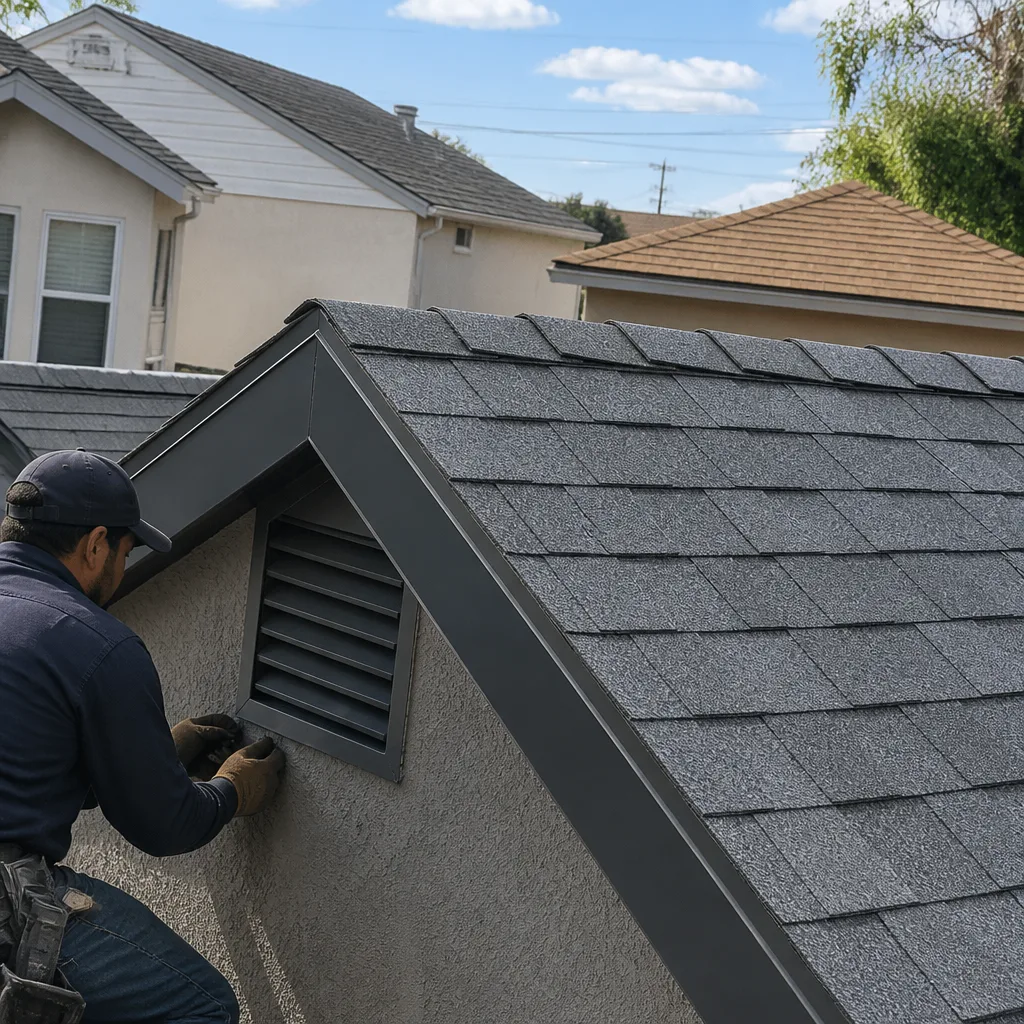
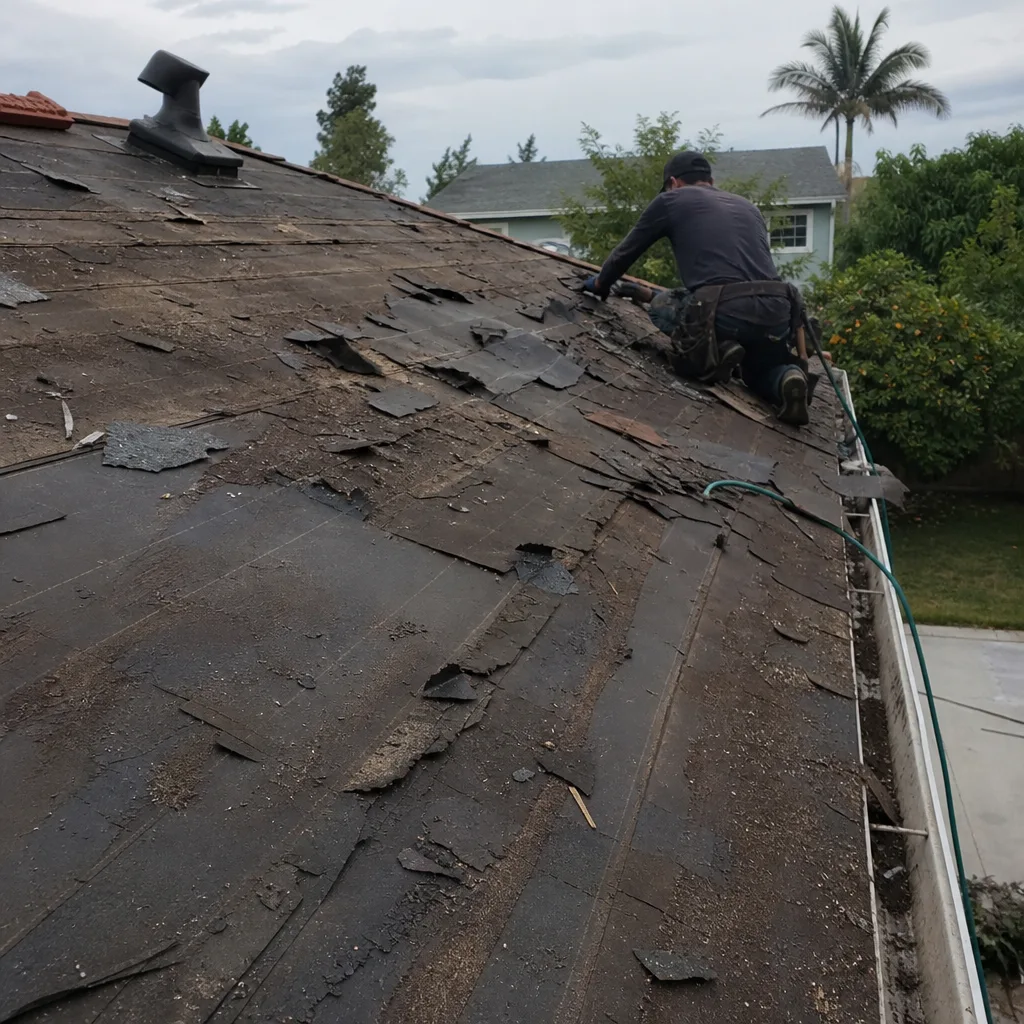 Before
 After
 Before
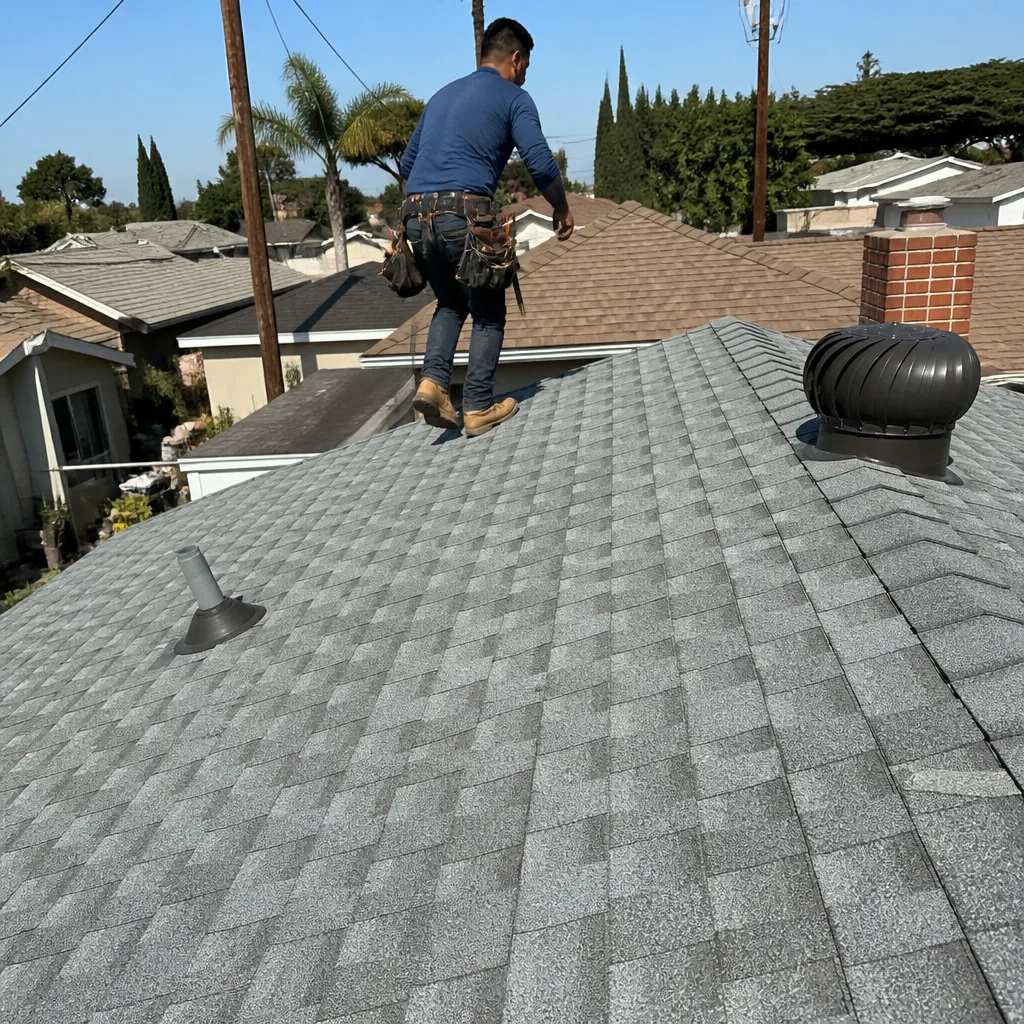 After
 Before
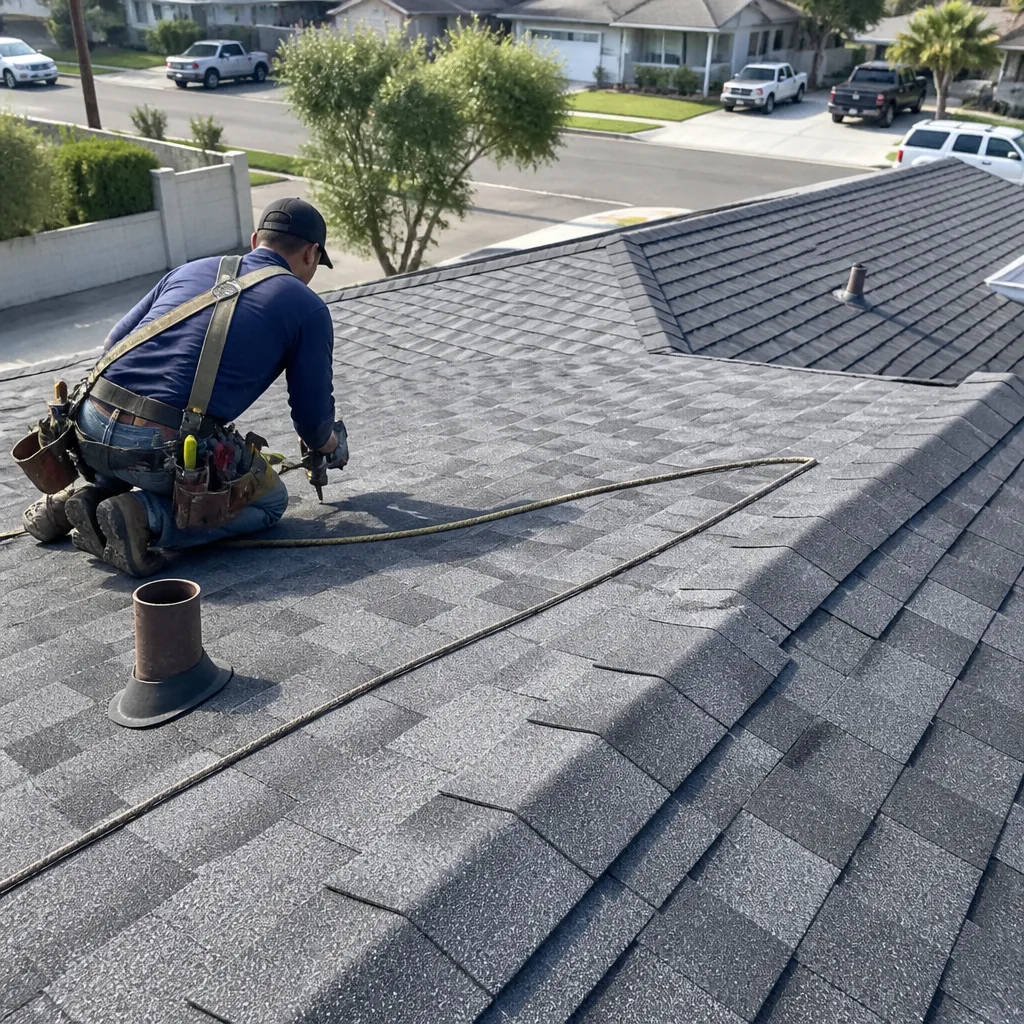 After
Frequently Asked Questions
A full tear-off roof replacement on a typical Downey ranch home costs between $9,500 and $16,500 depending on the shingle tier, the deck condition, and the underlayment grade. Budget architectural shingles start at the low end, while premium and designer lines from Boral or CertainTeed run to the high end. Deck replacement on aging T&G boards adds $1,200 to $3,000 to many projects. Call (855) 597-2817 for an exact quote on your specific roof – estimates are free.
Yes, but only if your roof has one existing shingle layer and the deck condition underneath is sound. Downey enforces a two-layer maximum under the California Building Code. Many postwar T&G decks make an overlay a bad idea even when it’s legal, because the decking needs replacement or repair that can only be reached with a full tear-off. Have the deck inspected before deciding.
The best material for a low-slope roof is not a single product, but a system: shingles specifically rated for low-slope application (down to 2:12) installed over a manufacturer-approved low-slope underlayment. Certain GAF, CertainTeed, and others offer product lines rated for low-slope use. The underlayment matters as much as the shingle. An inspection that measures your actual slope is the first step.
Yes. The City of Downey requires a building permit for residential roof replacement, with fees typically ranging from $180 to $350. The permit process includes two inspections: one after underlayment installation and one after completion. Skipping the permit creates problems when you sell the home and can trigger code enforcement.
A standard tear-off and replacement on a Downey ranch home takes two to four working days for the roofing work itself, plus time for permit processing and city inspections. Spring and early summer are the city’s busiest months for the permit office, so starting the paperwork early smooths the schedule. The actual roofing work on most postwar ranch roofs moves quickly once the permit is in hand.
Roof repair addresses a specific, localized problem, such as damaged flashing, missing shingles, or a leak around a penetration; replacement addresses systemic issues across the entire roof surface, such as widespread shingle failure, deck degradation, or age beyond the roof’s remaining service life. On Downey’s older housing stock, we often see roofs where a targeted Roof Repair in Los Alamitos approach handles the immediate issue, but the age of the roofing system overall points toward Roof Replacement in Los Alamitos within a few years. Repair when repair is right. Replace when it’s not.
The Bottom Line
Downey’s roofing challenges are specific because the city’s housing stock is specific. Low-slope ranch roofs from the postwar era demand product choices that generic contractors often ignore. The slope limits shingle eligibility. The T&G decking underneath determines whether an overlay is even worth considering. The inland heat profile changes which materials perform and which ones degrade early. And the city’s permit process, while straightforward, has enforcement details that matter for your timeline and your budget. The right contractor for a Downey roof is one who understands all of this and gives you the full material picture, not just the one brand they happen to sell. Browse our more guides & resources for additional Downey-specific roofing advice.
Contact Seacrest Roofing
Seacrest Roofing serves Downey and the surrounding area with three services under one roof: inspection, repair, and replacement. We install across seven shingle brands so you get the right material for your specific roof, not a single-line pitch. If you’re ready to know exactly what your roof needs, call us at (855) 597-2817 to schedule a free estimate. An inspection that diagnoses first, sells second – that’s how we work. If you’d like to learn more about our approach or see how we handle Seacrest Roofing home services across the region, start with a conversation about your roof.
Written by the team at Seacrest Roofing, serving Downey since 2018.