

Last updated October 31, 2026
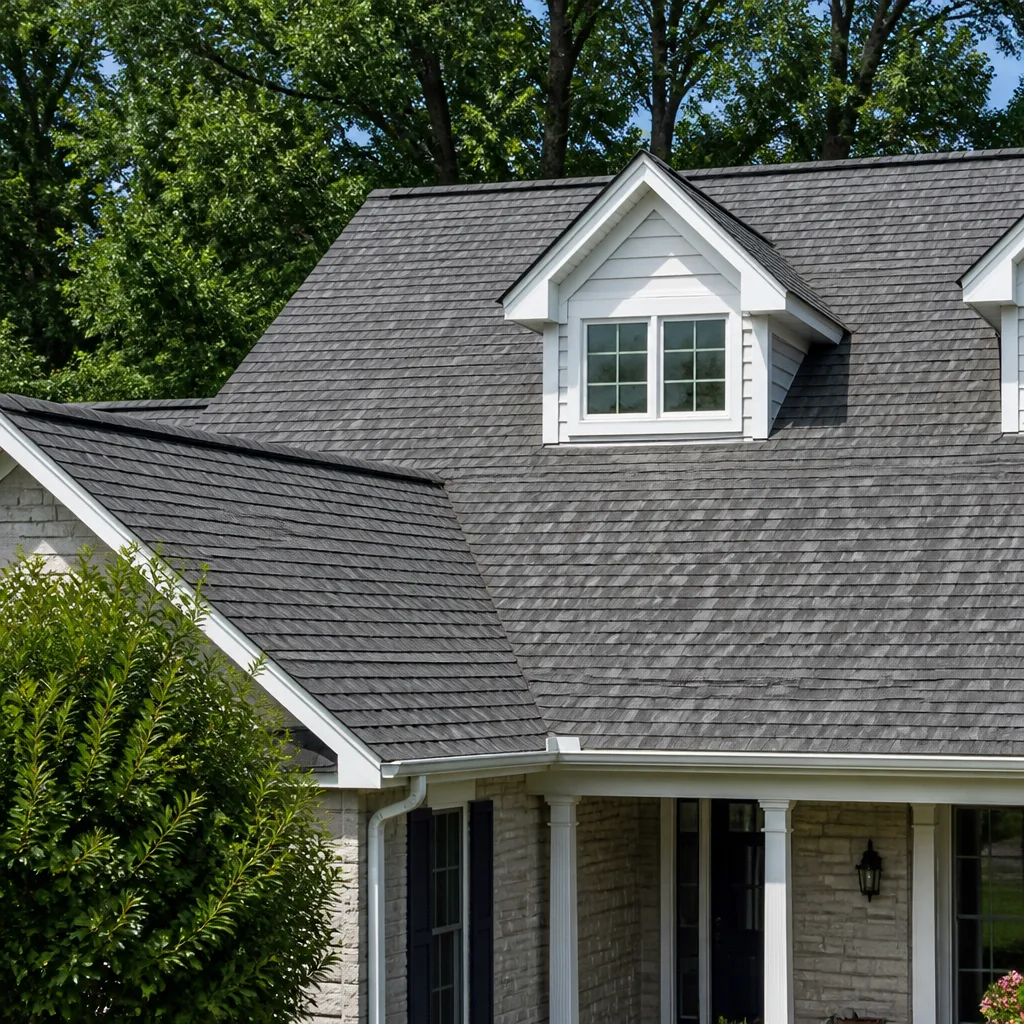 Architectural shingles
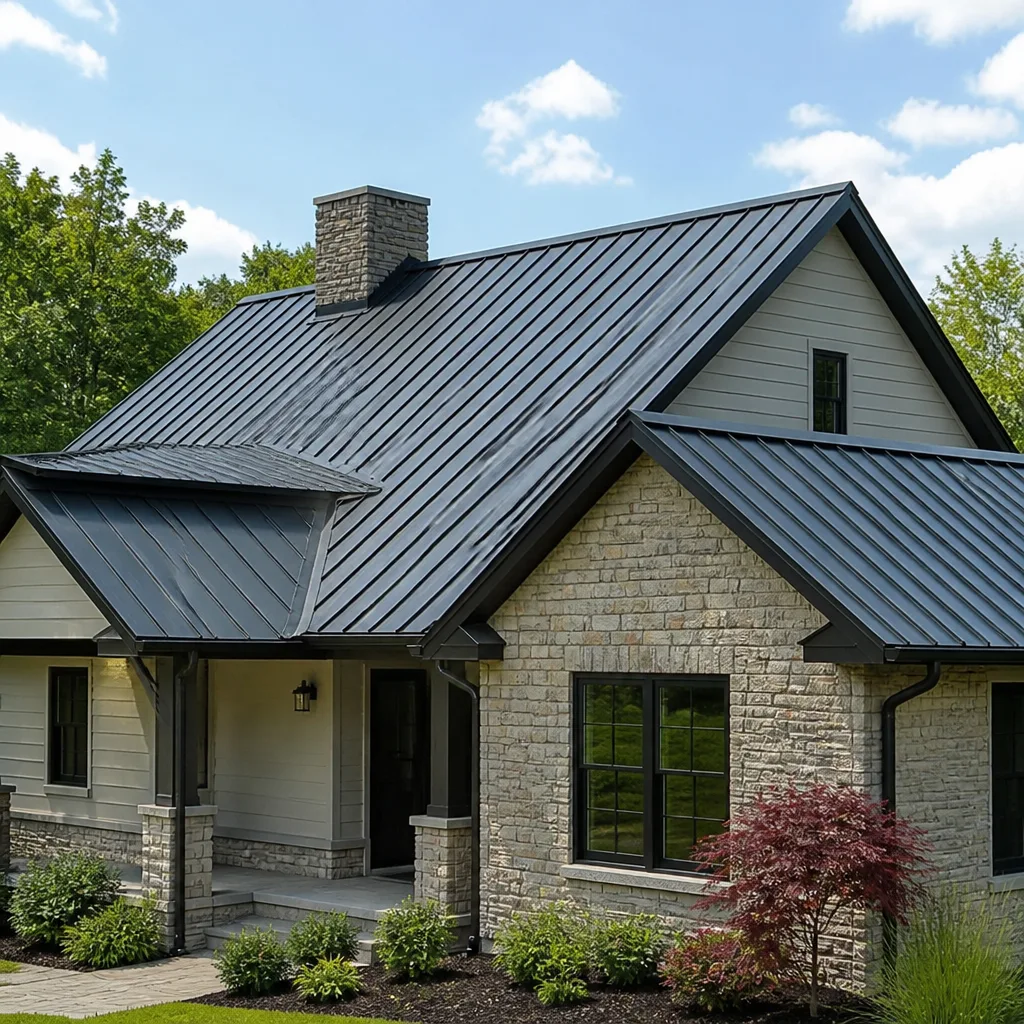 Metal roofing
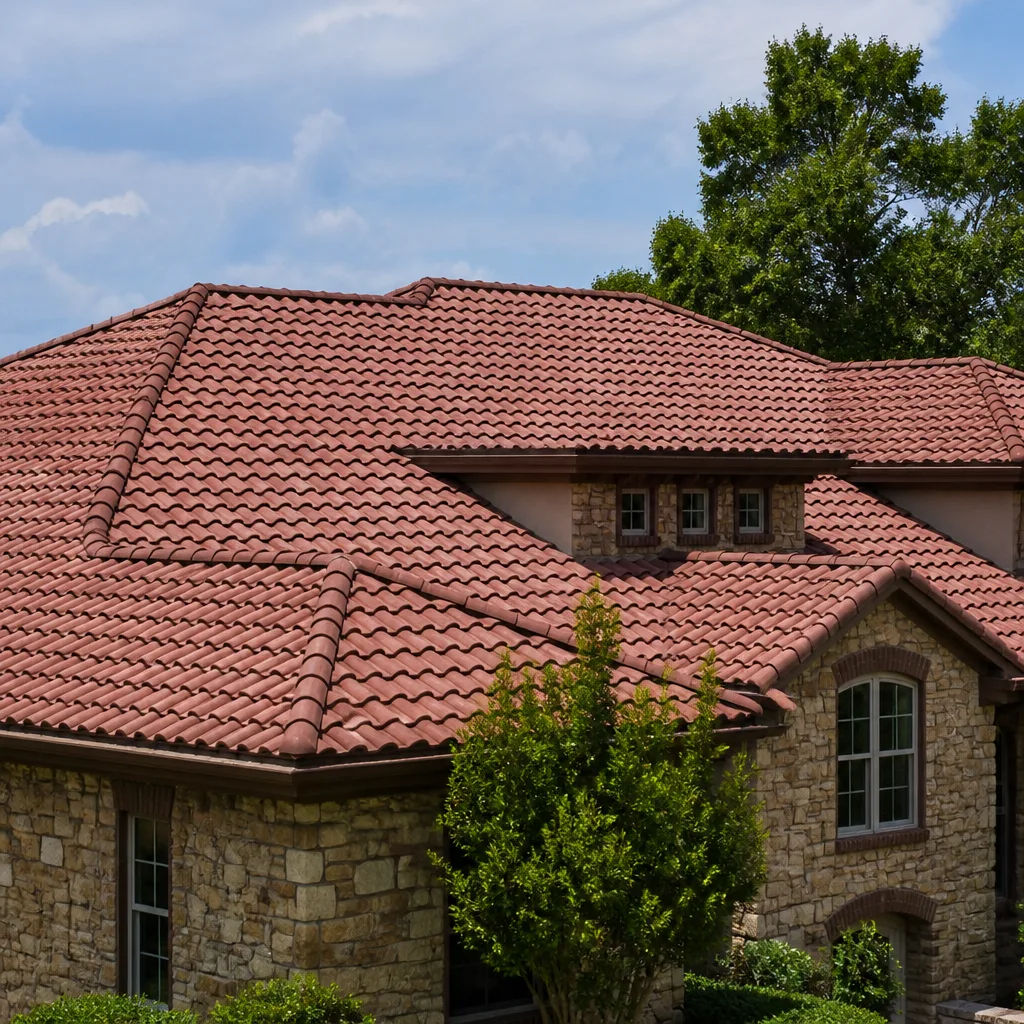 Tile roofing
 GAF
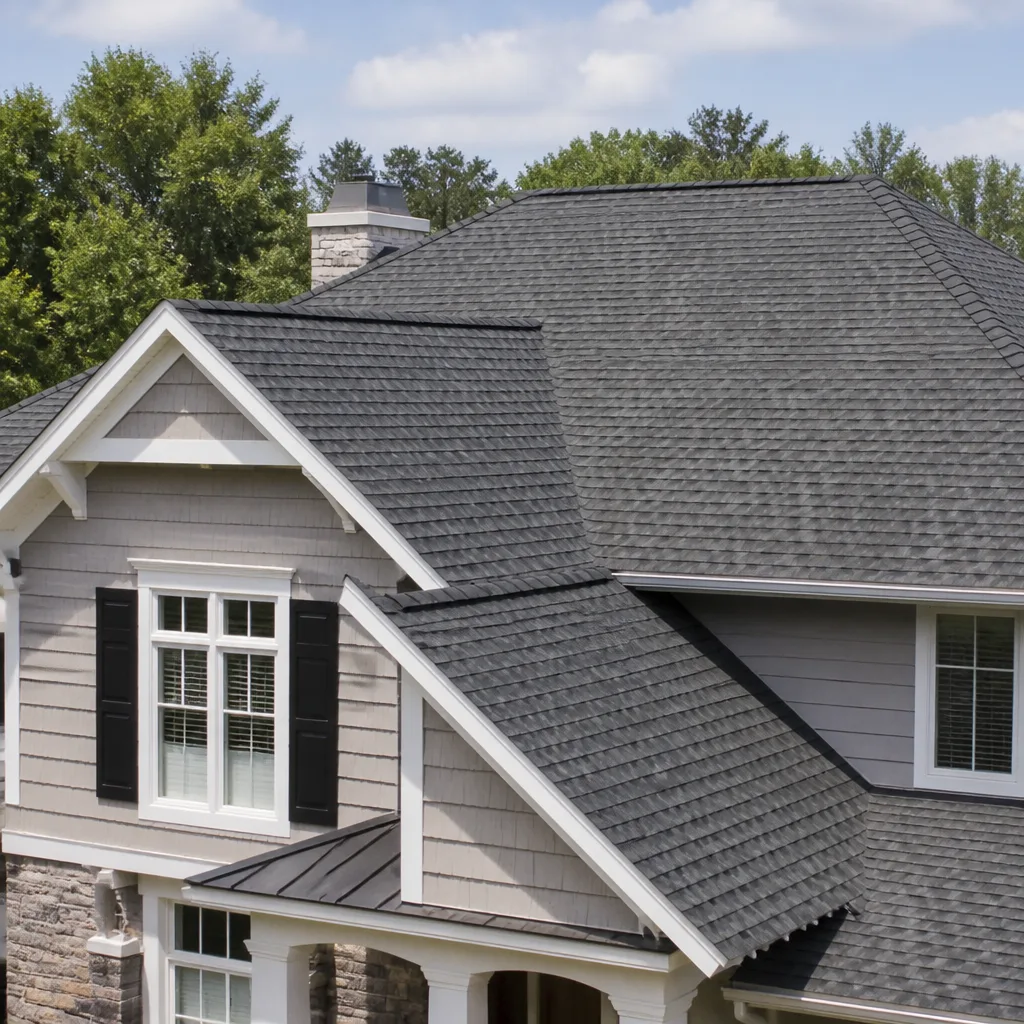 Owens Corning
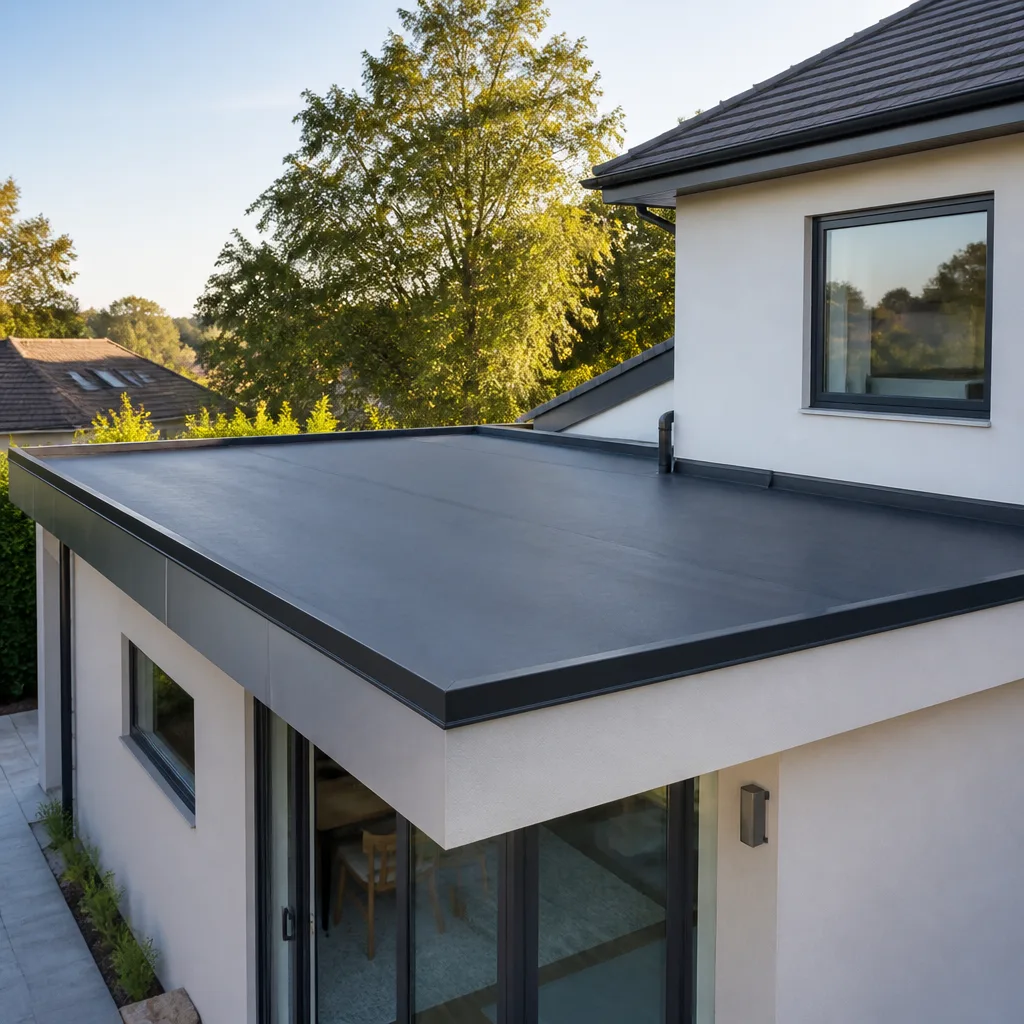 Flat & low-slope
Free roof inspection with deck photos before we talk money - GAF and Owens Corning certified installation
Roof Repair Troubleshooting: Common Problems and How to Fix Them
Roughly 90% of roof leaks in Downey homes trace back to the same handful of failure points: flashing, penetrations, or material that outlived its useful service window. The problem with most roofing advice online is that it treats a roof as one thing. It isn’t. A tile roof in a Downey neighborhood built in the 1950s fails differently than a shingle roof in a 1990s tract home, and the fix that saves one can be money wasted on the other. This guide works backward from the material that’s actually on your roof because that’s the only honest way to diagnose what you’re seeing from the ground.
Styles & brands we work with
Quick Answer
Roof Repair services start with identifying what material your roof uses, then matching the symptom you see – staining, granule loss, lifting, or leaks – to the specific failure mode of that material. For most Downey homeowners, the first safe step is a ground-level inspection: look for uneven shingle edges, visible flashing gaps, and granule concentrations in gutters. If you see interior ceiling stains, trace them upward to the nearest roof penetration or valley, not straight up from the stain itself. When repair is done right on the right material, a localized fix can buy 5 to 10 more years. When it’s done on a failing deck or the wrong product, it’s a temporary patch that will cost more later.
Table of Contents
- Why the Material Always Tells the Story First
- Asphalt Shingle Failures: What Actually Goes Wrong
- Tile Roof Problems: The Underlayment Is Almost Always the Culprit
- Flat and Modified Bitumen Roofs: The Trapped Moisture Problem
- Flashing Failure vs. Shingle Failure: Same Leak, Different Fix
- Granule Loss in Gutters: When to Worry, When to Wait
- Will the Repair Hold? How to Spot a 5-Year Fix vs. a Temporary Patch
- Three Ground-Level Diagnostics You Can Do Before Calling a Contractor
- Common Mistakes to Avoid
- When to Call a Professional
- Frequently Asked Questions
- The Bottom Line
Why the Material Always Tells the Story First
A homeowner searches “roof bubbling” and gets one answer. But bubbling on a 3-tab asphalt shingle is trapped manufacturing moisture. Bubbling on a torch-down flat roof is usually trapped installation moisture or substrate failure. Same word, opposite repairs. If you start with the symptom instead of the material, you’ll misdiagnose the problem before a ladder ever goes against the wall.
We work across seven major shingle brands – GAF, CertainTeed, Owens Corning, IKO, Atlas, Tamko, and Boral – which means we see the full range of how different products fail in Downey’s specific climate. Hot, dry summers. Cool, damp winters. Morning marine layer burning off by midday. That temperature swing matters because roofing materials expand and contract, and the rate of that movement changes by product. A concrete tile expands differently than a fiberglass-based shingle from CertainTeed, and both expand differently than a modified bitumen membrane.
This is also why manufacturer-agnostic diagnosis matters. A contractor who only installs one brand will naturally diagnose problems through that brand’s lens. When you stock seven product lines, the question flips: what’s actually on the roof now, what failed, and what’s the right replacement for the way this particular roof behaves under Downey’s sun and rain.
Here’s the diagnostic order that prevents most misdiagnoses:
- Confirm the roof material type. Shingle, tile, metal, wood shake, or flat/modified bitumen.
- Identify the symptom. Leak, visual deformation, granule loss, or visible flashing separation.
- Locate the nearest roof penetration to any interior stain. Pipes, vents, chimneys, skylights, or valleys.
- Match symptom to material-specific failure mode using the sections below.
- Assess the deck condition before agreeing to any localized repair. A structurally compromised deck means a patch won’t hold.
In Downey, we see a lot of homes where the roof was replaced in phases over decades, so one house might have three different materials on three different sections. That makes this material-first approach even more important. A “roof leak” on the back addition might be a completely different repair than the “same” leak over the garage.
Asphalt Shingle Failures: What Actually Goes Wrong
Asphalt shingles remain the most common residential roofing material in Downey, and they fail in predictable, specific ways. Understanding those failure modes tells you whether you’re looking at a $400 repair or a full roof replacement in the next 18 months.
Common asphalt shingle failure patterns and what they mean:
- Curling at edges or corners: This is a moisture imbalance problem. Shingles absorb moisture on the bottom edge and dry unevenly, which causes the corners to lift. On a 10-year-old roof, localized curling means poor attic ventilation. If you see it across the entire roof, the shingles were either low-quality or installed wrong. Curled shingles catch wind and will eventually tear.
- Cracking: Age and heat. Downey gets enough direct sun that shingles dry out and become brittle by year 15 on standard budget-tier products. Premium lines like some of CertainTeed’s higher-grade asphalt or Boral’s stone-coated products resist cracking longer because the asphalt compound is formulated differently. Cracks let water through to the felt underneath.
- Blistering: Small circular bumps, often in clusters. Usually trapped moisture or air in the asphalt during manufacturing. Most blistering is cosmetic and won’t leak unless the blister pops, exposing the fiberglass mat. If you see widespread blistering on a roof under 5 years old, it’s a manufacturing defect. On a 20-year-old roof, it’s just age.
- Missing granules but shingle structurally intact: Normal aging. Granules protect the asphalt from UV. When they wear off, the asphalt cooks and the shingle fails. See the granule loss section below for the specific pattern that signals an emergency.
- Lifting or flapping: A shingle edge that’s raised more than an inch and doesn’t lie flat means the sealant strip has failed. In Downey’s occasional Santa Ana winds, a lifted shingle becomes a broken shingle within one wind event. This is a cheap fix if caught before the shingle tears.
Repair approach for asphalt shingles: Individual shingles can be replaced for $25 to $75 per shingle in materials plus labor, assuming the surrounding shingles and the deck underneath are intact. If you’re replacing more than 2% of shingles across scattered locations, you should be asking whether the roof has hit its functional end. Patching a dying roof six times is more expensive than replacing it once. We’ll tell you that directly because our repair business is real – it’s not a gateway pitch to replacement. Roof repair in Los Alamitos shares the same honest line: repair when repair is right, replace when it’s not.
Tile Roof Problems: The Underlayment Is Almost Always the Culprit
Most homeowners assume a tile roof is indestructible. The tile itself mostly is. The underlayment underneath it is not. Tile roofs in Downey – common on Spanish and Mediterranean style homes throughout the area – fail from the bottom up, and the tile often looks perfect while the felt or synthetic underlayment underneath has turned to dust.
How tile roof failure actually happens:
- Tile cracks or slips, exposing the underlayment to direct sun and rain.
- Underlayment degrades – felt dries out and rips, or old synthetic stretches.
- Water moves under the tile, running down the roof deck and finding the first opening into the home, which may be nowhere near the cracked tile you saw from the ground.
- Deck boards rot, tile battens weaken, more tile slips – a slow cascade.
This is why the standard “replace the broken tile” advice is often incomplete. Yes, replace the broken tile. But if the leak started months earlier and the underlayment is compromised, a new tile on top changes nothing. The water still runs underneath it.
Signs that your tile roof needs more than a tile swap:
- Interior stains in rooms that sit under areas of the roof with visible missing tile
- Granular black or gray material from underlayment in your gutters (this is not shingle granule – it’s underlayment particles)
- Sagging between rafters, visible from inside the attic
- Multiple cracked tiles arranged in a line, which often means a roof traffic injury from a previous service visit
Tile repair done correctly requires pulling tile in the affected area, inspecting and often replacing the underlayment beneath, reinstalling the tile, and sealing the new tile to match. It’s more involved than a shingle swap, and a contractor who quotes you a $150 tile replacement without asking about the underlayment is guessing. We stock tile profiles that match common Downey homes and will tell you if the repair needs to go deeper than the surface.
Boral makes tile products that hold up extremely well in Southern California’s heat, but even the best tile means little if the underlayment underneath was installed 30 years ago. The tile rarely asks to be replaced. The underlayment almost always does first.
Flat and Modified Bitumen Roofs: The Trapped Moisture Problem
Flat roofs on Downey homes – with or without parapet walls – fail in a very specific way: moisture gets trapped between the membrane and the deck or insulation, tries to escape through the surface, and forms blisters. The bubble itself is not the leak. The bubble is the evidence that water is already where it shouldn’t be.
Modified bitumen and torch-down roofing failure modes:
- Blistering: Trapped moisture from installation, or moisture entering through a small puncture and vaporizing under heat. Small blisters (under 3 inches in diameter) on a roof that’s otherwise dry can sometimes be left alone and monitored. Larger blisters or clustered blisters mean the membrane has lost adhesion to the substrate and will eventually rupture – usually at the worst possible moment, during a rain event.
- Seam separation: Modified bitumen roofs are installed in rolls that overlap and torch or cold-adhere together. Those seams can pull apart as the membrane expands and contracts in Downey’s temperature swings. A seam that’s lifted even an eighth of an inch is an open invitation for water to run sideways into the overlap.
- Ponding water: Flat roofs should drain. If water stands for more than 48 hours after rain, you either have a drainage design problem or a sagging substrate. Ponding accelerates membrane breakdown and shortens the roof’s life dramatically.
- Alligatoring: The surface of older bitumen develops a pattern of fine cracks that looks like alligator skin. This means the oils in the membrane have cooked out of it. Once alligatoring starts, the roof is on borrowed time – recoating might buy 2 to 3 years, but full replacement is the real fix.
Flat roof repair on a modified bitumen system often involves cutting out the damaged section, repairing the substrate if it’s wet, and torching in a new patch that laps the edges by at least 6 inches. Done right on a structurally sound deck, that repair can last 10 to 15 years. Done on a soggy deck, it’ll fail in the first heavy rain. The difference is invisible from the outside, which is why flat roof repair needs an inspection that looks at the deck itself, not just the membrane surface.
Manufacturers like Tamko make excellent modified bitumen products, but even the best membrane can’t overcome a failed deck or poor original installation. The material gets blamed; the deck is often the problem.
Flashing Failure vs. Shingle Failure: Same Leak, Different Fix
This is the single most common misdiagnosis in residential roofing, and it costs homeowners real money. A water stain on the ceiling near a wall, chimney, or roof valley usually gets blamed on shingles. In our experience with Downey homes, it’s flashing more often than not.
What flashing is: Flashing is the metal – usually galvanized steel, aluminum, or copper – that channels water away from roof intersections. Chimneys, skylights, walls that meet the roof, valleys where two roof planes join, and plumbing vents all use flashing. When flashing fails, water enters the home through the gap, not through the shingles themselves.
How to tell the difference:
- Map the leak to the nearest roof feature. If the interior stain sits below a chimney, a skylight, a wall intersection, or a valley, flashing is the prime suspect – not the field shingles around it.
- Look at the flashing from the ground. If you can see gaps between the flashing and the wall or chimney – spaces where caulk has cracked and pulled away – that’s your leak. Shingles may look perfectly okay.
- Check what the previous repair did. If you see old caulk lines around a chimney or vent, someone chased a flashing leak with sealant. Caulk is a temporary bandage on flashing. It shrinks, cracks, and fails within a year or two. Real flashing repair means removing and reinstalling the metal, not smearing sealant over it.
Why this matters for your wallet: A flashing repair might cost $300 to $700 depending on the location and the type of flashing needed. A shingle replacement in the same area might be quoted at $200. If the real problem is flashing and you replace shingles instead, you’ll be back in the same spot within one rain season. And if the contractor replaced shingles and sealed the flashing with caulk, you’ll be back even sooner.
We diagnose the actual problem first. That means investigating the flashing before recommending shingle work, not after. If a roofer’s proposal doesn’t mention flashing at all and your leak is near any roof penetration, ask why.
Granule Loss in Gutters: When to Worry, When to Wait
Every asphalt shingle roof sheds some granules. You’ll find them in gutters after heavy rain. That’s normal and expected, especially on roofs under 5 years old as manufacturing excess granules wash off. The question is the pattern and the volume.
When granule loss is normal:
- Roof is under 5 years old and granules in gutters are sparse and fine
- Granules appear after installation or after a wind event, then taper off
- Roof surface still looks uniformly dark, no bare asphalt patches
- No corresponding leaks or ceiling stains
When granule loss signals a problem:
- Roof is over 15 years old and granules in gutters form a continuous layer
- Shingles show bare or patchy spots where the asphalt base is visible
- Granule loss is concentrated below specific shingles or roof sections
- You see granule “lanes” – consistent lines of bare asphalt running down the roof
The pattern that signals an emergency isn’t the volume in the gutter. It’s the pattern on the shingle. If you look up from the ground and see individual shingles that are more asphalt-grey than granule-covered while neighboring shingles still look dark, those shingles are nearing end of life. When a shingle loses enough granules, the asphalt underneath deteriorates quickly – cracking, shrinking, and eventually leaking. That’s the moment when a localized repair makes sense, before water gets through.
A Roof Inspection in Los Alamitos or Downey that includes a granule assessment will tell you whether what you’re seeing is normal shedding or the early warning of a larger problem. It’s a 20-minute assessment that could save you from emergency patching during the next big storm.
Will the Repair Hold? How to Spot a 5-Year Fix vs. a Temporary Patch
Some roof repairs are permanent. Others are patches. The difference is rarely in the materials used – it’s in the condition of the substrate under the repair and the honesty of the person selling it to you.
A repair will hold 5+ years when:
- The deck underneath is dry and structurally sound
- The new material laps over the old by the manufacturer’s specified minimum – usually 4 to 6 inches for membrane repairs, full shingle overlap for shingle swaps
- The surrounding material is still pliable and sealed
- The repair is in a location where water can drain away, not pool against it
- The product used matches the surrounding material in formulation and expansion rate
It’s a temporary patch when:
- The deck underneath is wet, rotted, or punky – the repair will fail from below
- Sealant or caulk is doing the work instead of mechanical seal or overlap
- The surrounding roof is so old or brittle that new material can’t create a lasting bond
- The repair is in a valley where water volume will test every seam during every storm
- Someone tells you a “recoat” or “rejuvenation” will extend the roof another 15 years without structural assessment
In Downey, where roofs face intense UV and occasional Santa Ana wind, a patch on a sound deck is a smart fix. A patch on a rotten deck is a gift to a future leak. Ask your contractor to show you the deck condition before they close anything up. If they won’t show you, that’s information too.
Roof Replacement in Los Alamitos and here in Downey sometimes is the honest answer when the deck is gone. But you should see the evidence. We show the photos. We’ll point to the specific deck boards and explain what we’re seeing.
Three Ground-Level Diagnostics You Can Do Before Calling a Contractor
You don’t need to climb a ladder to gather useful information about your roof’s condition. Below are three safe, ground-level steps that will help you talk intelligently with any contractor and protect yourself from overselling.
Step 1: Walk the perimeter and photograph what you see
Use your phone camera’s zoom to capture anything that looks uneven: lifted shingle edges, visible gaps at flashing points, tile that looks displaced, or spots where the roof plane appears uneven. Don’t just note the problems – photograph them with the date. The photo inventory gives you a baseline to compare against after any contractor tells you what needs fixing. It also gives you something concrete to share with them.
Step 2: Check your gutters – but look at the pattern, not just the debris
As covered in the granule loss section, gutters tell you what’s washing off your roof. But also look for these materials in your gutters and downspouts: underlayment particles (often dark, crumbly), tile chips, nail heads, and shreds of membrane. Each points to a different failure mode. On flat roof sections, look for blistering from the ground using binoculars or a camera zoom – you can spot the raised circles without getting on the roof at all.
Step 3: Trace interior stains upward to the nearest roof feature
Climb into the attic if accessible. Find the area directly above an interior stain, then look up. Note whether the spot aligns with a plumbing pipe, vent, chimney, valley, or skylight. Measure the distance from the roof’s edge or a wall so you can point a contractor to the exact location. This one step saves more trial-and-error than any other diagnostic. A leak that feeds through a framing member can appear feet away from its entry point, so the stain is not the source. The nearest penetration to the stain’s uphill side is your prime suspect.
These three diagnostics take about 30 minutes and don’t endanger anyone. They also make you an informed buyer – and the right contractor will appreciate that. The wrong one will find it inconvenient.
Common Mistakes to Avoid
- Replacing shingles when the flashing is the problem. If your leak is near a penetration, the flashing is the first suspect. Replacing shingles instead of fixing flashing just delays the same leak by a few months and wastes the cost of the shingle work.
- Ignoring granule loss because “that’s normal.” Sparse granules on a young roof are normal. Continuous granule accumulation on a 15+ year old roof in Downey’s sun is a countdown, not a nuisance.
- Treating a “bubbling roof” as one generic problem. As this guide has explained, blistering on shingles and blistering on modified bitumen have different root causes. If your contractor says “bubbling is bubbling,” find another contractor.
- Agreeing to a repair without knowing the deck condition. A patch over a rotten deck is money thrown away. Ask to see the deck. If the contractor won’t show you photos, don’t sign.
- Letting a one-brand contractor limit your options. When a roofer only carries one product line, every diagnosis will lead to that product. The right answer for your roof might be a GAF shingle, a CertainTeed product, or a Boral tile – and you should be able to choose based on your roof, not someone’s inventory restraint.
- Waiting through “one more rainy season.” Many Downey homeowners push repairs because the last rain wasn’t catastrophic. But water intrusion compounds – minor deck rot becomes major, insulation absorbs moisture, and a $500 repair becomes a $15,000 replacement. The cheapest day to fix a roof problem is the day you first see it.
- Believing caulk is a solution. Caulk around flashing, vents, or chimneys is a temporary bandage. It fails. Metal flashing and proper mechanical seals are the fix.
When to Call a Professional
Some roof problems are straightforward enough to monitor. Others need a trained assessment before they become emergencies – our Roofing Emergency Preparedness Guide for Downey Homes explains how to tell the difference. Call a professional when you see interior ceiling stains that persist or grow after rain, when you find granule loss that’s concentrated instead of uniform, when you notice lifted or missing shingles after high winds, when you spot blistering on a flat roof section, or when you’ve never had your roof inspected and it’s over 15 years old. Do not get on the roof yourself – roof falls are the leading cause of home improvement injury, and the view from a ladder tells you nothing about deck condition anyway. Seacrest Roofing offers free estimates in Downey. Call (855) 597-2817 and we’ll tell you exactly what your roof needs – and show you every material option that fits.
Frequently Asked Questions
Most localized roof repairs in Downey run between $300 and $800, depending on the material and location. Flashing repairs typically sit at the lower end, while tile repair involving underlayment work runs higher. Flat roof patches on modified bitumen systems average $400 to $900. The only way to get an exact number is an inspection of the specific repair area. Call (855) 597-2817 for a free estimate – we’ll give you a written line-item price before any work begins.
For localized repairs on accessible sections of the roof, yes – same-day work is often possible once we’ve assessed the problem. But we won’t rush a repair that requires deck inspection or material matching. The goal is a lasting fix, not a fast one. Call (855) 597-2817 and we’ll give you a realistic timeline based on what we find.
The deciding factor is usually deck condition and the extent of material failure, not the age of the roof alone. A 30-year-old roof on a sound deck with localized damage might need only a repair. A 12-year-old roof on a rotten deck might need replacement. We’ll show you the evidence for either recommendation – and we’ll give you the material options across all seven brands we carry so you can choose how to invest, not just whether to invest.
Not with our written estimates. We price from the inspection findings, and if we open up the repair area and find additional compromised decking, we stop and show you before adding any cost. You approve the change or you don’t. No surprise line items.
Yes, when permits are required by city or county code. Some localized repairs don’t require permits, but any roof replacement or structural repair in Downey does. We handle the permitting process and schedule inspections as part of the job. If a contractor tells you a permit isn’t needed for a full replacement, call the city yourself.
There’s no single “best” brand – only the right product for your roof’s exposure, your aesthetic, and your budget. We carry seven major manufacturers, including GAF, CertainTeed, Tamko, and Boral, because homeowners should be able to choose the material that fits their roof, not the one brand a contractor happens to sell. In a consultation, we’ll show you samples and explain the warranty differences so you can make the call with full information.
The Bottom Line
Roof troubleshooting that starts with the material your roof is made of will save you time, money, and false starts. Asphalt shingles fail by curling, cracking, blistering, and granule loss. Tile roofs fail from underlayment decay even when the tile looks fine. Flat roofs fail from trapped moisture and seam separation. Flashing fails more often than the field materials around it. And a repair will only hold if the deck underneath is sound. If you’re in Downey and need a roof assessment, our roofing team will diagnose the actual problem first, then show you every material option that fits. Seven shingle brands, one honest recommendation.
Written by the team at Seacrest Roofing, serving Downey since 2018. Explore more guides & resources from our team.
See the difference
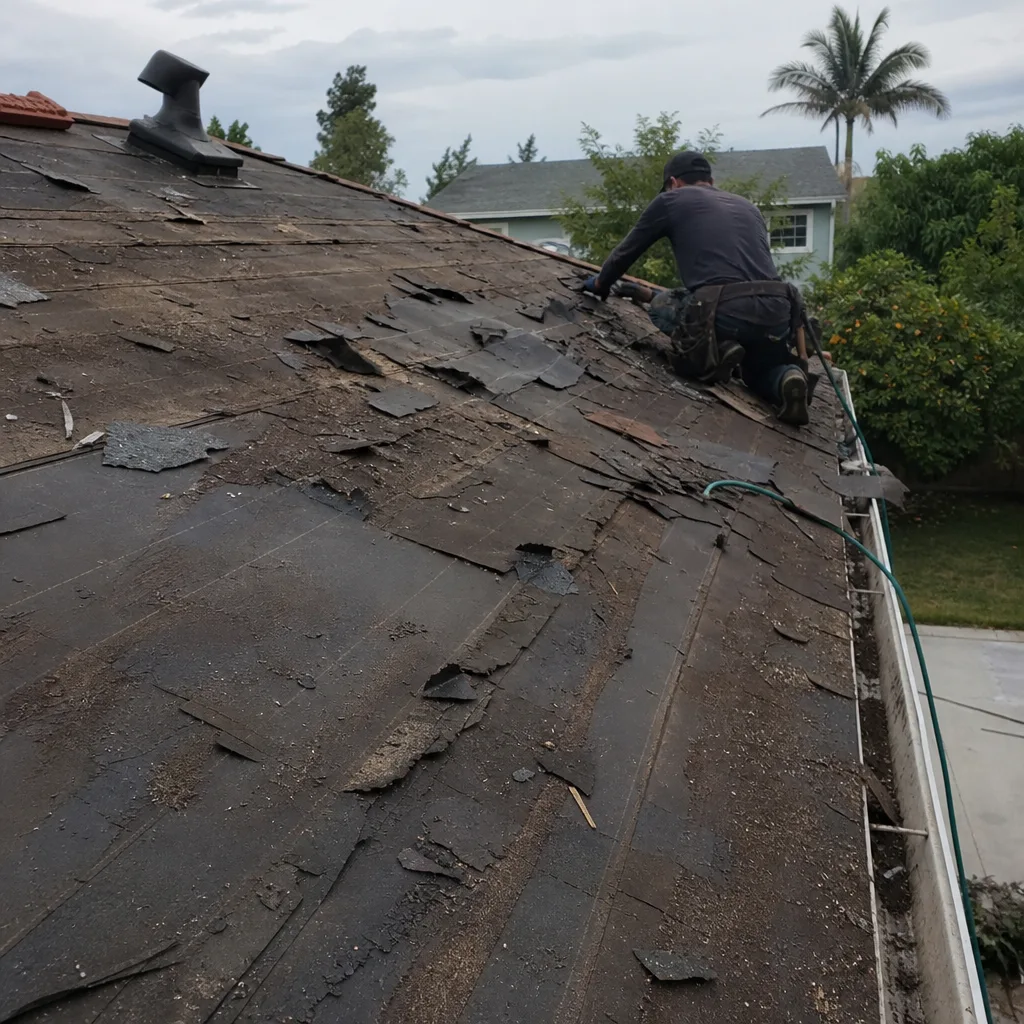 Before
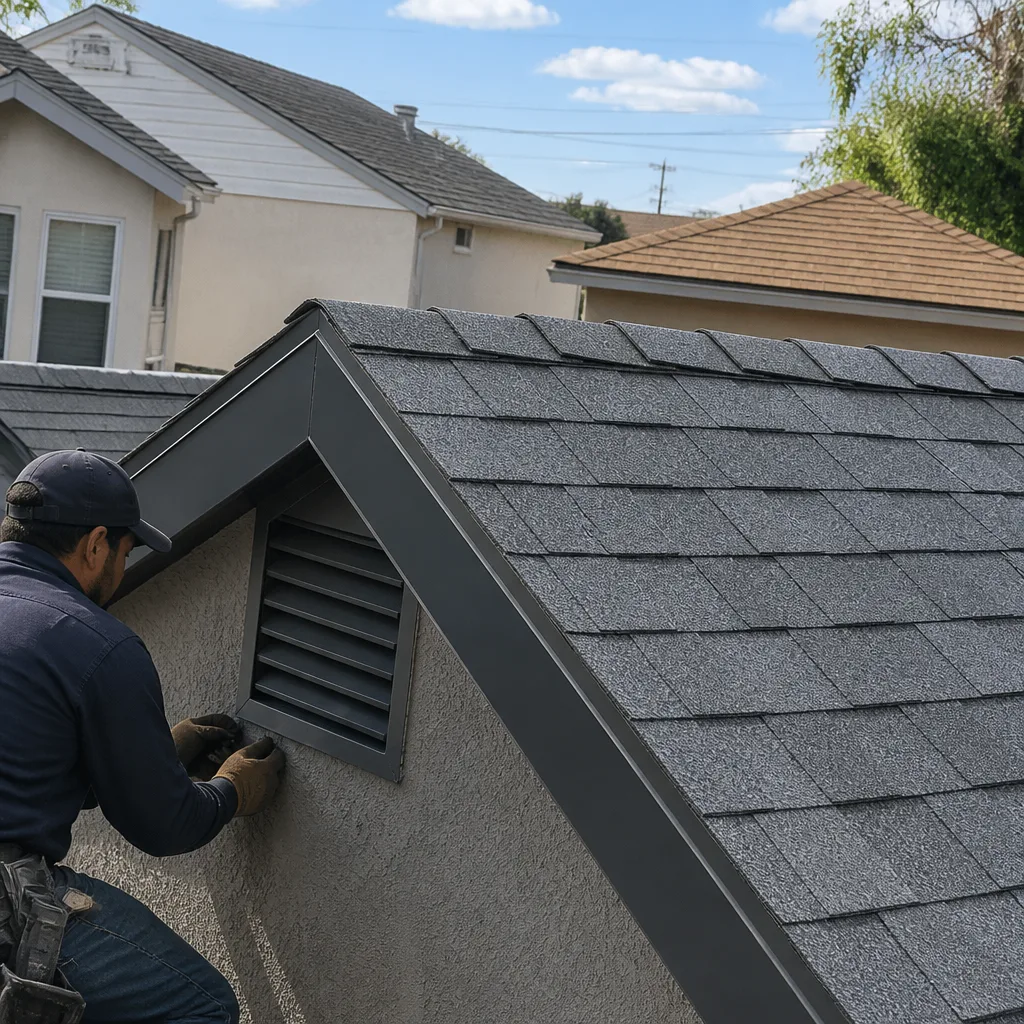 After
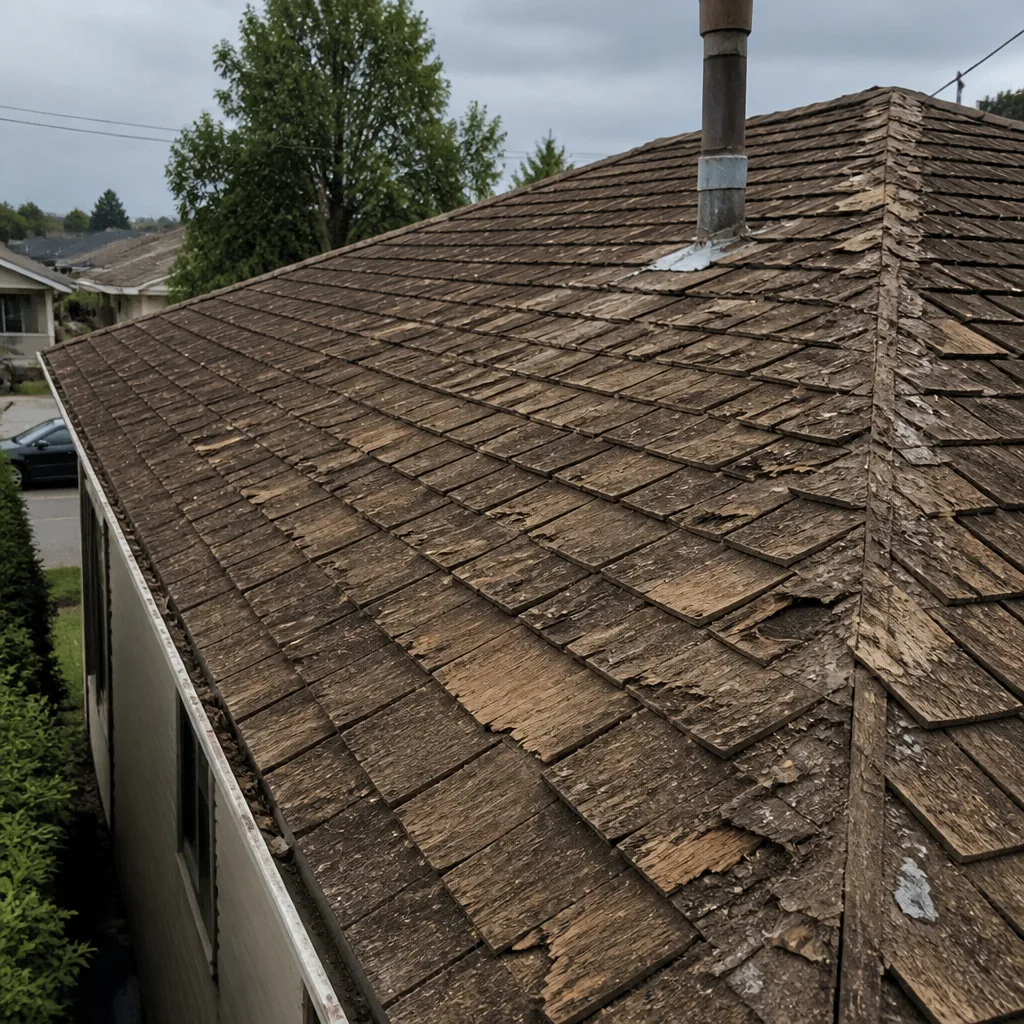 Before
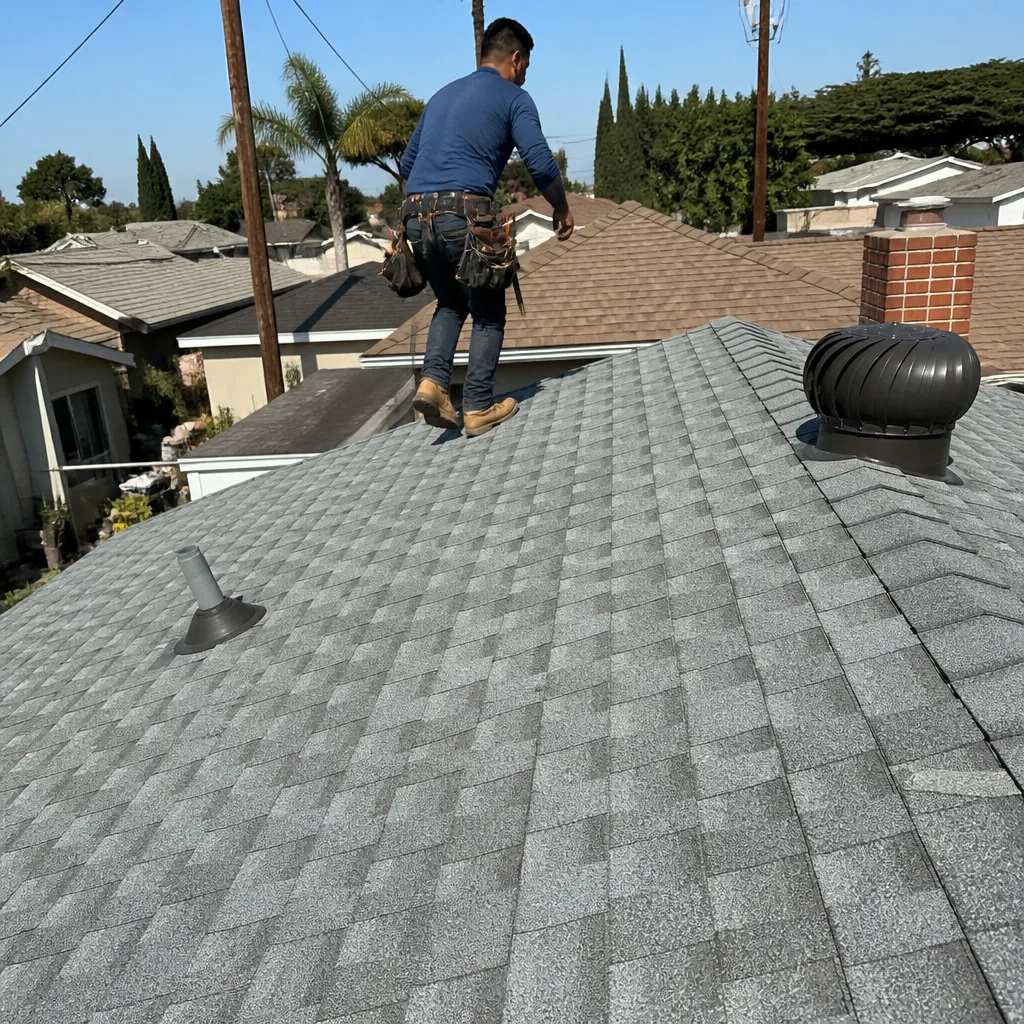 After
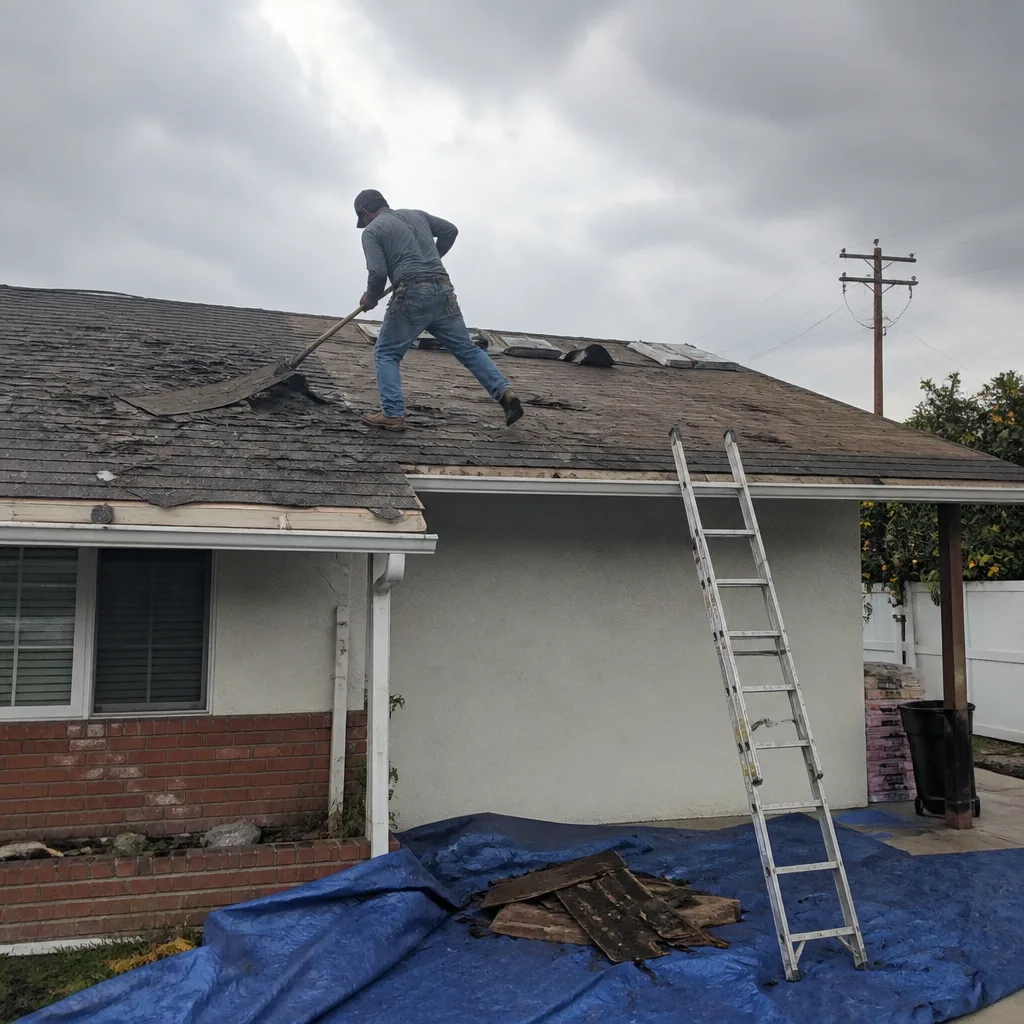 Before
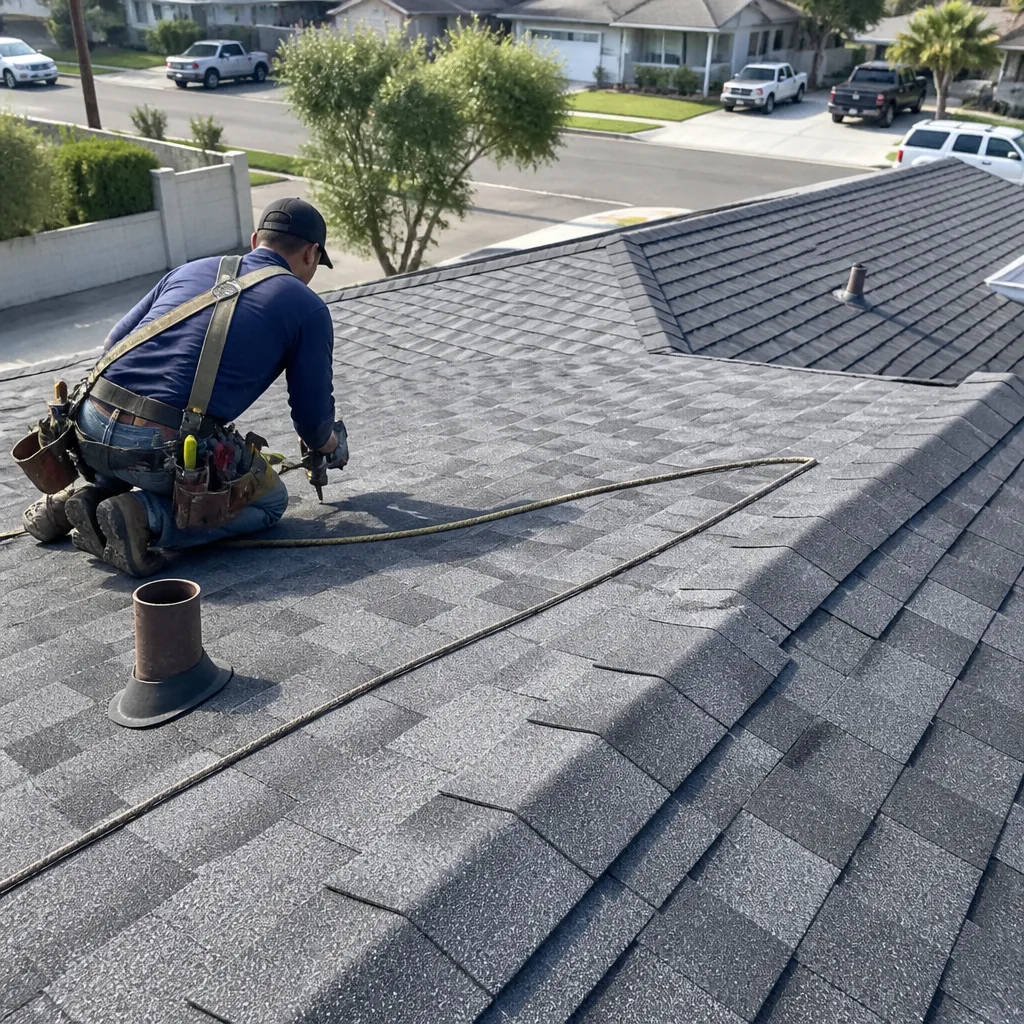 After