

Last updated October 31, 2026
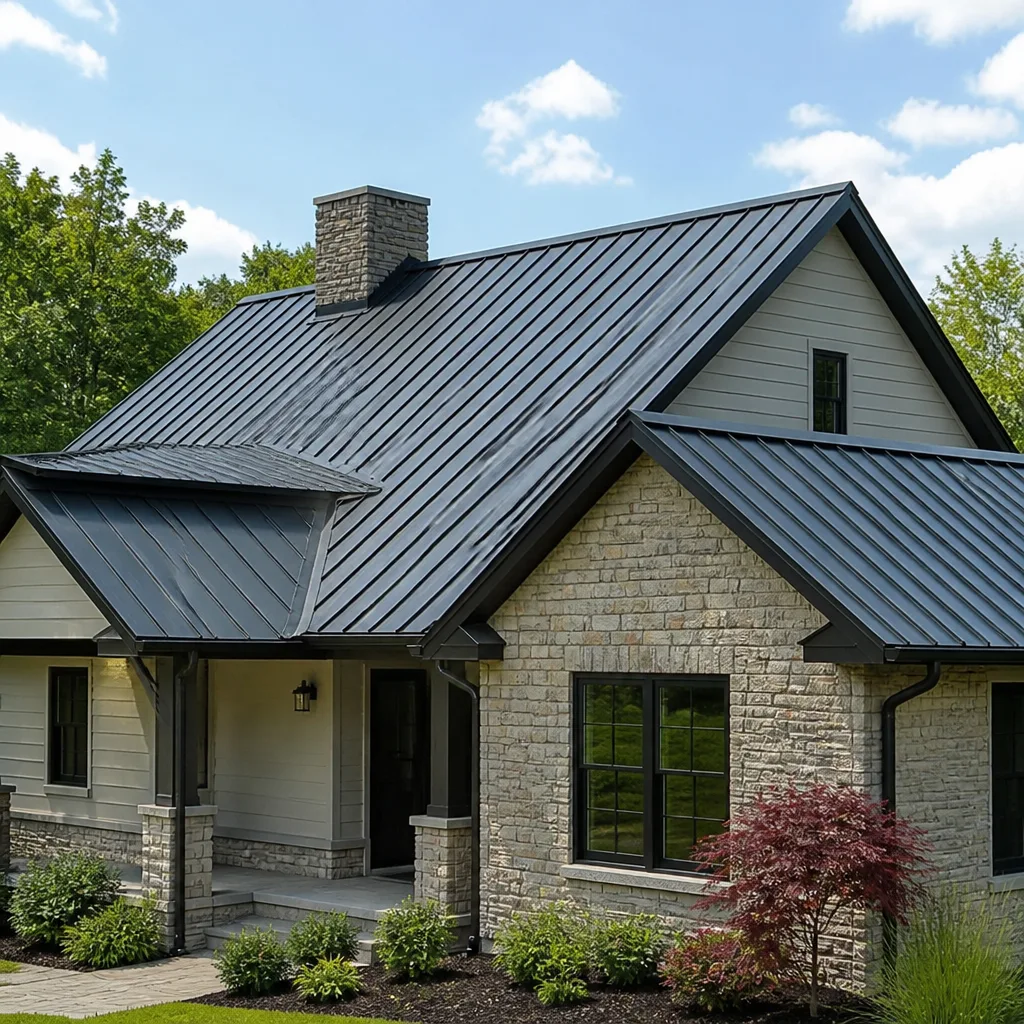 Metal roofing
 Architectural shingles
 Tile roofing
 GAF
 Owens Corning
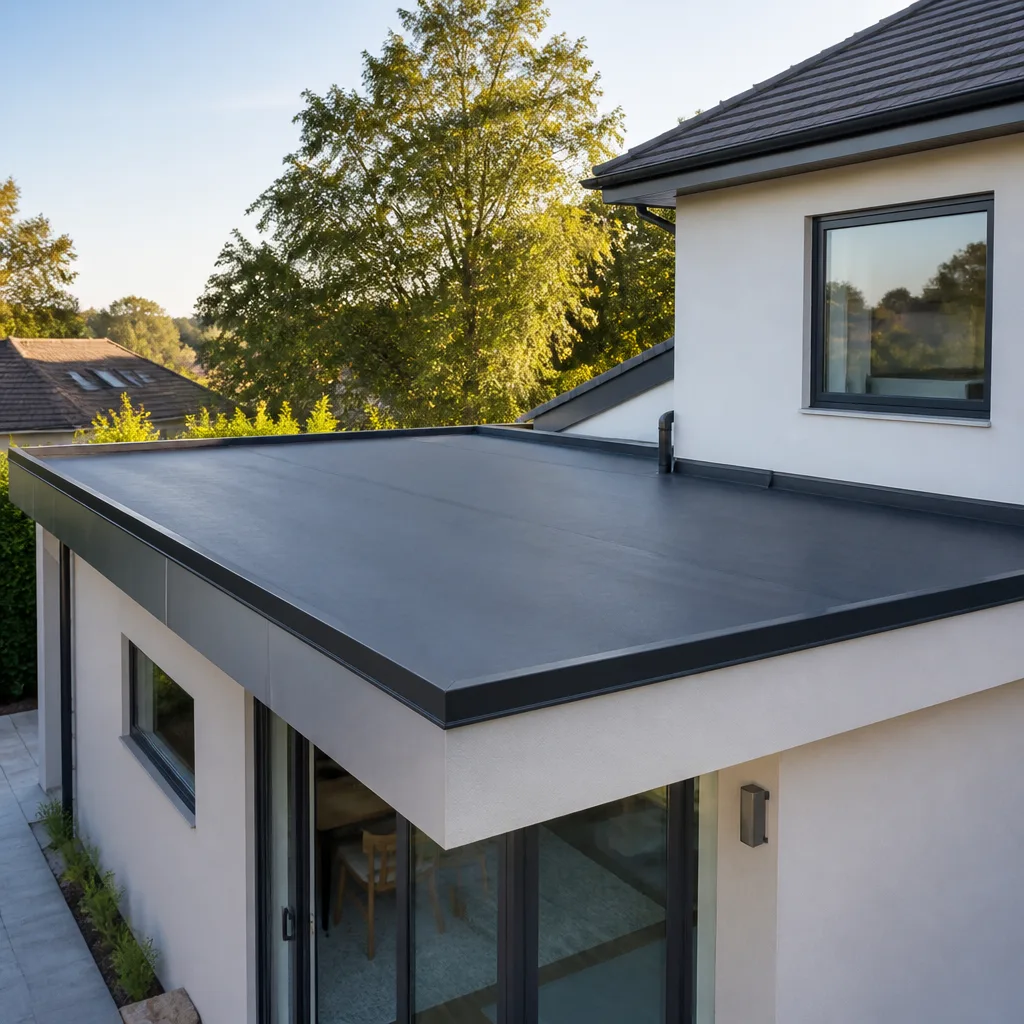 Flat & low-slope
Free roof inspection with deck photos before we talk money - GAF and Owens Corning certified installation
Roofing Warning Signs: A Downey Homeowner’s Reference Guide
Granules in the gutter are the warning sign Downey homeowners notice most, and they’re usually the least urgent. A shingle shedding granules is like a tire losing tread slowly: worth watching, rarely an emergency. The signs that predict imminent interior water damage are almost all invisible from the ground. They live in attic spaces, behind flashing, and under ridge caps. This guide—along with our complete guide to roofing in Downey—assigns a triage level to every common roofing warning sign so you know whether to call a roofer this week, schedule an inspection within thirty days, or simply note the issue and move on with your life.
Quick Answer
Roofing warning signs fall into three urgency tiers in Downey. Water actively entering your home or visible daylight through the roof deck is an emergency: call a roofer immediately. Curling shingles, cracked pipe boots, and failing flashing should be scheduled within about thirty days, before the next heavy rain. Granules in gutters, minor moss, and general aging are monitor-annually signs that require a professional inspection to determine real remaining lifespan. The critical skill is knowing which tier you’re looking at.
Styles & brands we work with
Table of Contents
- The Three-Tier Urgency Framework
- Granules in the Gutter: What They Actually Mean
- Interior Ceiling Stains: Reading the Stain, Not the Ceiling
- Normal Shingle Aging vs. Accelerated Degradation
- Flashing Warning Signs: Step, Counter, and Pipe Boots
- Signs a Previous Repair Was Done Wrong
- Downey-Specific Factors: What Our Climate Does to Roofs
- Common Mistakes to Avoid
- When to Call a Professional
- Frequently Asked Questions
The Three-Tier Urgency Framework
Most roofing “warning signs” lists fail Downey homeowners because they treat every symptom like it carries equal weight. A missing shingle after a wind storm is not the same as a water stain spreading across a bedroom ceiling. One needs attention this week. The other can usually wait for the next scheduled inspection. Here is the framework we use when a Downey homeowner calls us uncertain about what they’re seeing.
Tier 1: Emergency (Act Immediately)
These are the signs that water is entering your home right now or will within the next rainfall. In Downey, our rain comes concentrated in a few months, which means a small breach can sit dormant through summer and then flood an attic in a single January storm.
- Active water dripping from a ceiling, light fixture, or wall during or after rain
- Visible daylight through the roof deck when you’re in the attic
- A sagging roofline or visible dip in the roof plane, which often signals structural sheathing failure
- Displaced or missing shingles exposing the underlayment over a living space, especially in Santa Ana wind season
- A fallen tree branch or other impact that pierced or crushed a section of roofing
If you see any of these, call a roofing professional immediately. These are not conditions to monitor.
Tier 2: Schedule Within 30 Days
These signs indicate that a component is failing but hasn’t yet caused interior water damage. Left unaddressed, they’ll migrate to Tier 1, often during the first heavy rain of winter when every Downey roofer is booked out—one reason we recommend seasonal roofing care for Downey homeowners.
- Curling or cupping shingle edges that expose the sealant strip beneath
- Cracked or blistered shingles, which lose their waterproofing integrity before they fall off
- Rusted or detached flashing around chimneys, vents, and skylights
- Failed pipe boots that have cracked, split, or lifted away from the vent pipe
- Moss or algae growth thick enough to hold moisture against the shingle surface
- Losing the sealant bond between shingles, visible as lifted tabs when wind blows
These conditions should be evaluated by a professional inspection within the month. Early intervention typically means repair. Delaying six months often means replacement.
Tier 3: Monitor Annually
These are normal aging signs that don’t require immediate action but deserve a professional eye at your annual inspection to track their progression.
- Granule accumulation in gutters without accompanying shingle deterioration
- Fading or slight color change across the roof surface
- Minor, isolated moss in shaded sections that hasn’t spread
- A few lifted shingle tabs that still reseal when the sun heats them
- Nail pops or minor surface rust on isolated fasteners
The trap here is complacency. Monitor-annually means actually inspecting annually. A Downey roof can move from Tier 3 to Tier 2 in a single season, which is why we recommend a professional Roof Inspection in Los Alamitos at least once every two years.
Granules in the Gutter: What They Actually Mean
Every homeowner who has cleaned a gutter on a Downey home with an asphalt shingle roof has seen granules. Some are normal. The question is how many, and what the shingles themselves look like above that gutter. The distinction matters because granule loss alone is almost never a reason to replace a roof.
Normal Granule Shedding
Asphalt shingles are manufactured with a layer of ceramic granules pressed into the asphalt coating. These granules block UV radiation, which is the primary destroyer of asphalt. During installation and the first few months of service, a shingle roof will shed a significant amount of granules. This is called “break-in” loss, and it’s expected. You’ll see it in Downey especially on new roofs where the granules that weren’t fully adhered during manufacturing finally release.
After break-in, a healthy shingle roof loses granules at a slow, steady rate over its life. By year 15 or 20 of a 25-year shingle, granular loss accelerates naturally as the asphalt begins to cure out and grow brittle.
Accelerated Granule Loss
If you scrape a foot of granules out of a downspout every season and the roof is only eight years old, something is accelerating the wear. Common causes in Downey include:
- Hail events that bruise the shingle mat and dislodge granules in concentrated spots
- Foot traffic from HVAC servicing, solar installation, or satellite work that crushes granules into the asphalt
- Defective shingle batches where granule adhesion failed at the factory
- Extended heat exposure on south-facing planes in Downey, where afternoon sun cooks asphalt faster than on shaded north slopes
When Granule Loss Is Not the Problem
Here’s the counterintuitive part we explain to homeowners in Downey all the time: a shingle can lose a significant amount of granules and still shed water for years. Granules protect against UV degradation, but the waterproofing is done by the asphalt and fiberglass mat, not the granules. A bare, black shingle section is cosmetically ugly and shorter-lived than a fully granulated one, but it isn’t an active leak.
The action item: if you’re seeing granule accumulation but no curling, cracking, or missing shingles, schedule an inspection to measure remaining lifespan. If you’re seeing granule loss plus visible shingle deterioration, the timeline shortens. Either way, the granules alone shouldn’t trigger a replacement.
Interior Ceiling Stains: Reading the Stain, Not the Ceiling
A brown water stain on a Downey living room ceiling is the most alarming roofing warning sign, and the most misunderstood. Homeowners instinctively look up at the stain and assume the roof breach is directly above it. It almost never is. Water travels along roof decking, rafters, and the tops of drywall until it finds a seam, a fastener, or a low point.
What the Stain Location Tells You
The stain tells you where water exited your ceiling structure, not where it entered your roof. A stain near an exterior wall could originate twenty feet up the roofline. A stairwell stain might trace to a pipe boot near the ridge. The only way to locate the actual breach is to get into the attic and trace the water path backward from the stain along the structural members.
In Downey homes, two-story layouts complicate this further. A second-floor stain often traces to a first-story exterior wall breach, because water travels downward and outward before finding an exit point. We’ve traced stains in Downey homes across entire level changes.
Stain Color and Water History
The color and condition of the stain tell you something about the duration of the leak:
- Dark brown with a defined ring: Water has been intruding for weeks to months. The ring marks repeated wetting and drying cycles.
- Light tan or yellow: Recent and likely active. This is the stain to chase before the next rain.
- Black or green: Mold or mildew has colonized the damp area. This isn’t just a roof problem; it’s a health and indoor-air-quality concern.
- Stain with chalky residue: Water has been moving through mineral deposits or dissolved drywall, leaving a white crust.
The Attic Check You Can Do
If you can safely access your Downey attic, look for the following on a dry day, ideally after the attic has had a few days to dry:
- Trace the stain location upward through the insulation to the underside of the roof deck
- Look for dark staining on the decking, which indicates the water entry point
- Check around the nearest roof penetrations: vent pipes, chimneys, attic fans, skylights
- Inspect insulation for compressed or discolored areas that hold water
- Note any daylight visible through the decking or around penetrations
If you find active moisture or multiple moisture paths, this belongs in Tier 1. Call a roofing professional the same day. Stains mean water is already inside the envelope. Every additional rain event expands the damage.
Normal Shingle Aging vs. Accelerated Degradation
Shingles age. That’s normal and expected. The question for a Downey homeowner is always whether the shingles on their roof are aging at a normal rate or degrading faster than they should. The difference often comes down to ventilation, installation quality, and material selection, which we cover in our buyer’s guide for choosing the right roofing brand in Downey.
The Normal Aging Pattern
A properly installed and ventilated shingle roof in Downey should show the following progression over its service life:
- Years 1 to 5: Full granule coverage, flat and sealed tabs, sharp edges
- Years 5 to 10: Noticeable granule loss starting on sun-baked planes, minor color fade, sealant still intact
- Years 10 to 15: Some curling at corners on south-facing slopes, granule loss visible on shingle faces, tabs still sealed
- Years 15 to 20: Brittle shingles that crack when lifted, widespread granule loss, edges becoming uneven
- Years 20 plus: Shingles near end of life, frequent tab lifting, visible fiberglass mat in spots
This is a healthy aging curve. A Downey roof that follows this path typically reaches its rated lifespan or close to it.
Accelerated Degradation: What It Looks Like
When a roof degrades faster than this curve, the cause is usually one of three things:
- Ventilation failure: In a Downey attic that doesn’t move enough air, summer heat builds to 140 degrees or more, cooking the shingles from below. Shingle curl will be uniform across the entire roof plane, not just sun-exposed edges.
- Improper installation: High nails, overdriven fasteners, or shingles nailed outside the nail line fail early. Look for multiple tabs lifting in a line, not randomly.
- Material mismatch: Installing a cheap shingle on a complex roof with many valleys and transitions in a hot climate like Downey accelerates wear. The shingle just wasn’t rated for the application.
The Ventilation Test
Here is a practical check Downey homeowners can do in August. Go into your attic at 3 PM. If the temperature feels within 10 to 15 degrees of outside air, ventilation is working. If it feels like an oven, the roof is being cooked from below. That heat prematurely ages shingles, and the shingle curling you see from the street is the visible result.
At Seacrest Roofing, our Seacrest Roofing home inspection process always includes an attic ventilation check, because we regularly see Downey roofs that failed at year 12 from heat buildup rather than year 20 from normal aging. The shingle brand, whether an Owens Corning or an IKO product, couldn’t save the roof because the ventilation was the problem, not the shingle.
Flashing Warning Signs: Step, Counter, and Pipe Boots
Flashing is where roofs fail most often. Shingles shed water as a field. Flashing channels water around the interruptions: chimneys, walls, vents, skylights, and pipes. When flashing fails, water enters the house even though the shingles themselves are in perfect condition. This is why we tell Downey homeowners that flashing condition matters more than shingle condition in many roof leak cases.
Step Flashing: The Wall-to-Roof Joint
Where a sloped roof meets a vertical wall, step flashing is installed in overlapping pieces, each one tucked under the shingle course and behind the siding or stucco. In Downey, many homes have second-story walls meeting first-floor roofs, making step flashing a critical leak point.
Warning signs: Rust staining on the wall just above the roofline, shingle tabs lifting near the wall, caulk or tar visible along the wall-to-roof joint, water stains on the ceiling near the exterior wall.
Step flashing fails in Downey when Santa Ana winds drive rain sideways and up the wall, defeating the overlap. If the flashing was installed without adequate overlap or with the wrong gauge, a wind-driven rain will find the gap.
Counter Flashing: The Chimney and Skylight Protection
Counter flashing is the second layer of protection installed over base flashing around vertical penetrations. It’s typically embedded in a mortar joint or wall surface. When it separates from the wall or mortar, water gets behind the base flashing.
Warning signs: Gaps between counter flashing and the chimney or wall, missing mortar joints around a chimney, a visible separation line between the flashing and the surface, water staining on the ceiling near the chimney or skylight.
Chimney flashing is a frequent Tier 1 emergency in Downey. Homes built in the 1950s and 1960s, which make up much of Downey’s north-side housing stock, often have original flashing that has been patched with tar multiple times. Once tar is in play, the flashing is no longer shedding water; it’s holding water.
Pipe Boots: The Silent Leakers
Every plumbing vent pipe penetrating your Downey roof passes through a rubber boot. The boot’s rubber collar seals against the pipe. Those rubber collars last about 10 to 12 years in Downey’s heat before they crack, split, or lose their elasticity. Pipe boot failures are the most common cause of isolated, small, persistent ceiling leaks near bathrooms and kitchens.
Warning signs: Cracked, split, or missing rubber collar around the vent pipe, a visible gap between the boot and the pipe, rusted metal base on the boot, water staining on the pipe itself inside the attic.
The good news: pipe boot replacement is one of the cheapest and fastest Roof Repair in Los Alamitos services we perform. The bad news: homeowners ignore the cracked boot for months because the leak is slow, and by the time the ceiling stain appears, the plywood decking underneath has been wet long enough to require replacement.
Signs a Previous Repair Was Done Wrong
Downey has been a homeowner city since the post-war boom. Tens of thousands of roofs have been patched, reroofed, and repaired since the 1950s. When we inspect a roof for the first time, quite often the most urgent problems are the previous repairs. Here is what bad repair work looks like, checked by checked.
Tar Over Flashing
Someone crawled up with a bucket of roofing cement and smeared tar over the flashing joint, the pipe boot, or the valley. Tar is a temporary patch. It cracks with temperature cycling, which Downey provides in full swing from summer to winter. Once tar cracks, water finds the original gap. Tar also traps moisture behind it, accelerating corrosion of the metal flashing underneath.
What it looks like: Black, glossy, or cracked residue smeared around chimneys, vents, valleys, or walls. If you see tar on a roof, you’re looking at a previous attempt to stop a leak without fixing the cause.
Mismatched Shingles
A patch was done with whatever shingle was on the truck, not the original roof shingle. The color is slightly off. The profile is different. The shingle may be a Tamko product patching an Atlas roof, which means the sealant chemistry doesn’t match and the tabs won’t fully bond with original shingles.
What it looks like: A patch of shingles that’s a slightly different shade, has a different dimensional profile, or doesn’t align with the surrounding shingle course lines. The patch may also have been nailed through the face of the shingle rather than in the nail line, leaving exposed nail heads.
Visible Caulk on Surfaces That Shouldn’t Be Caulked
Caulk has a legitimate use on some roof surfaces, but it’s never a structural waterproofing product. If you see caulk beads running along a valley, sealing a pipe boot, or filling a gap in step flashing, someone tried to caulk a leak rather than repair it. Caulk degrades first at the bond line, and the leak returns. Often worse, because the caulk held water against the surface.
What it looks like: White, gray, or clear beads running along metal-to-shingle transitions, around penetrations, or along wall-to-roof joints.
Overdriven or Exposed Nails
Nails driven too deep tear the shingle and lose holding power. Nails left exposed on the surface of a shingle are a water entry point. Both are installation errors that create slow leaks.
What it looks like: Nail heads visible on the shingle face, shingle surfaces dimpled at the fastener, or multiple nails in a single spot where someone tried to resecure a tab.
If any of these conditions are present on your Downey roof, especially if you purchased the home in the last few years, get an inspection. In our experience, these bad-repair markers usually cluster together, which means the underlying problem is still there.
Downey-Specific Factors: What Our Climate Does to Roofs
Downey sits in a particular microclimate that exacts a particular toll on roofing materials. Understanding what our weather does to your roof helps explain which warning signs to watch for and when.
The Summer Heat Load
Downey averages 20 to 30 days per year above 90 degrees, with occasional heat waves pushing past 100. That heat is brutal on asphalt shingles. The south-facing roof plane on a Downey home can reach 160 degrees or hotter at the peak of an August afternoon. Asphalt shingles are designed for high heat, but heat accelerates asphalt curing, which makes shingles progressively more brittle year over year. Brittle shingles crack. Cracked shingles let water in.
This is why shingle brand and formulation matter in Downey. An Owens Corning duration shingle and an IKO dynasty shingle perform differently at sustained high heat. Our job is to match the material to the specific roof plane orientation and ventilation profile, not to sell a single line.
The Santa Ana Wind Factor
Santa Ana winds hit Downey with gusts that regularly exceed 40 mph in the fall and early winter. Wind-driven rain under these conditions is the number one cause of flashing-related leaks. A roof that sheds a normal winter rain perfectly can leak during a Santa Ana event because the rain is moving sideways, not falling. This is why step flashing overlap and sealant integrity matter so much in our area.
After a serious wind event, we recommend a visual inspection from the ground, looking for lifted tabs, displaced shingles, and any debris accumulation on the roof surface.
Coastal Moisture Without Coastal Fog
Downey is about ten miles from the coast, close enough to receive marine moisture but far enough inland that fog burns off by midday. This creates a damp-then-hot cycle. Moss and algae grow in the shaded sections, especially on north-facing planes and under tree canopies. The moss holds moisture against the shingle surface. Then the midday heat comes and the moisture turns to steam against the shingle underside. This cycling is harder on a roof than either condition alone.
Downey’s mature tree canopy, especially in the northeast neighborhoods near Wilderness Park and the older sections near downtown, means many homes have roofs that stay shaded and damp through the morning. Those homes need more frequent moss monitoring than a home on an open lot in south Downey.
Common Mistakes to Avoid
Here are the mistakes we see Downey homeowners make when interpreting roofing warning signs, in rough order of cost consequence:
- Ignoring a ceiling stain because it’s small. A stain is the visible end of a water path. By the time you see a quarter-sized mark on the ceiling, the decking above has likely been wet for weeks. Small stain, big hidden damage.
- Assuming granules in the gutter mean the roof is shot. Granule loss alone is rarely a replacement trigger. A professional inspection measures the actual remaining shingle life, not the granule pile.
- Waiting until the rainy season to schedule an inspection. Every Downey roofing contractor is saturated in November through February. The roof that leaks in January was inspectable in September.
- Treating tar patches as permanent fixes. Tar is a temporary bandage. It cracks. If someone patched your roof with tar, the original problem is still there, collecting interest.
- Checking only the roof surface, never the attic. The roof can look fine from the street while the decking is rotting from below. Half of the serious problems we find in Downey attics were invisible from the outside.
- Replacing shingles without checking flashing. Many homeowners who replace a roof to stop a leak find the leak returns because the flashing was the problem all along. Fix the flashing, and the shingle field may last another decade.
- Accepting one-brand recommendations at face value. A contractor who installs only one shingle brand will always recommend that brand. Our position at Seacrest Roofing is different: we stock and install across seven manufacturers, including Atlas and Tamko, so the recommendation is driven by your roof, not our inventory.
When to Call a Professional
Call a roofing professional if you see any Tier 1 emergency sign: active water entry, visible daylight through the roof deck, a sagging roofline, or storm damage. Call within the week if you see water stains on the ceiling that haven’t been investigated. Call within the month if you see curling shingles, failed flashing, cracked pipe boots, or any of the bad-repair markers described above. And call annually for a professional inspection, even if nothing looks wrong from the ground.
Seacrest Roofing offers free estimates in Downey. Our inspection process diagnoses the actual problem first, then matches the repair or replacement product to your roof. We’ll tell you exactly what your roof needs and show you every material option that fits and our lineup includes seven shingle brands, so the material choice is always yours. Call (855) 597-2817 to schedule.
Frequently Asked Questions
Seacrest Roofing offers inspections as a standalone service with free estimates on repair and replacement work in Downey. An inspection that diagnoses first and sells second is the only way to know whether what you’re seeing from the ground is a Tier 1 emergency or a Tier 3 non-issue. Call (855) 597-2817 for current inspection pricing.
No. A small leak that enters your Downey home this winter will keep moving water into the cavity between roof and ceiling for months. By spring, the decking, insulation, and possibly framing will be compromised. The $400 flashing repair now becomes a $5,000 decking and interior repair later.
Most properly installed and ventilated shingle roofs in Downey reach 18 to 25 years of service, depending on shingle weight, ventilation quality, and orientation. South-facing planes on poorly ventilated homes may reach only 12 to 15 years. The brand matters less than the installation and ventilation.
Tar patches mean a previous repair was done as a temporary measure. Tar cracks with Downey’s temperature swings and traps moisture against the surface beneath. If you see tar on your roof, the underlying problem was never fixed and is likely still active.
It depends on the extent and location. Isolated curling at the corners of a handful of shingles can often be repaired. Widespread curling across an entire plane indicates heat damage from below, which usually calls for replacement of that plane or the whole roof. Our Roof Replacement in Los Alamitos and repair teams assess the pattern, not just the count, before recommending.
We install products from seven shingle manufacturers: GAF, CertainTeed, Owens Corning, IKO, Atlas, Tamko, and Boral. That breadth lets us match your budget tier and aesthetic preference without steering you toward a single product family, which matters when your HOA or insurance carrier has specific requirements.
The Bottom Line
Roofing warning signs are not all created equal, and treating them equally costs Downey homeowners real money. Granules in the gutter can wait. A ceiling stain cannot. The framework above assigns every common sign to the urgency tier it deserves, so you know what to watch and when to act. The best advice is also the simplest: get a professional inspection that diagnoses first and sells second. Seacrest Roofing serves Downey with inspections, repairs, and replacements across seven shingle brands, which means we’ll recommend what your roof needs, not what our inventory dictates.
Written by the team at Seacrest Roofing, serving Downey since 2018.
See the difference
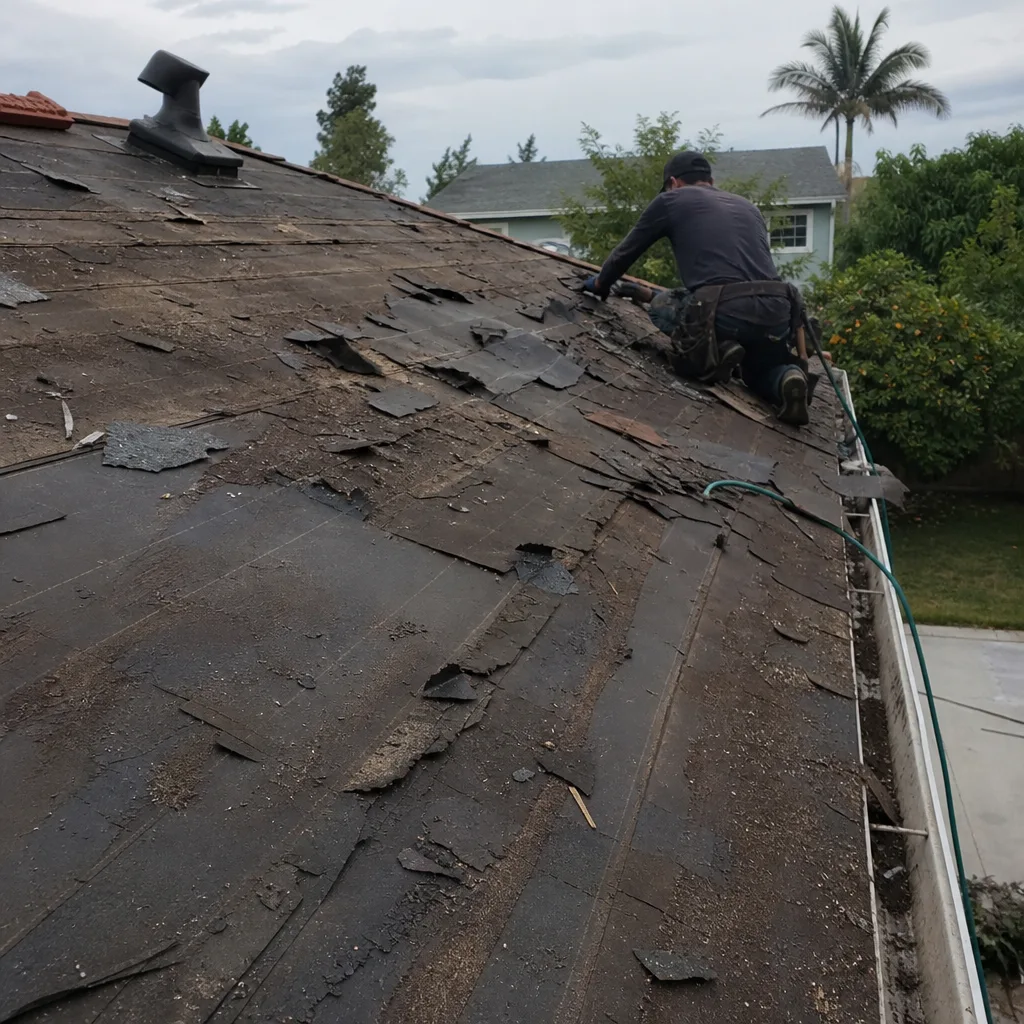 Before
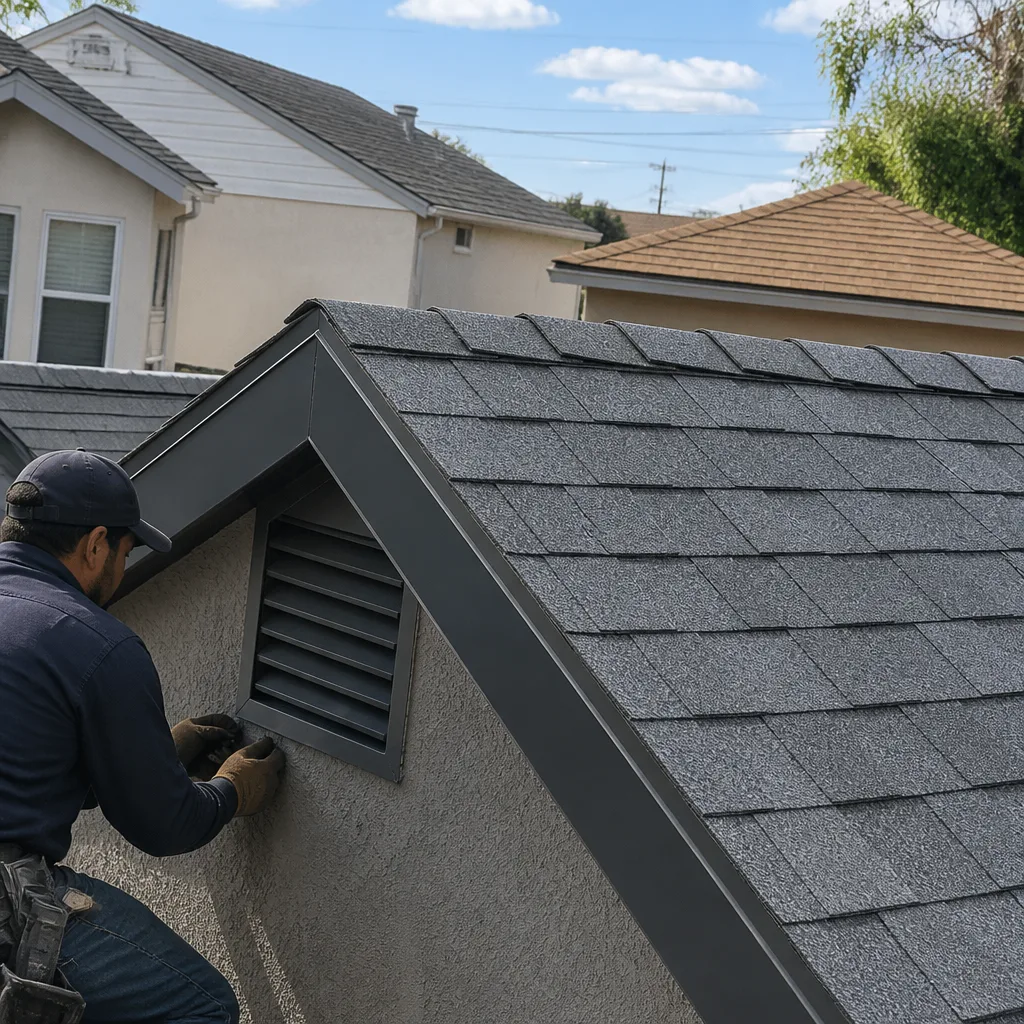 After
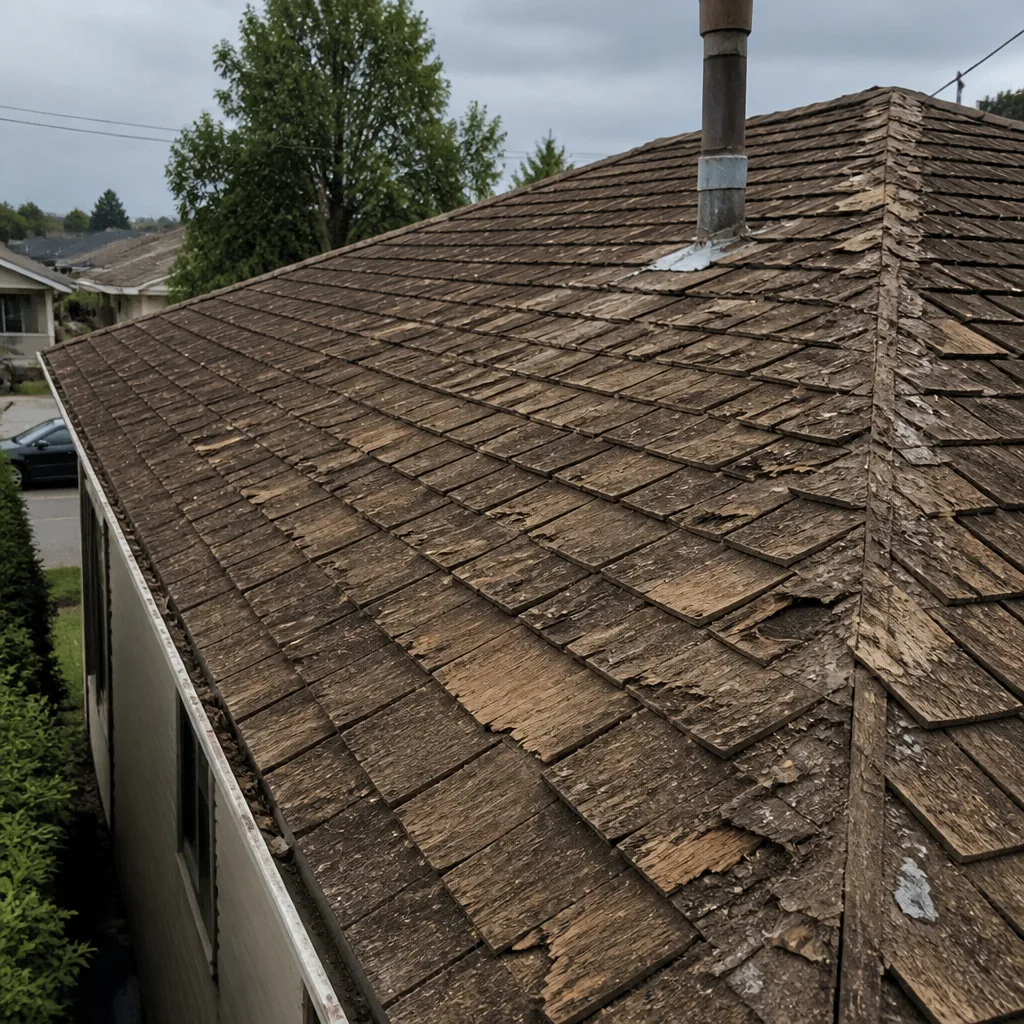 Before
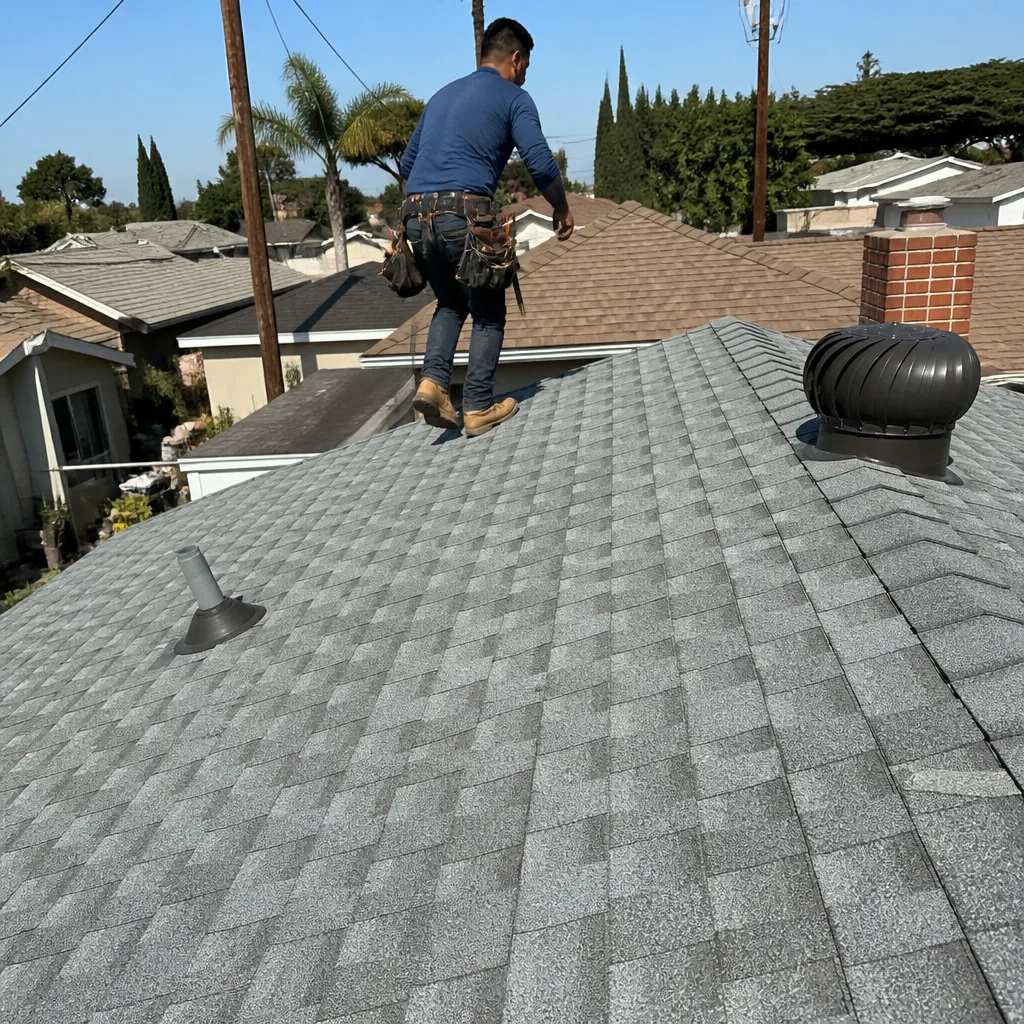 After
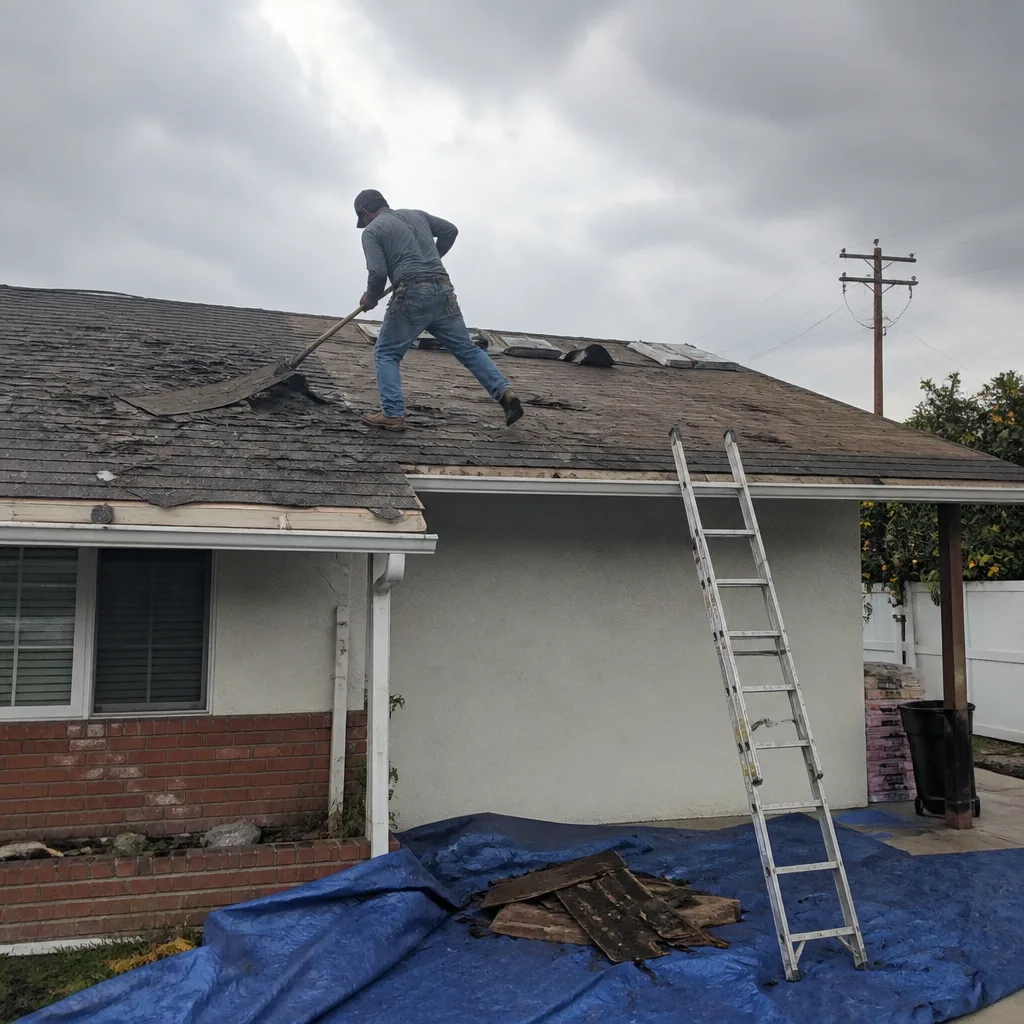 Before
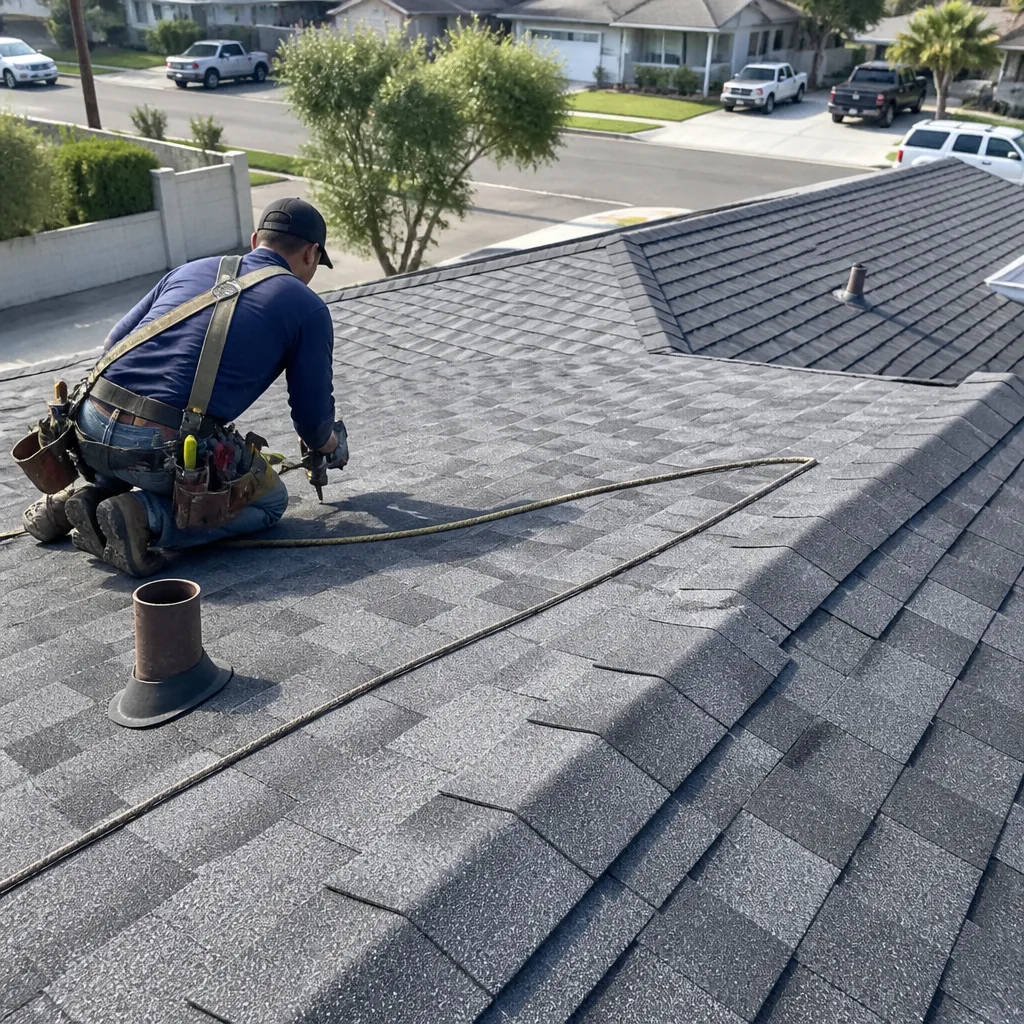 After