

Last updated October 31, 2026
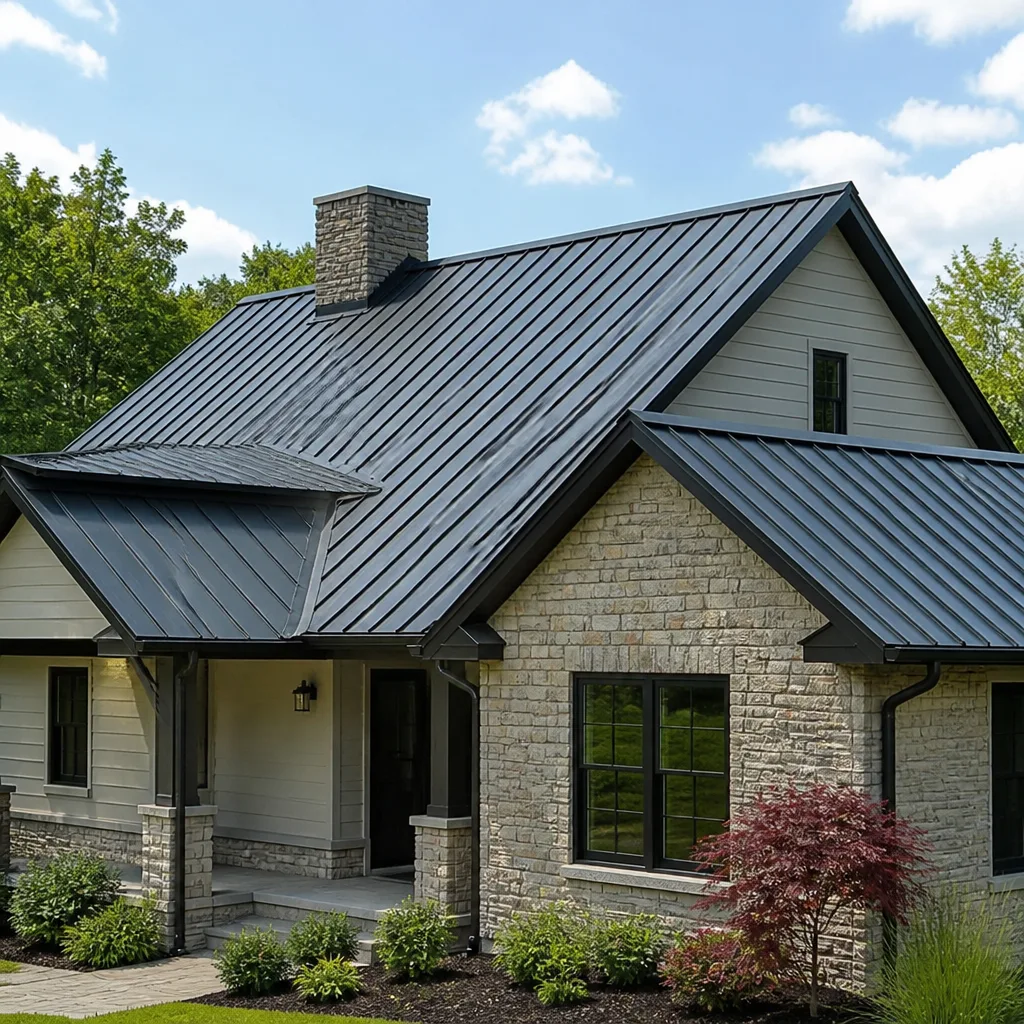 Metal roofing
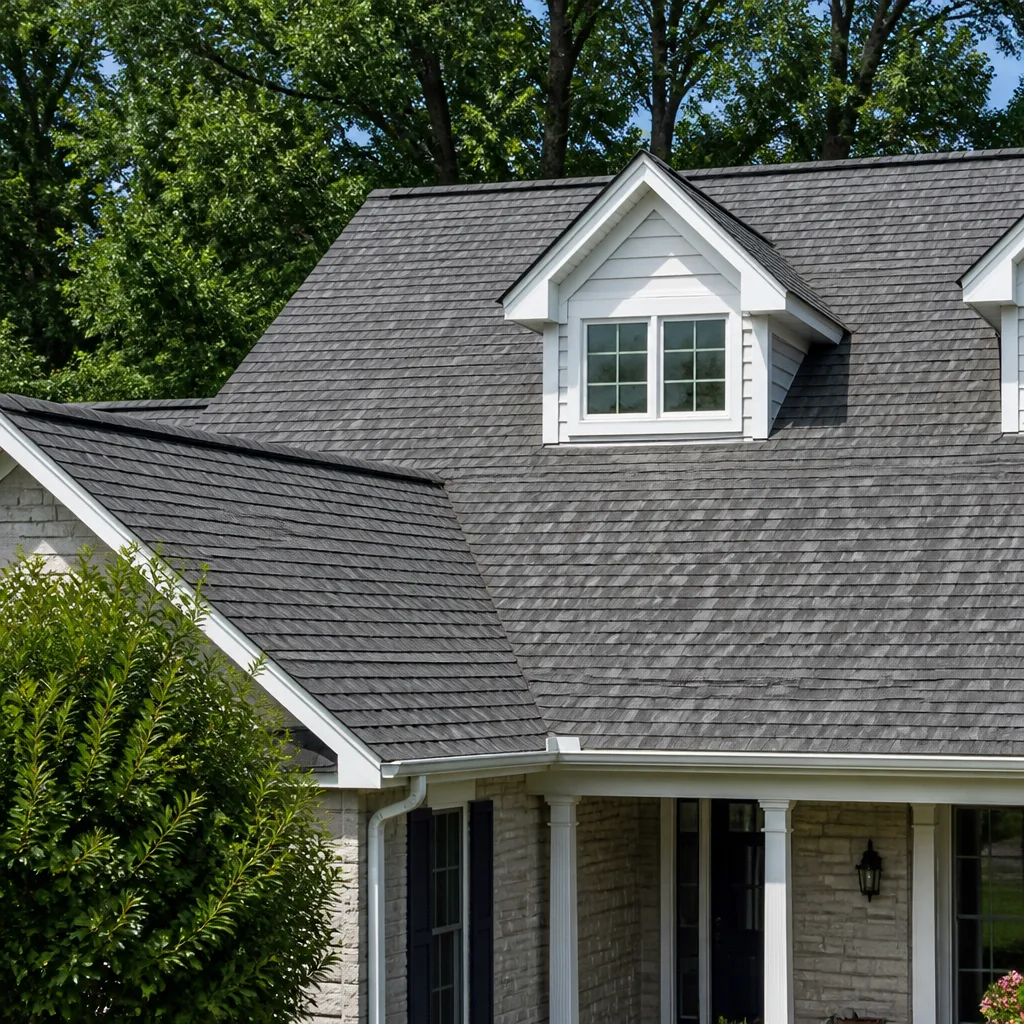 Architectural shingles
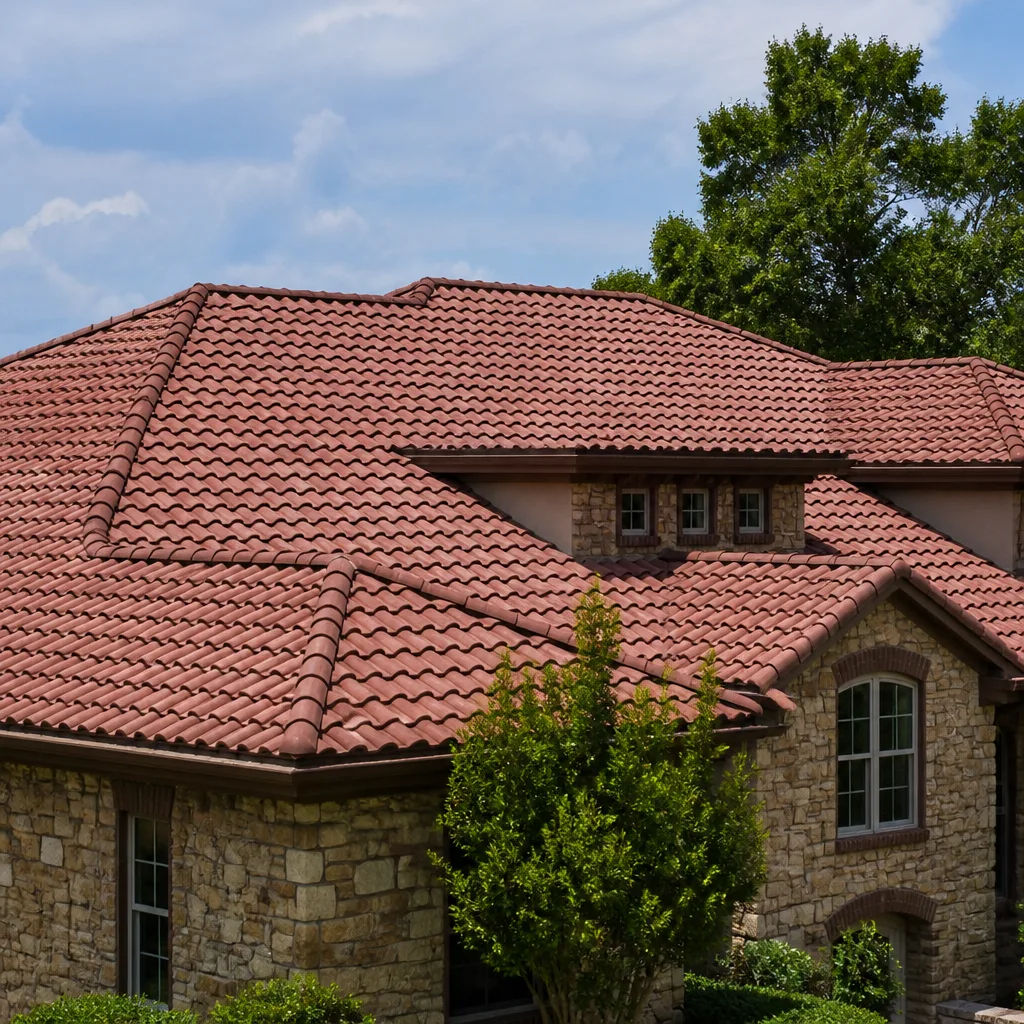 Tile roofing
 GAF
 Owens Corning
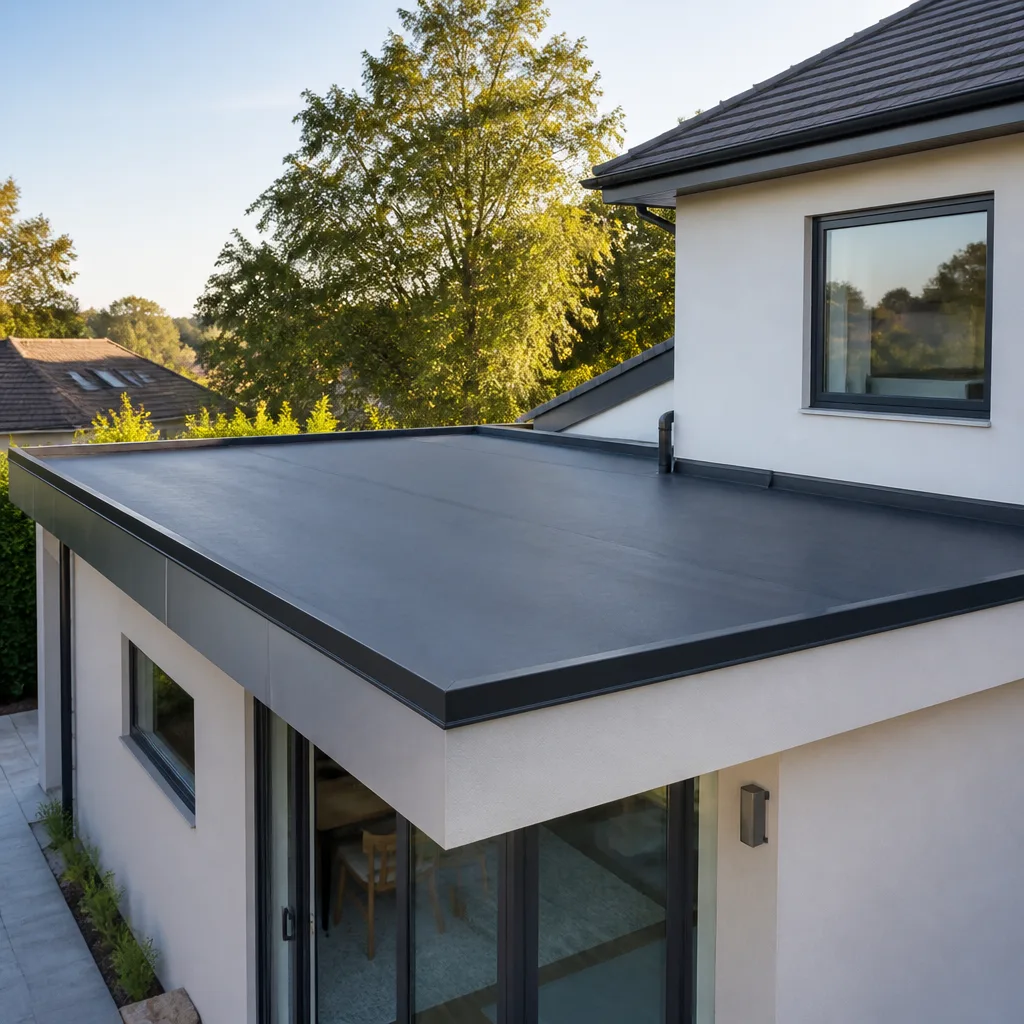 Flat & low-slope
Free roof inspection with deck photos before we talk money - GAF and Owens Corning certified installation
Seasonal Roofing Care for Downey: Year-Round Homeowner’s Guide
Downey averages just 13 inches of rain per year, but nearly all of it falls inside a 90-day window between late November and early March. That means the roof over your Downey home spends roughly 275 days a year accumulating sun damage, drying out, and slowly losing the protective flexibility in its sealants and flashing. Then, in a matter of weeks, it gets hit with more water than it’s seen all year. This Complete Guide to Roofing in Downey walks through the two stress cycles that actually define local roofing, what to check during each one, and how to catch small problems before they become interior damage.
Quick Answer
Seasonal roof care in Downey means inspecting your roof twice a year: once in early October before the rainy season arrives, and once in late March after the last significant rain. During the dry months, the main threats are UV degradation of sealants, pipe boots, and ridge cap, plus occasional Santa Ana wind damage. During the wet months, the priority is catching leaks early and understanding where water actually enters versus where it shows up on your ceiling.
Styles & brands we work with
Table of Contents
- Downey’s Two Stress Cycles: Why the Calendar Is Misleading
- The October Pre-Rain Window: What to Inspect, What to Repair, What to Defer
- UV Damage During the Dry Season: What 275 Days of Sun Does to a Roof
- Santa Ana Wind Events: Assessing Ridge Cap and Hip Shingle Damage
- Post-Rain Inspection: Reading Interior Ceiling Patterns to Find the Source
- Repair vs. Replacement: How to Tell if a Fix Is a True Fix
- Material Considerations for the Downey Climate
- A Simple Year-Round Maintenance Schedule for Downey Homeowners
Downey’s Two Stress Cycles: Why the Calendar Is Misleading
Roofing advice written for the national market assumes four seasons: winter freezes, spring thaws, summer storms, autumn leaf buildup. That framework barely applies in Downey. We don’t get freeze-thaw cycles. We don’t get hail. We get something quieter and more insidious: a long, hot dry season that slowly bakes the flexible components of your roof, followed by a concentrated wet season that exposes every weak point at once.
The first cycle runs from April through September. Daytime highs during this period regularly sit in the 80s and 90s, and roof surface temperatures run 40 to 50 degrees hotter than the air temperature. A 90-degree day in Downey means your shingles are sitting at 130 to 140 degrees. Over six months, that heat breaks down the plasticizers in pipe boots, loosens the adhesive bond on ridge cap, and causes sealants around vents and flashing to shrink and crack. None of this is visible from the street, and most of it causes no problem at all until water is introduced.
The second cycle runs from late November through March. Downey’s rain comes in bursts, often as atmospheric rivers that can drop two or three inches in a single day. That’s more water than your roof sees during the rest of the year combined. Any sealant that cracked in August becomes a leak in January. Any ridge cap that lifted during an October Santa Ana becomes a water entry point during a February storm. The damage doesn’t happen in the rain. The rain just reveals it.
Understanding this pattern changes how you maintain your roof. Instead of thinking in seasons, think in transitions: the October transition from dry to wet, and the March transition from wet back to dry. Those two windows are when your attention matters most.
The October Pre-Rain Window: What to Inspect, What to Repair, What to Defer
The six weeks between mid-September and the end of October are the most important maintenance window for a Downey roof. The weather is still dry, days are cooler, and you have time to address issues before the first significant storm arrives in late November or early December. Here’s what to prioritize.
What to Inspect First
- Pipe boots and vent collars. These rubber or neoprene components sit around plumbing vents and exhaust pipes on the roof surface. After a summer of Downey heat, they crack and split at the base. In our experience, cracked pipe boots are the single most common source of roof leaks in Downey homes, ahead of shingle damage. A pipe boot replacement is a small repair that takes under an hour.
- Ridge cap adhesion. The ridge cap shingles run along the peaks of your roof. The adhesive strips that hold them down soften in high heat and can fail, especially on south-facing and west-facing roof planes that get the most afternoon sun. If a ridge cap shingle lifts during a Santa Ana wind, rain can drive underneath it.
- Flashing around chimneys and skylights. Flashing is the metal or flexible membrane that transitions between your roof surface and vertical protrusions. Sealants used at these points degrade during the dry season. Check for visible gaps, cracked caulking, or rust on exposed metal flashing.
- Valleys and low-slope transitions. If your Downey home has architectural features like dormers or additions, check where roof planes meet. Debris accumulates in valleys and holds moisture against the shingle surface for weeks after a rain.
- Gutter and downspout flow. Clogged gutters during a heavy Downey storm mean water backs up onto the roof edge, which can lead to fascia damage and, in extreme cases, water intrusion at the eave line.
What to Repair Now
- Cracked or split pipe boots: replace immediately, as this is a cause of active leaks during the first rain.
- Lifted ridge cap shingles: re-adhere or replace, especially if Santa Ana winds are in the forecast.
- Failed sealant at flashing points: re-seal with a roofing-grade sealant appropriate for the material.
- Missing or damaged shingles from previous storms: replace now, because the next rain will test every gap.
What’s Safe to Defer
- Cosmetic granule loss on shingles, if the fiberglass mat is not exposed. Granule loss shortens shingle life but is not an immediate leak risk.
- Mild algae staining. It’s aesthetic and can be addressed at the next scheduled maintenance. In Downey’s dry climate, algae pressure is lower than in coastal communities like Los Alamitos.
- Minor shingle curling at corners, if the shingle is still sealed and the roof is under 15 years old. Flag it for monitoring rather than immediate replacement.
The logic here is simple: repair anything that can admit water, defer anything that only affects appearance or long-term wear. Water intrusion is the enemy. Everything else can wait until the next inspection. For a professional assessment in Downey before the rains arrive, an independent roof inspection can catch what a quick visual check misses.
UV Damage During the Dry Season: What 275 Days of Sun Does to a Roof
Most homeowners think of rain as the primary threat to a roof. In Downey, that’s backwards. The dry season, not the wet season, is when most roof degradation actually occurs. Rain merely exposes the damage that sun has already done.
The Specific Failure Mechanisms
Ultraviolet radiation breaks down the molecular bonds in the asphalt compounds that give shingles their flexibility. Think of it like leaving a rubber band on a sunny windowsill for six months. It doesn’t break; it loses its snap. The same thing happens to roofing components across a Downey summer.
Pipe boots, which are typically made from rubber or neoprene, are the most visible example. A brand-new pipe boot is flexible and forms a watertight seal around the vent pipe. After two or three summers of Downey UV exposure, that same boot is brittle. Squeeze it and it cracks. The crack may be fractions of an inch wide, but during a heavy rain, that’s enough to admit a steady drip.
Sealants at flashing points fail the same way. The caulking or roofing mastic used to seal around chimneys, vents, and skylights loses elasticity. It shrinks as it dries, pulling away from the surfaces it was meant to bond. A gap of an eighth of an inch is invisible from the ground but is a wide-open door for water driven by wind.
Ridge cap and hip shingles face particularly intense exposure because they sit at the highest points of the roof, with no shade from adjacent roof planes. The adhesive strips on their undersides soften and re-harden repeatedly during the daily heat cycle. After enough cycles, the adhesive fails and the shingle relies on roofing nails alone to stay in place. That’s fine in calm weather. It’s not fine in a Santa Ana wind.
What Homeowners Can Do During the Dry Season
- Schedule a mid-summer visual check. You don’t need to get on the roof. Use binoculars from the ground to look for visible cracking around pipe collars, lifted ridge cap, or shingles that look “tented” rather than flat.
- Look at south- and west-facing slopes first. These planes receive the most cumulative UV exposure in Downey. If you’re going to see sun-related damage anywhere, it’ll be there.
- Be aware of roof age. Asphalt shingle roofs in Southern California typically last 18 to 25 years, but the sealants and rubber components have a much shorter useful life, often 8 to 12 years. A 20-year-old roof with original pipe boots is a leak waiting to happen, even if the shingles look fine.
If you’re already planning a roof replacement, the dry season is the ideal time to do it. Installing a new roof during Downey’s summer means all adhesives and sealants cure fully before the first rain tests them.
Santa Ana Wind Events: Assessing Ridge Cap and Hip Shingle Damage
Santa Ana winds are a fixture of autumn and early winter in Downey. These are hot, dry winds that blow from the northeast, often gusting to 40 or 50 miles per hour or more. They’re a different animal from the onshore breezes that dominate the rest of the year, and they affect roofs in specific, predictable ways.
What Santa Anas Do to a Roof
The primary damage mechanism is uplift. Wind hitting the side of a house creates positive pressure, but wind passing over a roof creates negative pressure, or suction, at the roof surface. This is the same principle that makes airplane wings work, and it tries to lift shingles off the roof deck. The components most vulnerable to uplift are the ones at the edges: ridge cap at the peak, hip shingles at the corners, and shingles at the gable ends. These edge elements carry the entire wind load and are the first to fail.
The failure modes are specific. Ridge cap shingles don’t blow off entirely in one piece. Instead, the windward edge lifts, the adhesive seal breaks, and the shingle folds back on itself. It may remain attached by its nails, but it no longer forms a waterproof covering. Water from the next rain can drive directly into the gap. The same pattern occurs with hip shingles, which run along the diagonal lines where roof planes meet. Corner shingles take the highest wind pressure because they’re exposed on two sides.
How to Assess Damage Without a Ladder
- Start from the street after the wind event. Walk to a point where you can see the ridge line clearly. Use binoculars if you have them. Look for shingles that appear lifted, bent, or out of line with their neighbors.
- Check the ground. Walk the perimeter of the house and look for shingle pieces, granules, or bits of ridge cap on the ground, in gutters, or in landscaping. Wind-damaged shingles often leave debris.
- Look at the gable ends. If your Downey home has a gable roof, the triangular wall at each end is the highest-risk zone. Check the edges where the roof plane meets the gable for lifted shingles.
- Check interior ceilings after the next rain. Wind damage often doesn’t leak immediately. It may take a rain event to reveal where water is getting in.
If you find damage, don’t attempt repairs on a sloped roof during windy conditions. Wait for calm weather and call a professional. Loose ridge cap is dangerous to work on, and an improper temporary fix can create more problems than it solves. A roof repair specialist can assess whether the damage is limited to the affected shingles or indicates a broader adhesive failure along the ridge line.
Post-Rain Inspection: Reading Interior Ceiling Patterns to Find the Source
When a Downey homeowner sees a water stain on the ceiling, the first assumption is that the leak is directly above the stain. That assumption is wrong more often than it’s right. Water travels. It runs along rafters, follows the slope of the roof deck, pools on the top side of the drywall, and drips at the lowest point it can find, which may be several feet from the actual entry point. Understanding this is the difference between fixing the right spot and fixing a symptom.
How to Read Ceiling Stains
- A single brown stain in the middle of a room: Could be a roof leak, could be a plumbing leak from a pipe in the attic. Determine whether there are water lines above the stain. If not, the roof is the likely source.
- A stain that follows a straight line: This often indicates water running along a rafter or ceiling joist. Follow the line. The leak source is likely at the high end of the line, not where the stain is darkest.
- Multiple stains in a line or cluster: Suggests water pooling on the attic side of the drywall and finding multiple drip points. The source is upstream of all of them.
- A stain at the edge of the ceiling near an exterior wall: Could be a roof leak at the fascia or eave, or could be a wall leak from stucco cracks or failed window flashing. Consider the roof slope above the wall.
- A stain that gets worse only during heavy rain: Indicates a roof leak that requires wind-driven rain to penetrate. The leak is likely at a ridge, a flashing point, or a shingle gap on the windward side of the home.
What to Do After Finding a Stain
- Check the attic while it’s still raining. If it’s safe to access, get into the attic with a flashlight. Look at the underside of the roof deck. Wet wood, water droplets, or a visible drip point will tell you more than any ceiling stain can.
- Measure the stain location against the roof. Note where the stain is relative to exterior walls, rooms above, and roof penetration points like vents and chimneys.
- Photograph the stain. Take photos immediately and again after 48 hours. If the stain shrinks or fades, the leak is intermittent. If it stays or grows, water is still entering.
- Mark the stain with a pencil. The edge will help you track whether the stain expands during subsequent rains.
Interior stains are the end of a chain of evidence, not the beginning. The actual point of water entry may be anywhere uphill and up-roof from where the stain appears. Tracking it down requires following the water path, and that often requires getting into the attic during or immediately after a rain. If you’re not comfortable doing that, or if the stain persists, a professional inspection is the right next step.
Repair vs. Replacement: How to Tell if a Fix Is a True Fix
Every roofing contractor in Downey has dealt with the homeowner who has paid for three separate repairs over five years, only to finally replace the roof anyway. Those repair dollars were not wasted exactly, but they were spent buying time on a roof that had already reached the end of its serviceable life. The honest question is: when is repair a true fix, and when is it a bridge to a conversation about replacement?
Signs a Repair Is a True Fix
- The underlying roof structure is sound, with no water damage to the decking.
- The shingle system is under 15 years old and still has meaningful service life remaining.
- The problem is isolated: one pipe boot, one section of flashing, one small area of wind damage.
- The shingles are still flexible and well-adhered, with no widespread curling, cracking, or granule loss.
- The roof has not been patched before, or previous patches were in different locations and are holding.
Signs a Repair Is a Bridge
- The roof is 18 years old or older. A repair now may be addressing a symptom of system-wide aging.
- There are multiple pipe boots, vents, or flashing points showing wear. Replacing them all is approaching the cost of a targeted replacement.
- Shingles are curling, losing granules on multiple slopes, or failing to seal after previous repairs.
- There is evidence of water damage to the roof deck. The deck may need repair before any surface work matters.
- The roof has been patched in multiple locations. Each patch is a data point: the system is failing in stages.
An honest assessment requires looking at the whole roof, not just the problem area. At Seacrest Roofing home, we approach every inspection with a repair-first philosophy. If a repair genuinely solves the problem and the roof has years of life remaining, that’s what we recommend. If the roof is in systemic decline, we’ll tell you that too, and we’ll walk you through the material options so you can make an informed decision about replacement. The answer is not always replacement. It’s also not always repair. The answer is whatever the roof actually needs.
Material Considerations for the Downey Climate
Downey’s climate creates specific demands on roofing materials. The long dry season requires materials that resist UV degradation. The concentrated wet season requires materials that can handle sudden, heavy water loads. The Santa Ana winds require edge components that resist uplift. These demands are not unique, but they do influence how different products perform here.
Asphalt shingles remain the most common choice in Downey, and for good reason. Modern architectural shingles from manufacturers like GAF, CertainTeed, and Owens Corning are engineered for UV resistance and have adhesive systems designed to survive high-heat cycling. But not all asphalt shingles are created equal. Budget lines from any manufacturer will have less UV stabilizer in the asphalt compound and thinner mats, which means faster granule loss and shorter service life in a climate like Downey’s.
Within the asphalt shingle category, homeowners should understand the difference between products at different price points. Entry-level three-tab shingles, which are increasingly rare, offer the least UV resistance and the shortest service life. Dimensional or architectural shingles add a thicker mat and more UV-stabilized asphalt, extending life and improving wind resistance. Designer shingles, like CertainTeed’s Grand Manor or GAF’s Grand Canyon, add more weight and aesthetic depth, and often carry wind warranties up to 130 miles per hour, which matters during Santa Ana season.
For Downey homeowners, the most important material decision is not brand. It’s matching the product to the specific demands of your roof: slope, exposure, and the presence of gable edges where wind uplift is highest. We stock products from seven shingle manufacturers, including IKO and additional lines beyond the three named above, because no single manufacturer makes the best product for every roof configuration. A south-facing roof with full sun exposure benefits from a shingle with heavy UV stabilization. A home in a wind-exposed area near the 105 corridor may benefit from a shingle with a high wind warranty. A homeowner in a neighborhood with a homeowners association may need to match specific aesthetic requirements. Seven shingle brands, one honest recommendation. That’s the approach.
If you’re considering which materials suit your specific Downey neighborhood, whether that’s near downtown, up toward Rio San Gabriel, or in the tracts south of Florence Avenue, material selection should follow from roof geometry and exposure, not a salesperson’s preference.
A Simple Year-Round Maintenance Schedule for Downey Homeowners
You don’t need to think about your roof every week. You need to think about it at specific moments. Here’s a maintenance calendar built around Downey’s two stress cycles.
September to October: Pre-Rain Preparation
- Schedule a professional roof inspection if you haven’t had one in the past two years.
- Clean gutters and downspouts before the first rain. Check that downspouts direct water away from the foundation.
- Visually check pipe boots, ridge cap, and flashing from the ground using binoculars.
- Address any cracked sealants or lifted shingles before the rainy season starts.
- If you have overhanging trees, trim branches that could drop debris or scrape the roof surface during winter winds.
November to March: Wet Season Monitoring
- After each heavy rain, do a quick visual check of ceilings in rooms under the roof, especially rooms with vaulted ceilings or skylights.
- If you see stains, act within 48 hours. Water damage compounds quickly.
- During Santa Ana events, check the ground for shingle debris after the wind calms.
- Keep gutters clear if you have large trees near the house. A single clogged downspout can cause water backup at the fascia.
April to August: Dry Season Awareness
- Do a mid-summer visual check from the ground, focusing on south- and west-facing slopes.
- If you notice granule loss in gutters or at downspout outlets, track how much appears over a month. Excessive granule loss is a sign of UV degradation.
- If you’re planning a replacement, schedule it during this window so new materials cure before the rains.
- Avoid walking on the roof during the hottest part of the summer. Asphalt shingles soften in high heat and foot traffic can cause cosmetic damage.
The pattern here is simple: act in October, monitor during the rains, be aware during the dry season. Most preventable roof damage in Downey happens because no one looked at the roof in October.
Common Mistakes to Avoid
- Treating ceiling stains as isolated problems. Most homeowners assume a single stain means a single leak in that exact spot. Water travels, and the actual entry point is often feet away. Treating the symptom without tracing the path means the leak continues.
- Ignoring pipe boots because the shingles look fine. In Downey, pipe boots fail years before shingles do. We’ve seen repeatedly that a roof with perfectly good shingles can have multiple cracked boots that are actively leaking.
- Deferring October inspections because the roof hasn’t leaked yet. The entire point of pre-rain inspection is to address issues before they leak. Waiting for a leak is a decision to accept interior damage as part of the maintenance process.
- Walking on a roof during the heat of the day. Hot asphalt shingles are soft and susceptible to damage from foot traffic. If you must be on the roof, do it in the early morning.
- Power-washing an asphalt shingle roof. High-pressure water strips granules and shortens shingle life. This is common advice from pressure-washing companies that should not apply to roofs.
- Choosing a shingle based on brand loyalty alone. The right shingle for a south-facing Downey roof may not be the right shingle for a shaded, north-facing slope. Material selection should follow roof conditions, not habit.
- Waiting to address Santa Ana damage until the next rain reveals it. Lifted ridge cap or broken hip shingles may not leak immediately, but they will. Repairing wind damage promptly, while the weather is still dry, prevents the predictable next step.
See the difference
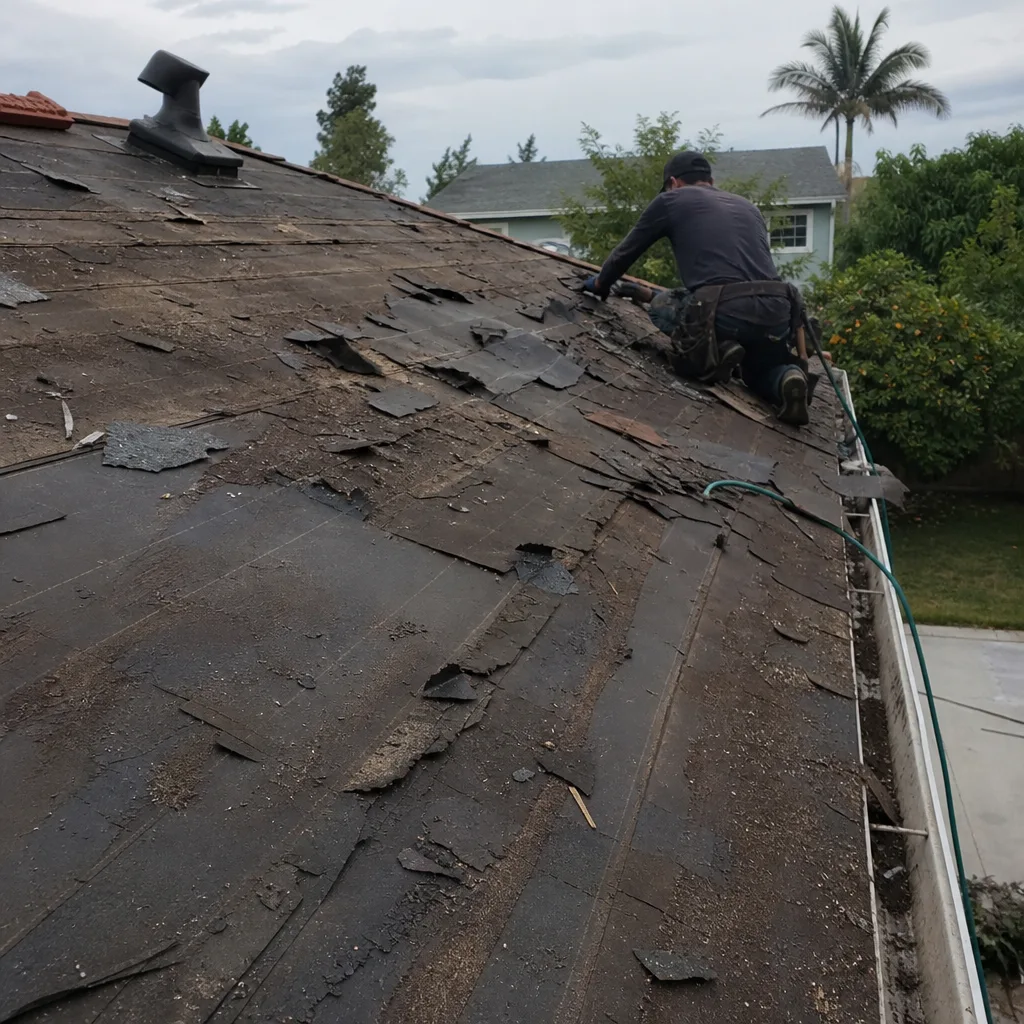 Before
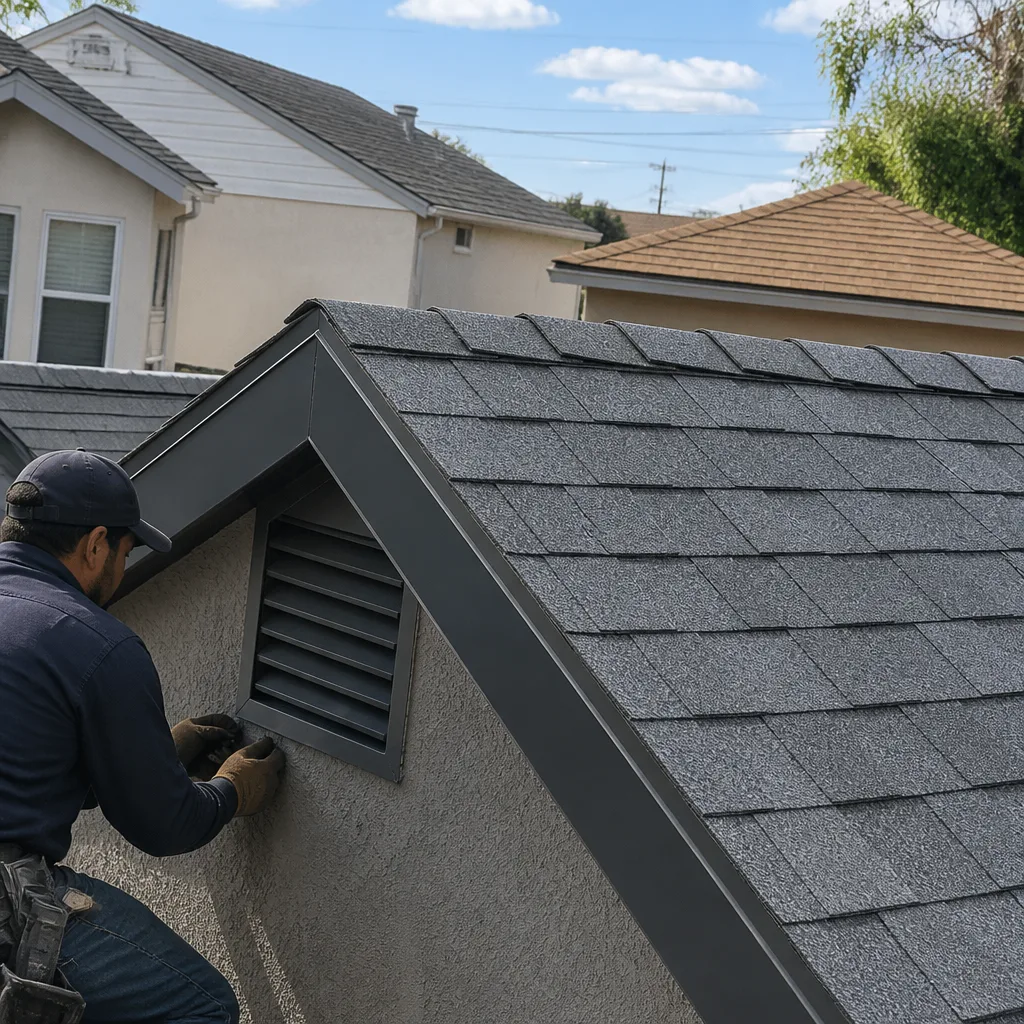 After
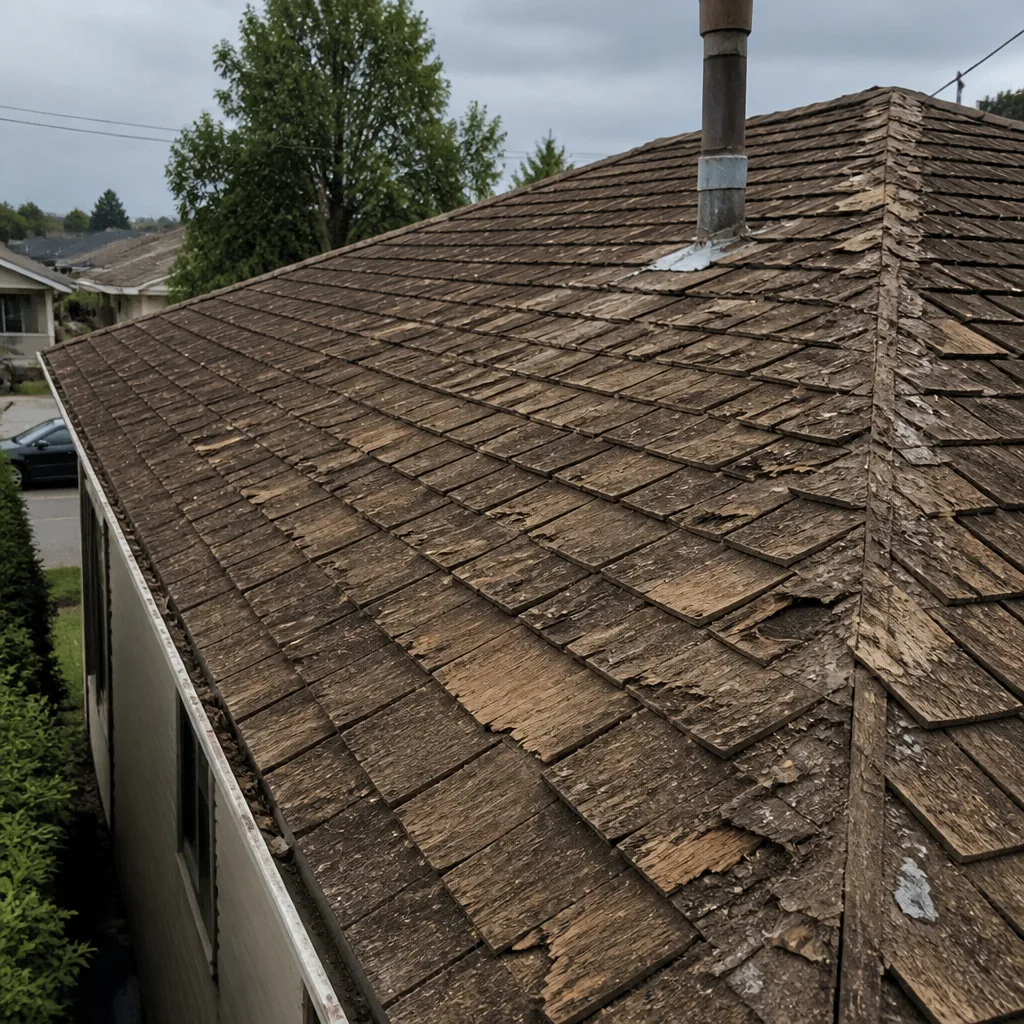 Before
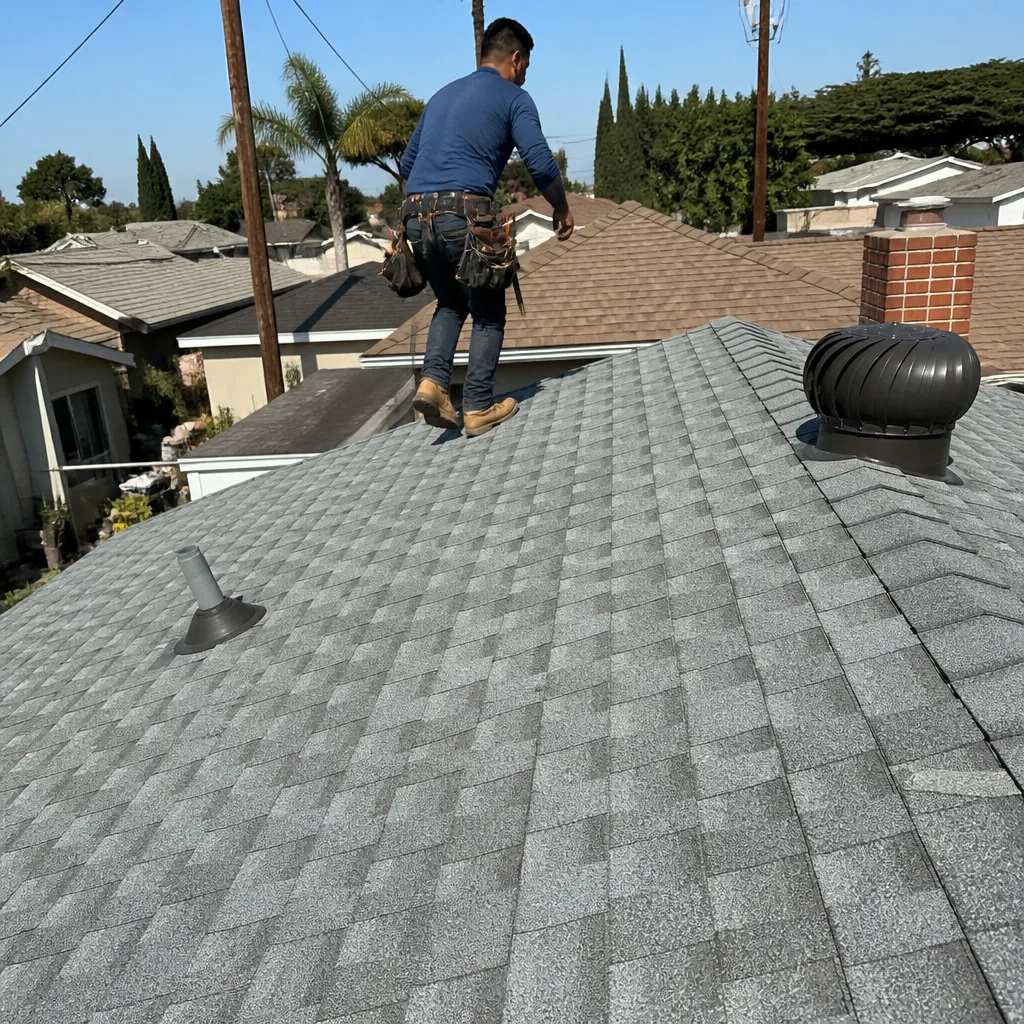 After
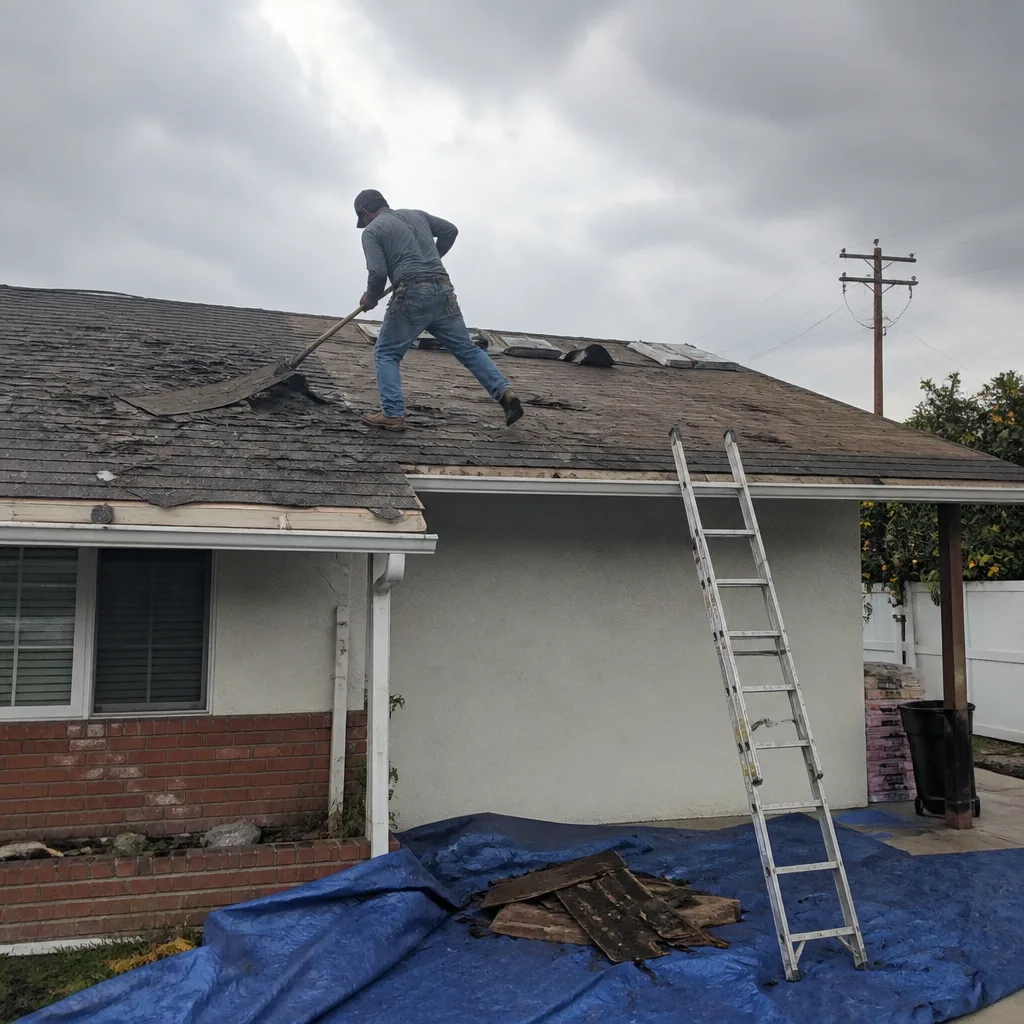 Before
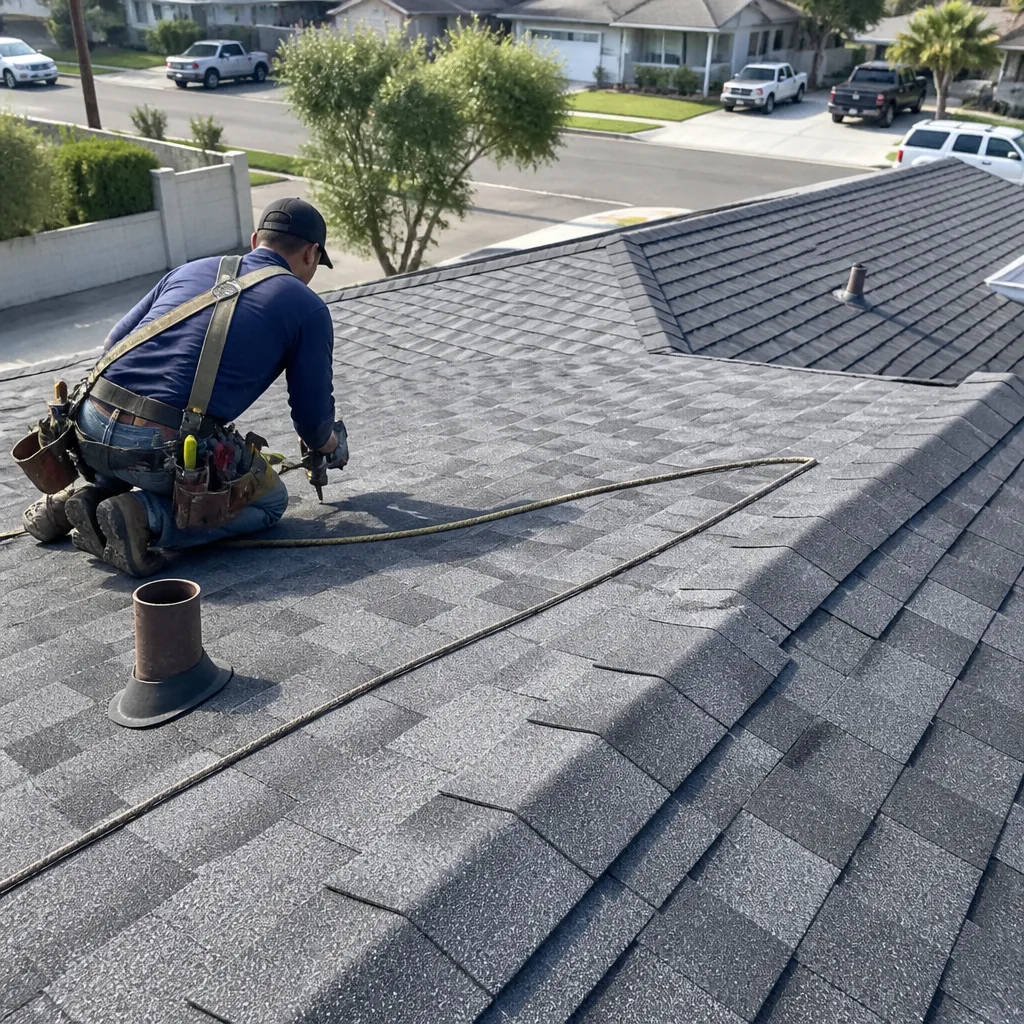 After
When to Call a Professional
You should call a roofing professional in Downey if you see a ceiling stain that appeared during or after rain, if a Santa Ana wind event leaves visible debris from your roof on the ground, if you notice pipe boots that appear cracked or pulled away from vent pipes, or if your roof is over 15 years old and has not been inspected in the past two years. You should also call if you’re uncertain whether a repair will actually solve a problem. The cost of a professional assessment is small compared to the cost of repeated repairs that don’t address the root cause. Seacrest Roofing offers free estimates in Downey – call (855) 597-2817 to schedule one.
Frequently Asked Questions
In Downey, an inspection every two years is appropriate for most asphalt shingle roofs, with annual inspections recommended for roofs over 15 years old or roofs with known problem areas like repeated pipe boot failures or past wind damage.
The best time to replace a roof in Downey is between April and October, during the dry season, when new shingles, sealants, and flashing can cure fully before the first significant rain of winter.
Professional roof inspections in Downey typically range from $150 to $350, depending on roof complexity and access. Seacrest Roofing offers inspections as a standalone service without any obligation to proceed with repairs or replacement. Call (855) 597-2817 for current pricing.
Asphalt shingle roofs in Downey typically last 18 to 25 years, though UV exposure can shorten that range. The flexible components like pipe boots and sealants have a much shorter life span and often need attention at the 8- to 12-year mark regardless of shingle condition.
Yes, Santa Ana winds can lift ridge cap, hip shingles, and shingles at gable ends through wind uplift. Damage is often partial rather than full removal, with shingles folding back and remaining attached by nails, which creates a water entry point for the next rain.
Photograph the stain, check the attic above the stain while it’s still raining if possible, and mark the stain edges with a pencil to track changes. Then call a roofing professional for an inspection. Water stains often appear feet away from the actual leak source, so tracing the water path is essential. Call (855) 597-2817 for a free estimate on inspection.
The Bottom Line
Downey roofing care is not about four seasons. It’s about two transitions: the shift from dry to wet in October, and the shift from wet back to dry in March. The work that protects your roof during the rainy season happens months earlier, during the dry season, when cracks and seal failures are still silent. The work that reveals what the dry season did happens after each rain, in the form of ceiling stains and attic drips. If you check your roof before the rains, monitor it during them, and understand that repair and replacement are different tools for different situations, you’ll catch problems small, when they’re cheap, instead of large, when they’re not. For more guides & resources on protecting your home, explore our blog. Downey gives you 275 dry days a year to prepare for 90 wet ones. Use them.
Written by the team at Seacrest Roofing, serving Downey since 2018.